

Amends the Workers' Compensation Act. Replaces language regarding the qualifications of Commissioners of the Illinois Workers' Compensation Commission with language requiring each Commissioner appointed on or after the effective date of the amendatory Act to be authorized to practice law in this State. Provides that each Commissioner appointed on or after the effective date of the amendatory Act shall receive an annual salary of 70% of a Circuit Court Judge in the Judicial Court constituted by the First Judicial District under the Salaries Act and the Chairman shall receive an annual salary of 5% more than the other Commissioners. Provides that the performance of arbitrators shall be reviewed by the Chairman every other year, or more often at the discretion of the Chairman (rather than on an annual basis). Provides that no arbitrator shall hear cases in any county, other than Cook County, for more than 4 years consecutively (rather than 2 years in each 3-year term). Provides that the Secretary and each arbitrator shall receive a per annum salary of 5% less than the per annum salary of members of the Illinois Workers' Compensation Commission. Provides for the dissolution of the Self-Insurers Administration Fund and for the transfer of the moneys in that fund to the Self-Insurers Security Fund. Authorizes expenditures from the Self-Insurers Security Fund for the purposes that were authorized for the Self-Insurers Administration Fund. Effective immediately. Senate Floor Amendment No. 1 Deletes reference to: 820 ILCS 305/4a-2 from Ch. 48, par. 138.4a-2 820 ILCS 305/4a-4 from Ch. 48, par. 138.4a-4 820 ILCS 305/4a-5 from Ch. 48, par. 138.4a-5 820 ILCS 305/4a-6.1 from Ch. 48, par. 138.4a-6.1 820 ILCS 305/4a-7 from Ch. 48, par. 138.4a-7 820 ILCS 305/13 from Ch. 48, par. 138.13 820 ILCS 305/14 from Ch. 48, par. 138.14 Adds reference to: 820 ILCS 115/13.5 new Replaces everything after the enacting clause. Amends the Illinois Wage Payment and Collection Act. Provides that, for all contracts entered into on or after July 1, 2022, a primary contractor making or taking a contract in the State for the erection, construction, alteration, or repair of a building, structure, or other private work in the State shall assume, and is liable for, any debt owed to a wage claimant incurred pursuant to the Act by a subcontractor at any tier acting under, by, or for the primary contractor for the wage claimant's performance of labor included in the subject of the contract between the primary contractor and the owner. Provides exemption from liability for a property owner who acts as a primary contractor related to the erection, construction, alteration, or repair of his or her primary residence where the aggregate costs of the project amounts to less than $100,000. Defines terms. Provides that the primary contractor's liability under the new provisions shall extend only to any unpaid wages, including interest owed and reasonable attorney's fees, but shall not extend to wage supplements, penalties, or liquidated damages. Provides that a primary contractor or any other person shall not evade or commit any act that negates the requirements of the new provisions. Provides that the obligations and remedies provided in the new provisions shall be in addition to any obligations and remedies otherwise provided by law, except that nothing in the new provisions shall be construed to impose liability on a primary contractor for anything other than unpaid wages, interest owed and reasonable attorney's fees. Provides that claims brought pursuant to the new provisions shall be done so in accordance with provisions concerning violations of the Act. Senate Floor Amendment No. 2 Makes various changes to the bill, as amended by Senate Amendment No. 1, with respect to terminology, the definition of "private work", a primary contractor's liability, and claims brought pursuant to the new provisions. Defines "construction" as building, altering, repairing, improving, or demolishing any structure or building, or making improvements of any kind to real property.
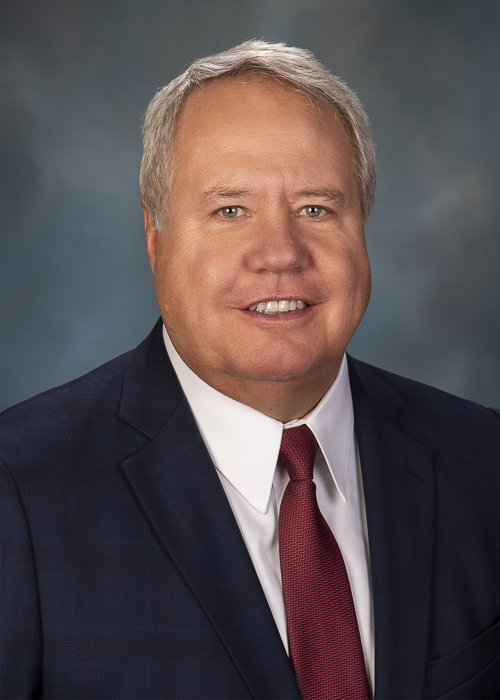
Rep. Jay Hoffman
Sponsored bills
Amends the Court of Claims Act. Provides that for the purpose of making up any deficiency in the appropriation for the payment of claims directed pursuant to the Line of Duty Compensation Act, there is appropriated, on a continuing annual basis in each fiscal year, from the General Revenue Fund to the Court of Claims, the amount, if any, by which the total appropriation for the payment of claims directed pursuant to the Line of Duty Compensation Act for the fiscal year is less than the amount required for the payment of claims pursuant to the Line of Duty Compensation Act for that fiscal year. Provides that the amount of any continuing appropriation used by the Court of Claims under the amendatory Act for a given fiscal year shall be charged against the unexpended amount of any appropriation for line of duty awards to the Court of Claims for that fiscal year that subsequently becomes available. Requires the Court of Claims to report to the President and Minority Leader of the Senate, the Speaker and Minority Leader of the House of Representatives, and the Governor's Office of Management and Budget on any continuing appropriation that is used at the conclusion of a fiscal year. Effective immediately.
Amends the Tax Increment Allocation Redevelopment Act of the Illinois Municipal Code. Extends the estimated dates of completion of redevelopment projects and the retirement of obligations issued to finance redevelopment project costs for ordinances adopted on August 4, 1999 and October 2, 1999 by Fairmont City. Effective immediately.
Amends the Local Government Wage Increase Transparency Act. Makes a technical change in a Section concerning the short title.
Amends the Workers' Compensation Act. Provides that nothing in the Act limits, prevents, or preempts a recovery by an employee under the Biometric Information Privacy Act.
Amends the Workers' Compensation Act. Provides that the rebuttable presumption concerning specified conditions or impairments of health of an employee employed as a firefighter, emergency medical technician, emergency medical technician-intermediate, advanced emergency medical technician, or paramedic is intended to shift the burden of proof to the employing entity and any party attacking the presumption must establish by clear and convincing evidence an independent and non-work related cause for the condition or disability and prove that no aspect of the employment contributed to the condition. Provides that the rebuttable presumption relating to hearing loss cannot be overcome with evidence allegedly showing that the injured employee did not meet specified exposure thresholds.
Amends the Illinois State Auditing Act. Makes a technical change in a Section concerning the definition of "Office of Auditor General".
Amends the Firearm Owners Identification Card Act and the Firearm Concealed Carry Act. Combines the functions of the Concealed Carry Licensing Review Board and the Firearm Owner's Identification Card Review Board. Creates the Firearms Safety Review Board, created independent of any other agency or department of State government, to perform the functions of the Concealed Carry Licensing Review Board and the Firearm Owner's Identification Card Review Board. Transfers powers, duties, rights, responsibilities, books, records, documents, and real and personal property of those agencies to the Firearms Safety Review Board. Makes other technical and stylistic changes. Amends the Illinois State Police Law of the Civil Administrative Code of Illinois concerning the eligibility of law enforcement agencies to receive grants under the Act. Amends the Open Meetings Act, the Freedom of Information Act, the State Finance Act, the Intergovernmental Drug Laws Enforcement Act, and the Criminal Code of 2012 to make conforming changes. Effective January 1, 2023.
Amends the Illinois Municipal Code. Provides that, in municipalities that require permits for special events, no person may perform, or employ, direct, or allow a person to perform, portable audiovisual rigging at a permitted special event unless the person performing such work holds a valid rigging certification from the Entertainment Technician Certification Program. Defines "portable audiovisual rigging" and "special event". Limits home rule powers.
Appropriates $4,959,600 from the General Revenue Fund to the Department of Children and Family Services to make grants to assist the Illinois Association of Court Appointed Special Advocates. Effective July 1, 2022.