

Amends the School Code. Provides that for a pupil of legal school age and in kindergarten or any of grades 1 through 12, a day of attendance shall be counted only for sessions of not less than 5 clock hours of school work per day under direct supervision of (i) teachers or (ii) non-teaching personnel or volunteer personnel when engaging in non-teaching duties and supervising in instances specified under the Code; provides for exceptions. Makes conforming changes, including in the Vocational Academies Act. Senate Floor Amendment No. 1 Replaces everything after the enacting clause. Reinserts the provisions of the introduced bill with the following changes. With regard to daily pupil attendance, provides that pupil participation in any of the following activities shall be counted toward the calculation of clock hours of school work per day: (i) instruction in a college course in which a student is dually enrolled for both high school credit and college credit, (ii) participation in a supervised career development experience in which student participation and learning outcomes are supervised by an educator licensed under the School Code, (iii) participation in a youth apprenticeship in which student participation and outcomes are supervised by an educator licensed under the School Code, or (iv) participation in a blended learning program in which course content, student evaluation, and instructional methods are supervised by an educator licensed under the School Code. With regard to the e-learning days program, removes a requirement limiting the program to 3 school districts and requiring the State Board of Education to report its recommendations for expansion, revision, or discontinuation of the program on or before June 1, 2019. Provides that a research-based program for e-learning days must be verified by the regional office of education or intermediate service center for the school district (rather than submitted to the State Superintendent of Education for approval); makes related changes. Requires the program to address the school district's responsibility to ensure that all teachers and staff who may be involved in the provision of e-learning have access to any and all hardware and software that may be required for the program. Provides that a proposal for the program must include a provision that ensures that non-electronic materials are made available to students participating in the program who do not have access to the required technology or to participating teachers or students who are prevented from accessing the required technology and that ensures that the protocol regarding general expectations and responsibilities of the program is communicated to teachers, staff, and students at least 30 days prior to utilizing an e-learning day. Makes other and conforming changes. Effective July 1, 2019.
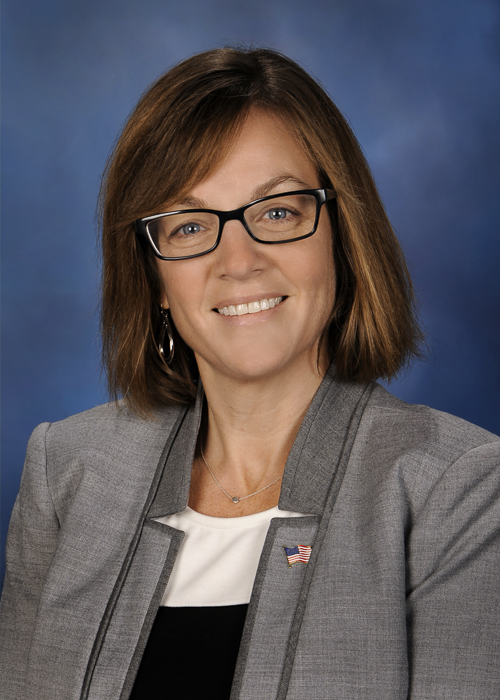
Rep. Katie Stuart
Sponsored bills
Creates the Elder Abuse Task Force to investigate the effectiveness of current elder protective services and laws, examine barriers to prosecution and strategies to increase public awareness of elder abuse and reporting, study training resources and best practices in other states, and identify a long-range plan to combat elder abuse. House Floor Amendment No. 1 Changes the time period for members to be appointed to the task force from 30 to 60 days. Changes the date that the final report is due from January 1, 2020 to January 1, 2021. Makes other corrections for grammar purposes.
Urges all four caucuses and the Governor to consider the Kaskaskia Watershed Comprehensive Plan when creating the upcoming fiscal year budget.
Urges the General Assembly to take action to modernize its early childhood education funding and teacher qualification standards to address the early childhood workforce crisis. Urges the Governor of Illinois to increase early childhood education provider representation on the Illinois Learning Council, the DCFS Daycare Advisory Council, the DHS Childcare Advisory Council, and the Professional Development Advisory Council to assure provider voices are heard as early childhood education policy is developed and implemented.
Authorizes the State Treasurer to issue official commemorative medallions honoring the 100th anniversary of the ratification of the 19th Amendment to the United States Constitution. The State Treasurer shall contract for the production, marketing, distribution, and sale of the medallions.
Encourages the Illinois State Board of Education, the Illinois Community College Board, and the Department of Commerce and Economic Opportunity to work collaboratively with each other and with school districts, community colleges, business and industry, and other organizations to ensure alignment among the Perkins and WIOA plans and priority occupational areas. Directs the ISBE, ICCB, and DCEO to report to the General Assembly and the P-20 Council on how the State's draft versions of the Perkins and WIOA plans address the foregoing recommendations. House Floor Amendment No. 2 Deletes everything. Replaces it with similar language encouraging ISBE and ICCB to include within the State's Perkins Plan certain components. Directs the ISBE, ICCB, and the IWIB to work collaboratively to ensure alignment among Perkins and WIOA plans. Directs the ISBE, ICCB, and IWIB to report to the General Assembly and the P-20 Council on how the State's draft versions of the Perkins and WIOA plans address the foregoing recommendations.
Amends the Compassionate Use of Medical Cannabis Pilot Program Act. Makes a technical change in a Section concerning the short title. House Committee Amendment No. 1 Adds reference to: 10 ILCS 5/9-45 30 ILCS 500/1-10 35 ILCS 5/201 from Ch. 120, par. 2-201 35 ILCS 105/3-10 35 ILCS 110/3-10 from Ch. 120, par. 439.33-10 35 ILCS 115/3-10 from Ch. 120, par. 439.103-10 35 ILCS 120/2-10 105 ILCS 5/22-33 225 ILCS 60/22 from Ch. 111, par. 4400-22 410 ILCS 130/7 410 ILCS 130/10 410 ILCS 130/30 410 ILCS 130/35 410 ILCS 130/36 410 ILCS 130/55 410 ILCS 130/57 410 ILCS 130/62 410 ILCS 130/75 410 ILCS 130/130 410 ILCS 130/195 410 ILCS 130/200 410 ILCS 130/135 rep. 410 ILCS 130/220 rep. 625 ILCS 5/2-118.2 625 ILCS 5/6-206.1 from Ch. 95 1/2, par. 6-206.1 625 ILCS 5/11-501 from Ch. 95 1/2, par. 11-501 625 ILCS 5/11-501.9 720 ILCS 550/5.3 Replaces everything after the enacting clause. Amends the Compassionate Use of Medical Cannabis Pilot Program Act. Removes the word "Pilot" from the Act's short title and the Compassionate Use of Medical Cannabis Pilot Program. Makes conforming changes throughout the Act and statutes. Provides that autism, chronic pain, irritable bowel syndrome, migraines, osteoarthritis, anorexia nervosa, Ehlers-Danlos Syndrome, Neuro-Behcet's Autoimmune Disease, neuropathy, polycystic kidney disease, superior canal dehiscence syndrome, and medical conditions or symptoms for which a person may benefit from the use of medical cannabis are debilitating medical conditions. Provides that possessing cannabis in a vehicle not open to the public unless the medical cannabis is in a reasonably secured, sealed, container (rather than a tamper-evident container) and reasonably inaccessible while the vehicle is moving is not permitted. Removes language providing that a physician may not accept, solicit, or offer any form of remuneration from or to a qualifying patient, primary caregiver, cultivation center, or dispensing organization other than accepting payment from a patient for the fee associated with a required examination. Provides that a qualifying patient under the age of 18 shall not be prohibited from having up to 3 (instead of 2) designated caregivers. Provides that the Department of Public Health shall establish procedures to permit qualified veterans to participate in the Opioid Alternative Pilot Program. Provides that any Department of Public Health-approved quantity waiver process must be made available to qualified veterans. Provides that the Department of Public Health shall provide for immediate changes to a registered qualifying patient's designated registered dispensing organization. Provides that the Department of Financial and Professional Regulation shall adopt rules permitting returns, and potential refunds, for damaged or inadequate products. Repeals a provision concerning changing a designated dispensing organization. Repeals a provision repealing the Act on July 1, 2020.
Directs the Illinois Community College Board and the Illinois Board of Higher Education to establish a joint advisory council to study how Illinois can maximize the number of students completing credit-bearing certificate programs and two-year or four-year degree programs and enter into high-skill, high-wage occupations and to develop a plan to increase those numbers. Senate Committee Amendment No. 1 Deletes everything. Replaces it with similar language directing the Illinois Community College Board and the Illinois Board of Higher Education to establish a joint advisory council to study how Illinois can maximize the number of students completing credit-bearing certificate programs and two-year or four-year degree programs and enter into high-skill, high-wage occupations and to develop a plan to increase those numbers. Changes the original membership of the advisory council. House Floor Amendment No. 1 Deletes everything. Replaces it with similar language directing the Illinois Community College Board and the Illinois Board of Higher Education to establish a joint advisory council to study how Illinois can maximize the number of students completing credit-bearing certificate programs and two-year or four-year degree programs and enter into high-skill, high-wage occupations and to develop a plan to increase those numbers. Changes the membership of the advisory council.
Directs the Auditor General to conduct a management audit of the Department of Human Services' process for selecting Independent Service Coordination agencies for the Fiscal Year commencing July 1, 2019.
Amends the Illinois Income Tax Act. Provides that a taxpayer who is a family caregiver is eligible to receive a nonrefundable income tax credit in an amount equal to 100% of the eligible expenditures incurred by the taxpayer during the taxable year related to the care of an eligible family member, but not exceed $1,500 for the same eligible family member. Provides that the term "eligible family member" means a person who: (1) is at least 18 years of age during a taxable year; (2) requires assistance with at least one activity of daily living; (3) is a resident of the State; and (4) is related to the family caregiver. Effective immediately. Correctional Note (Dept of Corrections) There is no fiscal or population impact on the department. Pension Note (Government Forecasting & Accountability) HB 2974 amends the Illinois Income Tax Act in a way that does impact any pension system. Judicial Note (Admin Office of the Illinois Courts) This legislation would neither increase nor decrease the number of judges needed in the State of Illinois. State Debt Impact Note (Government Forecasting & Accountability) This bill would not change the amount of authorization for any type of State-issued or State-supported bond, and, therefore, would not affect the level of State indebtedness. Land Conveyance Appraisal Note (Dept. of Transportation) No land conveyances are included in this bill; therefore, there are no appraisals to be filed. Housing Affordability Impact Note (Housing Development Authority) This bill will have no effect on the cost of constructing, purchasing, owning, or selling a single-family residence. State Mandates Fiscal Note (Dept. of Commerce & Economic Opportunity) This bill does not create a State mandate Home Rule Note (Dept. of Commerce & Economic Opportunity) This bill does not pre-empt home rule authority. Balanced Budget Note (Office of Management and Budget) Please be advised that the Balanced Budget Note Act does not apply to this bill, as it is not a supplemental appropriation that increases or decreases appropriations. Under the Act, a balanced budget note must be prepared only for bills that change a general funds appropriation for the fiscal year in which the new bill is enacted. Fiscal Note (Dept. of Revenue) The fiscal impact of HB 2974 would be a reduction in income tax revenue by an estimated $870 million to $1.74 Billion per year depending on the assumed claim rate. This estimate is based on data from the AARP "Caregiving in the US" 2015 report. From there we estimate that there are 1.36 Million caregivers caring for an adult in Illinois. Following the bill's language, we reduce that number to account only for those caring for an eligible family member. Based on the same data source we arrive to 1.16 Million caregivers that may qualify for this tax credit. When we apply the credit amount of $1,500 per qualified taxpayers to this latest figure, the result is $1.74 Billion in cost to the state - the upper limit of our estimate. The lower limit of the estimate accounts for the fact that in approximately 33% of the cases there is not a sole caregiver (based on the same data source). It also assumes that only 3 out of every 4 qualified taxpayers will claim the credit. For these two reasons in the lower limit we reduce the cost estimate to $870 Million per year, which is 50% of the upper limit. The definition of eligible expenditures is very broad, including costs associated with improvements or alterations to the family residence to permit an eligible family member to remain mobile, safe, and independent; the cost to purchase or lease equipment necessary to assist an eligible family member in carrying on one or more activities of daily living; and the cost of other goods and services that assist in providing care, including personal care attendants, transportation, and legal and financial services. For this reason, we believe that it is reasonable to expect that taxpayers may easily reach to the full credit amount of $1,500 that the bill establishes. For comparison purposes, consider that there are almost 1.6 million returns clarifying retirement income in the state (according to the latest available return data, FY16). This group of taxpayers would likely be the main beneficiary of this bill proposal. This fact reinforces our findings. Furthermore, data from the Centers for Medicare and Medicaid off ice indicates that the home health care cost in Illinois is around $4.2 Billion annually. This additional fact further strengthens our estimated cost range.