

Creates the Illinois Broadband Deployment, Equity, Access, and Affordability Act of 2022. Provides that access to affordable, reliable, high-speed broadband service is essential to full participation in modern life in the State and throughout the United States. Defines terms. Provides that the Department of Commerce and Economic Opportunity shall establish and implement a statewide broadband service grant program. Provides that the Department shall use money from the grant program only for the exclusive purpose of awarding grants to applicants for projects that are limited to the construction and deployment of broadband service into unserved areas in the State and for the Department's cost to administer the program. Provides that the Department shall not award grant money to a governmental entity or educational institution. Provides that the Department shall not, as a condition of an award of grant money, impose an open network architecture requirement, rate regulation, or other term or condition of service that differs from the applicant's terms or conditions of service in its other service areas. Includes provisions providing for the criteria for determining the award of funds, the information an applicant must provide for an application for a grant, the priority by which the Department shall follow in granting awards, and when the Department shall not award a grant to an applicant. Provides that when a grant is awarded, the Department shall provide notice on its website of each application receiving a grant. Provides that the Department shall require an applicant awarded a grant to submit a semi-annual report from the time the applicant receives the grant to 3 years after completion of the project. Makes a conforming change in the Freedom of Information Act. Effective immediately.
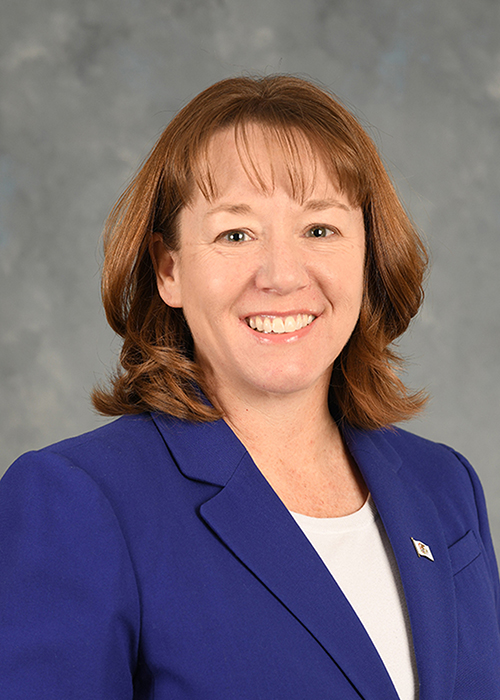
Rep. Amy Elik
Sponsored bills
Amends the Illinois Vehicle Code. Reduces the trailer flat weight tax for maximum loads of 3,000 pounds and less from $118 to $18. Effective immediately.
Urges Governor JB Pritzker, the Illinois State Board of Education, and the Illinois Department of Public Health to reinstate local control and allow duly elected school board members to make decisions on COVID-19 mitigation efforts that best fit the community and school districts in which they serve.
Amends the Criminal Code of 2012. Provides that a person commits aggravated battery when, in committing a battery, other than by discharge of a firearm, he or she knows the individual battered to be a health care worker (rather than a nurse) while in the performance of his or her duties as a health care worker (rather than a nurse). Defines "health care worker".
Repeals the Statewide Use of Force Standardization Act, the No Representation Without Population Act, the Reporting of Deaths in Custody Act, and the Task Force on Constitutional Rights and Remedies Act. Restores various provisions of specified Acts to the form in which they existed before their amendment by Public Acts 101-652 and 102-28, except for changes made to the Crime Victims Compensation Act. Effective immediately.
Amends the Wildlife Code. Provides in various provisions an exemption to carry a firearm on Department of Natural Resources property in accordance with the Firearm Concealed Carry Act.
Amends the Criminal Code of 2012. Creates the offense of peace officer targeting. Provides that a person commits the offense when, by reason of the actual or perceived employment as a peace officer of another individual, regardless of the existence of any other motivating factor or factors, he or she commits assault, battery, aggravated assault, intimidation, stalking, cyberstalking, misdemeanor theft, criminal trespass to residence, misdemeanor criminal damage to property, criminal trespass to vehicle, criminal trespass to real property, mob action, disorderly conduct, transmission of obscene messages, harassment by telephone, or harassment through electronic communications. Provides that peace officer targeting is a Class 3 felony for a first offense and a Class 2 felony for a second or subsequent offense. Provides that the State's Attorney of each county shall submit an annual report to the General Assembly outlining: (1) the number of offenses in which a peace officer was a victim, (2) the charges filed, and (3) the ultimate disposition of each case.
Makes application to Congress under the provisions of Article V of the Constitution of the United States for the calling of a convention of the states limited to proposing amendments to the Constitution of the United States that impose fiscal restraints on the federal government, limit the power and jurisdiction of the federal government, and limit the terms of office for its officials and for members of Congress.
Amends the General Assembly Compensation Act. Establishes the fiscal year 2022 mileage reimbursement rate and allowance for lodging and meals. Amends the Compensation Review Act. Prohibits cost-of-living adjustments for or during the fiscal year beginning July 1, 2021 for State government legislative and executive elected officers and appointees in positions for which the Compensation Review Board previously recommended or determined compensation. Effective immediately.
Amends the Criminal Code of 2012. Provides that when the victim is under 18 years of age at the time of the offense or a person with a disability, a prosecution for grooming may be commenced within 10 years after the discovery of such an offense by a person or agency having the legal duty to report the offense or in the absence of such discovery, within 10 years after the proper prosecuting officer becomes aware of the offense. In the definition provisions of the Sex Offenses Article of the Code, includes "sibling" in the definition of "family member" and includes in the definition of "unconscious of the nature of the act", incapable of resisting because the victim was asleep, unconscious, or surprised such that the victim could not give voluntary, intelligent, and knowing agreement to the sexual act. In the definition of "family member" deletes provision that if the victim is a child under 18 years of age, an accused must have resided in the household with the child continuously for at least 6 months. Provides that a person also commits grooming when he or she knowingly engages in a pattern of conduct that entices, persuades, induces, or coerces a child to engage or participate in criminal sexual activity or is for the purpose of sexual gratification or arousal of the victim, the accused, or another. Increases the penalty for grooming from a Class 4 to a Class 3 felony. Changes references in the Code from "child pornography" to "child sexual abuse images". Defines "pattern" and "sexual activity". Amends the Code of Criminal Procedure of 1963. Provides that the court may set any conditions it finds just and appropriate on the taking of testimony of a victim or witness who is under 18 years of age or an intellectually disabled person or a person affected by a developmental disability (rather than a victim who is a child under the age of 18 years or a moderately, severely, or profoundly intellectually disabled person or a person affected by a developmental disability), involving the use of a facility dog in any criminal proceeding (rather than in a prosecution of criminal sexual assault, predatory criminal sexual assault of a child, aggravated criminal sexual assault, criminal sexual abuse, aggravated criminal sexual abuse, or any violent crime). Makes changes concerning the admissibility of evidence in prosecutions for involuntary servitude, involuntary sexual servitude of a minor, or trafficking in persons. House Floor Amendment No. 1 Adds reference to: 20 ILCS 4026/10 110 ILCS 57/5 225 ILCS 10/3.3 325 ILCS 5/4.5 325 ILCS 5/11.1 from Ch. 23, par. 2061.1 325 ILCS 15/3 from Ch. 23, par. 2083 325 ILCS 40/2 from Ch. 23, par. 2252 325 ILCS 47/10 705 ILCS 135/15-70 705 ILCS 405/3-40 725 ILCS 5/124B-10 725 ILCS 5/124B-100 725 ILCS 5/124B-420 725 ILCS 5/124B-500 725 ILCS 215/2 from Ch. 38, par. 1702 725 ILCS 215/3 from Ch. 38, par. 1703 730 ILCS 5/3-1-2 from Ch. 38, par. 1003-1-2 730 ILCS 5/3-12.5-10 730 ILCS 5/5-5-3 730 ILCS 5/5-5-3.2 730 ILCS 5/5-8-1 from Ch. 38, par. 1005-8-1 730 ILCS 5/5-8-4 from Ch. 38, par. 1005-8-4 730 ILCS 5/5-9-1.7 from Ch. 38, par. 1005-9-1.7 730 ILCS 5/5-9-1.8 730 ILCS 150/2 from Ch. 38, par. 222 740 ILCS 128/10 Replaces everything after the enacting clause. Reinserts the provisions of the introduced bill, except: (1) changes the statute of limitations for grooming to provide that when the victim is under 17 years of age at the time of the offense or is a person with a disability, a prosecution for grooming may be commenced within 10 years after the victim or the person with a disability attains 17 years of age; (2) changes the name of the offenses of child sexual abuse material and aggravated child sexual abuse material to child sexual abuse material and aggravated child sexual abuse material; (3) retains the Class 4 felony penalty for grooming; (4) deletes references to criminal transmission of HIV in various statutes; (5) in the definitions provisions of the Sex Offenses Article of the Criminal Code of 2012, provides that "family member" also means, if the victim is a child under 18 years of age, an accused who has resided in the household with the child continuously for at least 3 (rather than 6) months; (6) provides that a person also commits sexual exploitation of a child if in the presence or virtual presence, or both, of a child and with knowledge that a child or one whom he or she believes to be a child would view his or her acts, that person knowingly entices, coerces, or persuades a child to participate in the production of the recording or memorializing a sexual act of persons ages 18 or older; provides that a violation is a Class 4 felony for a first offense; and a Class 3 felony for a second or subsequent offense, or if the person has been previously convicted of a sex offense; and (7) amends various Acts to change references to "child pornography" to "child sexual abuse material".