Urges the federal government to allocate more funding toward finding a cure for Lyme disease. Encourages the Illinois State Board of Education to begin health education to prevent tick bites for children who represent the highest risk group for tick-borne diseases. Declares the month of May 2025 as Lyme Disease Awareness Month in the State of Illinois.
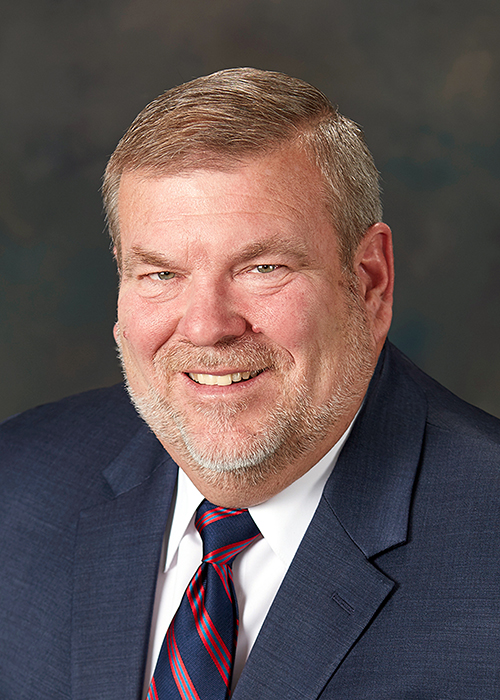
Rep. Charlie Meier
Sponsored bills
Declares April 2025 and April 2026 as Deaf History Month in the State of Illinois and encourages Illinoisans to become familiar with and celebrate the contributions of deaf Illinoisans to our state and nation.
Commends the brave actions of Andy Goforth and Daven Hug and honors them for nobly putting their lives on the line to protect some of Illinois' most vulnerable residents.
Declares the month of August 2025 as Spinal Muscular Atrophy Awareness Month in the State of Illinois. Encourages continuing research on spinal muscular atrophy and community support for those affected by the disease.
Declares 2026 as the Illinois Route 66 Centennial Year in the State of Illinois. Encourages communities, historical societies, and state agencies to organize commemorative events and educational initiatives to honor this historic occasion.
Declares the week of May 5 through May 11, 2025 as Read with Your Child Week in the State of Illinois. Encourages all Illinois schools to promote Read with Your Child Week with appropriate activities.
Maddy summaryHR 29 declares September 15 through September 21, 2025, as Farm Safety Week in the State of Illinois. This bill officially recognizes and highlights the importance of safety practices for the agricultural community within the state during that designated week.
Amends the Military Veterans Assistance Act. Expands the Act to allow for the formation of multi-county Veterans Assistance Commissions. Provides that veteran service organizations located in 2 or more adjacent counties having a population of 60,000 or less may enter into an agreement to come together and jointly form a multi-county Veterans Assistance Commission to serve the adjacent counties in accordance with the Act. Provides that a multi-county Veterans Assistance Commission may also be formed under an agreement between an existing county Veterans Assistance Commission and a veteran service organization located in an adjacent county that is without a veterans assistance commission and has a population of 60,000 or less. Requires an agreement to form and maintain a multi-county Veterans Assistance Commission to set forth: (i) the distribution of funding with respect to each member county; (ii) the location of the Commission's office; (iii) the type of services provided; (iv) the superintendent selection or appointment process; (v) Commission rules and policies; and (vi) the composition of delegates and alternates on the Commission. Provides that multi-county Veterans Assistance Commissions shall have the same powers and duties under the Act as Veterans Assistance Commissions that serve one county. Makes corresponding changes in the Counties Code, the Illinois Public Aid Code, the Drug Court Treatment Act, the Veterans and Servicemembers Court Treatment Act, and the Mental Health Court Treatment Act. Effective immediately.
Amends the Administration Article of the Illinois Public Aid Code. Provides that subject to appropriation and any necessary federal waivers or approvals, the Department of Human Services shall develop and implement a transitional benefits program for Temporary Assistance for Needy Families (TANF) and the Supplemental Nutrition Assistance Program (SNAP) that is designed in such a way that a TANF or SNAP beneficiary will not experience an immediate loss of benefits should the beneficiary's income exceed the maximum allowable income under the TANF or SNAP program. Provides that the transitional benefits offered shall gradually step down the beneficiary's monthly benefit proportionate to the increase in the beneficiary's income. Sets forth monthly benefits amounts based on monthly household income. Requires beneficiaries to comply with TANF and SNAP work requirements. Provides that, subject to appropriation, the Department shall implement, by July 1, 2026, a program to allow recipients to receive transitional child care benefits without the requirement that such recipients first be eligible for full child care benefits. Provides that transitional child care benefits shall be determined on a sliding scale for recipients with household incomes in excess of the eligibility level for full benefits. Sets forth the sliding benefit schedule for the program. Requires the Department to track the number of participants in the program and issue an annual report to the General Assembly by September 1, 2027 and by September 1 each year thereafter, detailing the effectiveness of the program in encouraging recipients to secure employment earning an income greater than the maximum wage eligible for the full child care benefit. Requires the Department to pursue all necessary waivers from the federal government to implement the program. Provides that upon federal approval, the Department shall limit any initial application for the SNAP, TANF, or the Child Care Assistance Program to a one-page form that is easily accessible on the Department's website. Provides that persons participating in TANF, SNAP, or the Child Care Assistance Program who are required to complete a periodic eligibility review form, may submit such form as an attachment to their Illinois income tax return. Requires the Department of Human Services and the Department of Revenue to adopt rules. Effective immediately.

Creates the Department of Government Efficiency Act. Establishes the Department of Government Efficiency in the Office of the Auditor General for certain purposes. Provides that the Office of the Auditor General shall provide administrative and other support to the Department. Provides that the Department shall be led by a Board of Directors, chaired by a Chairperson elected annually at the first meeting of the year from among the directors. Lists 5 directors, including the Auditor General or the Auditor General's designee and 4 directors appointed by leaders of the General Assembly. Provides that the Board may appoint members of the Department who are experts in certain fields or with certain experience who shall serve under the Board. Provides that directors and members shall serve without compensation but shall be reimbursed for their reasonable and necessary expenses from funds appropriated for that purpose. Provides for powers of the Department, including advising the Office of the Auditor General regarding audits and investigations. Provides that the Board may request a State agency head to provide all information requested by the Board and possessed by the State agency to the Board. Provides that the Department may adopt rules. Provides that the Department shall issue quarterly reports to the Governor and the General Assembly, as well as other discretionary reports. Sets forth findings and a statement of purpose. Defines terms. Amends the Illinois State Auditing Act to provide that the Auditor General may consult with the Department of Government Efficiency regarding audits and investigations.