States that the Interstate 290 Corridor is a project of state, regional, and national significance that will improve multimodal transportation and connectivity and promote economic development. Further states that the goals of reconstructing the Interstate 290 Corridor should include enhancements to racial equity, promotion of open space, community enhancement, and sustainable and innovative practices. Formally requests that the U.S. Department of Transportation provide sufficient resources to the Illinois Department of Transportation to begin engineering and advance this project expeditiously.
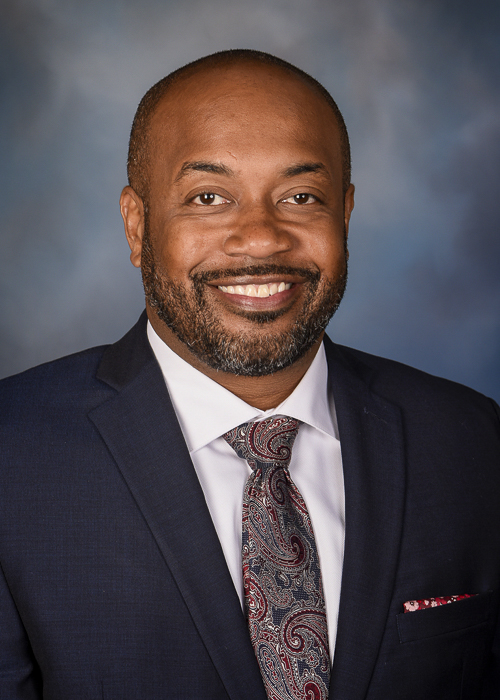
Rep. Omar Williams
Sponsored bills
Amends the Hospital Licensing Act. Requires hospitals that receive a property tax exemption under a provision of the Property Tax Code concerning exemptions related to access to hospital and health care services by low-income and underserved individuals to refer patients who receive treatment at the hospital's emergency room to a financial counselor before the patient is discharged.
Amends the Abused and Neglected Child Reporting Act. Provides that notwithstanding any other law or rule to the contrary, whenever a child protective investigator of a Child Protective Service Unit must visit a home or residence to investigate a report of abuse or neglect, at least one local law enforcement officer must accompany the child protective investigator to offer assistance and must remain with the child protective investigator for the duration of the visit until the child protective investigator is safely clear of the home or residence.
Amends the Criminal Identification Act. Provides that a petitioner may petition the circuit court to expunge the records of his or her arrests and charges not initiated by arrest when each arrest or charge not initiated by arrest sought to be expunged resulted in: (1) an order of misdemeanor diversion under the Unified Code of Corrections, and the diversion program was successfully completed by the petitioner; or (2) a conviction for possession of certain specified amounts of a controlled substance; (3) a conviction for possessing less than 5 grams of methamphetamine; or (4) a conviction where the statutory penalty changed as a result of a resentencing hearing under the Code of Criminal Procedure of 1963. Amends the Illinois Controlled Substances Act. Changes the penalties for the manufacture, delivery, or possession with intent to manufacture or deliver, or possession of a controlled substance. Amends the Methamphetamine Control and Community Protection Act. Changes the penalties for methamphetamine delivery or possession. Amends the Code of Criminal Procedure of 1963. Provides that a person serving a sentence, including a sentence of probation, for an offense for which the statutory penalty has been subsequently reduced under the amendatory Act to petition the trial court that entered the judgment of conviction to request resentencing in accordance with the statutory penalty in effect at the time of the filing of the petition. Amends the Unified Code of Corrections to create a Misdemeanor Diversion Program. Fiscal Note (Admin Office of the Illinois Courts) HB3447 amends the Criminal Identification Act regarding expungements. Based on a review of the bill, it has been determined that the proposed legislation would have no fiscal impact on the state appropriation to the judicial branch. It is not possible to determine what fiscal impact, if any, the bill would have on local judicial budgets.
Amends the School Code. Provides for dyslexia screening guidelines and rules. Requires the State Board of Education to employ at least 5 dyslexia specialists or dyslexia therapists with a minimum of 5 years of field experience in screening, identifying, and treating dyslexia and related disorders to provide technical assistance and training. Provides that, beginning with the 2022-2023 school year, each school district must screen students in grades kindergarten through second (and in higher grades under certain circumstances) for the risk factors of dyslexia using a universal screener approved by the State Board. Sets forth what the screening must include. Provides for additional screening for a student who is determined to be at risk, or at some risk, for dyslexia to determine if a student has the characteristics of dyslexia. Requires the use of a multi-tiered system of support framework if screening indicates that a student has some risk factors for dyslexia or has the characteristics of dyslexia. Sets forth provisions concerning exceptions to screening, dyslexia intervention services, and reporting. Effective July 1, 2022.
Creates the Ballistics Information Act. Provides that, whenever a law enforcement agency recovers any spent shell casing at a crime scene or has reason to believe that the recovered spent shell casing is related to or associated with the commission of a crime or the unlawful discharge of a firearm, the law enforcement agency shall, within a 24-hour period, submit the ballistics information to the National Integrated Ballistics Identification Network. Provides that, whenever a law enforcement agency seizes or recovers a semiautomatic firearm that is deemed suitable to be entered into the National Integrated Ballistics Identification Network system that was: unlawfully possessed, used for any unlawful purpose, recovered from the scene of a crime, is reasonably believed to have been used or associated with the commission of a crime, or is acquired by the law enforcement agency as an abandoned or discarded firearm, the law enforcement agency shall arrange for every such firearm to be test fired within 24 hours and the results of that test firing to be submitted to the National Integrated Ballistics Identification Network to determine whether the firearm is associated with or related to a crime, criminal event, or any individual associated with or related to a crime or criminal event or reasonably believed to be associated with or related to a crime or criminal event.
Amends the Illinois Municipal Code. Provides that municipalities shall, at a minimum, perform the following inspections on high-rise buildings (specified buildings that stand 80 feet or more above grade) in lakeshore communities (developed property half a mile or less from Lake Michigan): (1) structural, subsurface, and foundation inspections every 4 years; and (2) facade inspections every 4 years between the structural inspections. Allows, in lieu of a municipal inspection, the owner of a high-rise building to notify the municipality that the owner intends to hire a private inspector to perform the inspections. Provides that the inspector shall create and file an inspection report with the municipality in which the high-rise building is located. Provides for penalties for noncompliance. Provides that the city council of the municipality shall, by ordinance, provide for procedures for inspections and reports required under the provisions. Limits home rule powers. Effective immediately.
Amends the General Assembly Operations Act. Provides that no person may serve more than 10 consecutive years in any of the following leadership roles: Speaker of the House of Representatives, President of the Senate, Minority Leader of the House of Representatives, and Minority Leader of the Senate. Provides that the limitations imposed by the amendatory Act apply to service beginning on and after the second Wednesday in January of 2023.
Amends the Probate Act of 1975. Removes language providing that a person who has been convicted of a felony is not qualified to act as an executor or an administrator.
Amends the Criminal Code of 2012. Makes a technical change in a Section concerning the unlawful sale of public conveyance travel tickets to a minor. House Floor Amendment No. 3 Deletes reference to: 720 ILCS 5/10-8 Adds reference to: 5 ILCS 140/7.5 20 ILCS 3930/7.10 new 605 ILCS 140/5 Replaces everything after the enacting clause. Amends the Illinois Criminal Justice Information Act. Provides that the Illinois Criminal Justice Information Authority shall establish a pilot program to award $100 to any individual who supplies video or audio footage from the individual's residential security camera that materially contributes to a criminal conviction. Provides that the Authority shall distribute the award to the law enforcement agency investigating or the State's Attorney investigating the crime, who shall pay the individual directly. Provides that, to be eligible for an award under the pilot program, the State's Attorney that prosecuted the offender must certify to the Office of the Attorney General that (i) the individual supplied video or audio footage from the individual's residential security camera and (ii) the video or audio footage supplied by the individual contributed to the criminal conviction of an offender. Provides that the pilot program shall terminate after a total of $1,000,000 has been awarded under the pilot program. Amends the Expressway Camera Act. Adds the State highway system in the counties of Boone, Bureau, Champaign, DeKalb, DuPage, Grundy, Henry, Kane, Kendall, Lake, LaSalle, Macon, Madison, McHenry, Morgan, Peoria, Rock Island, Sangamon, St. Clair, Will, and Winnebago to the Act. Provides that images from the cameras may also be used in the investigation of any forcible felony, to detect highway conditions, and to facilitate highway safety and incident management. Provides that images from the cameras may be used by any law enforcement agency conducting an active law enforcement investigation. Provides that images from the cameras are exempt from disclosure under the Freedom of Information Act. Provides that all images and footage from the cameras must be deleted within 180 days, unless the images or footage is relevant to an ongoing investigation or pending criminal trial. Provides that cameras shall not be used to monitor individuals or groups in a discriminatory manner contrary to applicable State or federal law. Provides that each law enforcement agency shall report statistics to the Illinois Criminal Justice Information Authority and that no later than June 30, 2023, the Illinois Criminal Justice Information Authority shall issue a report concerning the instances in which camera-captured information lead to a successful conviction. Makes changes concerning funding for the program. Authorizes the Attorney General or local State's Attorney to prosecute certain offenses. Makes other changes. Effective immediately.