Issue · Criminal Justice

Criminal Justice

Every criminal justice bill, vote, and legislator stance in Illinois, automatically classified by Maddy, our AI policy reader.

Total bills
733
104th Regular Session
Top supporter
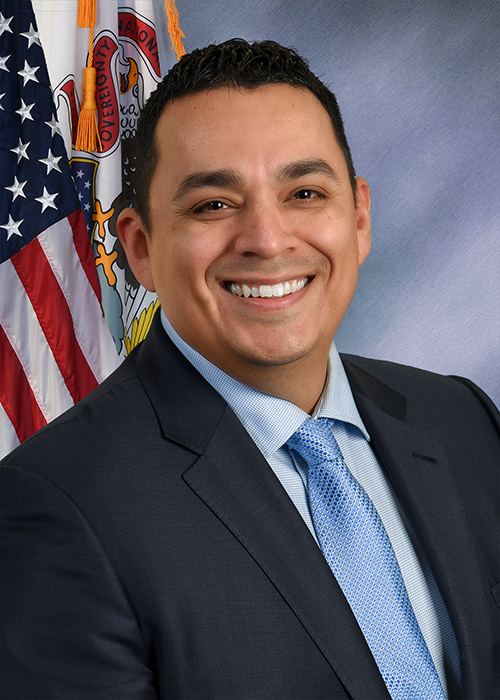
Joyce Mason
100% support rate
Top opponent
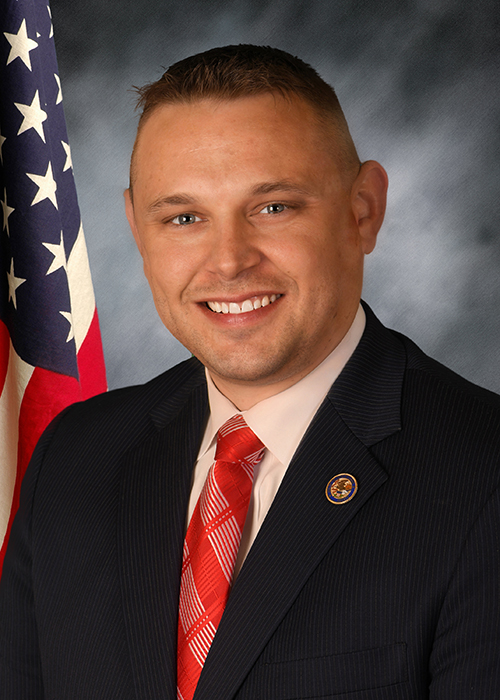
Marty McLaughlin
0% support rate
Ranked legislators
10
5 support · 5 oppose
Key legislators

Who's moving criminal justice in Illinois

Legislators moving criminal justice in Illinois
Legislator Party Stance Support rate Votes
Joyce Mason
Joyce Mason House · District 61
D
Strong +
100% 124
Don Harmon
Don Harmon Senate · District 39
D
Strong +
100% 45
Doris Turner
Doris Turner Senate · District 48
D
Strong +
100% 47
LJ
Lilian Jiménez House · District 4
D
Strong +
99% 195
Maurice West
Maurice West House · District 67
D
Strong +
99% 185
Marty McLaughlin
Marty McLaughlin House · District 52
R
Strong −
0% 129
Li Arellano
Li Arellano Senate · District 37
R
Strong −
0% 57
Brad Halbrook
Brad Halbrook House · District 107
R
Strong −
2% 131
Regan Deering
Regan Deering House · District 88
R
Strong −
2% 124
Neil Anderson
Neil Anderson Senate · District 47
R
Strong −
3% 100
Showing 471–480 of 733 bills

All criminal justice bills

in committee · Illinois · House Apr 17, 2026

HB 1611: CRIM PRO-WARRANT REQUIREMENTS

Amends the Code of Criminal Procedure of 1963. Provides that a no-knock search warrant shall not be issued when the only offense alleged is possession of a controlled substance unless there is probable cause to believe that the controlled substance is for other than personal use. Provides that when an officer, having a warrant for the search of a dwelling, executes the search warrant, the officer shall: (1) execute the warrant between the hours of 9 a.m. and 7 p.m. unless the judge, for good cause, expressly authorizes execution at another time; (2) be readily identifiable as a law enforcement officer in uniform or wearing a visible law enforcement badge that clearly identifies the person as a law enforcement officer; (3) In counties of 90,000 or more inhabitants, be a member of a special weapons and tactics team or special response team, or another established team or unit trained and tasked with resolving high-risk situations and incidents, who has received appropriate training in the execution of arrest and search warrants authorizing entry without notice; (4) wear and activate a body-worn camera as required by the use of force in execution of a search warrant when entering a premises for the purpose of enforcing the law; (5) have a certified or licensed paramedic or emergency medical technician in proximity and available to provide medical assistance, if needed; (6) be prohibited from pointing firearms at individuals under 18 years old, unless there is clear and present danger to the officer or another person; and (7) knock and announce the officer's presence at a volume loud enough for the officer to reasonably believe the occupants inside can hear, allow a minimum of 30 seconds of time before entering given the size of the dwelling for someone to get to the door, and delay entry if the officer has reason to believe that someone is approaching the dwelling's entrance with the intent of voluntarily allowing the officer to enter the dwelling; except that this provision does not apply if the circumstances known to the officer at the time provide an objectively reasonable basis to believe that a no-knock entry or not waiting a reasonable amount of time is necessary because of an emergency threatening the life of or grave injury to a person, provided that the imminent danger is not created by the law enforcement officers executing the search. Makes other changes.
in committee · Illinois · House Apr 11, 2025

HB 3431: CD CORR-TASK FORCE-ADA

Amends the Unified Code of Corrections. Provides that the Department of Corrections shall convene a special task force to study and propose recommendations regarding ADA requirements in correctional institutions and facilities for aging committed persons with life sentences. Provides that the task force shall be composed of no more than 22 members appointed by the Director of Corrections. Provides that the Director of Corrections shall, in appointing the task force, attempt to ensure that the membership on the task force represents the geographic diversity of the State. Provides that members of the task force shall serve without compensation and may not receive reimbursement for any expenses incurred in performing their duties as members of the task force. Provides that the task force shall study and make recommendations regarding the following topics: (1) the number of individuals in correctional institutions and facilities who have disabilities, including sight, hearing, and mobility issues; (2) how the population in paragraph (1) are being accommodated; (3) how many committed persons are not having their needs met; and (4) what areas, as it relates to ADA accessibility, correctional institutions and facilities that are unable to provide adequate accommodations and care for aging committed persons with disabilities. Provides that the task force must submit its recommendations as to any changes in the ADA standards for correctional institutions and facilities to the General Assembly on or before July 1, 2026.
Sub-Topics Corrections
in committee · Illinois · House Feb 18, 2025

HB 3316: CD CORR-DEPT OMBUDSPERSON

Amends the Unified Code of Corrections. Provides that the Department of Corrections Ombudsperson Bureau is established as a separate bureau within the Department of Corrections. Provides that the Governor shall appoint a Director of the Bureau within 30 days of the effective date of the amendatory Act. Provides that the Ombudsperson may receive, investigate, and attempt to resolve complaints that the Department: (1) violated a specific law, rule, or Department written policy; or (2) endangered the health or safety or any person. Provides that if the Ombudsperson discovers evidence that the Ombudsperson reasonably believes constitutes the commission of a crime, the Ombudsperson immediately shall, if the Ombudsperson considers it appropriate, inform the Director of the Department, who shall conduct an investigation. Provides that an Ombudsperson shall be given: (1) appropriate access to the records of an offender who files a complaint; and immediate access to any correctional facility administered or supervised by the Department. Amends the Criminal Code of 2012. Creates the offense of obstruction of the Ombudsperson. Provides that the offense is a Class A misdemeanor. Makes other changes.
Sub-Topics Corrections
in committee · Illinois · Senate Jan 17, 2025

SB 131: AGE OF SEXUAL CONSENT-18

Amends the Criminal Code of 2012. In the statutes concerning the offenses of criminal sexual assault, aggravated criminal sexual assault, predatory criminal sexual assault of a child, criminal sexual abuse, and aggravated criminal sexual abuse, increases the age of consensual acts of sexual penetration or sexual conduct from 17 years of age to 18 years of age. In those statutes, increases from 17 to 18 years of age for which more enhanced penalties may be imposed for violations of those provisions.
Sub-Topics Violent Crime
in committee · Illinois · Senate May 28, 2026

SB 65: ISOLATED CONFINEMENT RESTRICT

Creates the Isolated Confinement Restriction Act. Provides that the Act may be referred to as the Nelson Mandela Act. Provides that a committed person may not be in isolated confinement for more than 10 consecutive days. Provides that a committed person may not be in isolated confinement for more than 10 days in any 180-day period. Provides that the provision of basic needs and services, such as nutritious food, clean water, hygiene supplies, clothing, bedding and mattress, religious materials, legal materials, access to grievance forms, and access to medical and mental health, shall not be restricted as a form of punishment or discipline for committed persons in isolated confinement. Provides that a committed person in protective custody may opt out of that status by providing informed, voluntary, written refusal of that status. Provides that a committed person shall not be placed in isolated confinement if the committed person: (1) is 21 years of age or younger; (2) is 55 years of age or older; (3) has a disability as defined in the Americans with Disabilities Act of 1990; or (4) is pregnant or postpartum. Provides that nothing in the Act is intended to restrict any rights or privileges a committed person may have under any other statute, rule, or regulation. Amends the Unified Code of Corrections to make conforming changes. Effective immediately.
Sub-Topics Corrections
in committee · Illinois · House Feb 6, 2025

HB 2625: CHILD VICTIM TESTIMONY

Amends the Code of Criminal Procedure of 1963. Provides that in a proceeding in the prosecution of an offense of criminal sexual assault, predatory criminal sexual assault of a child, aggravated criminal sexual assault, criminal sexual abuse, aggravated criminal sexual abuse, aggravated battery, or aggravated domestic battery, in which the victim is a child or a person with a moderate, severe, or profound intellectual disability or a victim affected by a developmental disability, the child victim or victim with a moderate, severe, or profound intellectual disability or a victim affected by a developmental disability does not need to testify or be present in court for the judge to make the determination of whether the testimony of such person will result in the person suffering serious emotional distress such that the person cannot reasonably communicate or that the person will suffer severe emotional distress that is likely to cause the person to suffer severe adverse effects. Provides that there is a rebuttable presumption that the testimony of a victim who is a child under 13 years of age shall testify outside the courtroom and the child's testimony shall be shown in the courtroom by means of a 2-way closed circuit television (rather than closed circuit television). Provides that before the court permits the testimony of a victim outside the courtroom that is to be shown in the courtroom by means of a closed circuit television, the court must make a finding that the testimony by means of a 2-way closed circuit television (rather than closed circuit television) does not prejudice the defendant.
Sub-Topics Judges Violent Crime
signed · Illinois · Senate Aug 15, 2025

SB 1548: AMBER ALERTS-DISABLED PERSONS

Amends the Illinois State Police Law. Provides that the Illinois State Police, in cooperation with the Golden Search Task Force, shall develop as part of the Endangered Missing Person Advisory a coordinated statewide awareness program and toolkit, which shall be referred to as the Golden Search, to be used when there is a missing person who is believed to be a person having a developmental disability or a person having an intellectual disability. Provides that the Illinois State Police shall complete development and deployment of the Golden Search Awareness Program and toolkit on or before July 1, 2026. Provides that the Illinois State Police shall establish a Golden Search Task Force within 90 days after the effective date of the amendatory Act to assist the Illinois State Police in development and deployment of the Golden Search Awareness Program and toolkit. Provides that the Task Force shall monitor and review the implementation and operation of that program, including procedures, budgetary requirements, standards, and minimum requirements for the training of law enforcement personnel on how to interact appropriately and effectively with individuals with developmental and intellectual disabilities. Sets forth membership of the Task Force. Provides that the Director of the Illinois State Police or the Director's designee shall serve as Chair of the Task Force. Provides that the Task Force shall meet at least twice a year and shall provide a report on the operations of the Golden Search Program to the General Assembly and the Governor each year by June 30th. Provides that the Child Safety Coordinator shall act in the capacity of Golden Search Program Coordinator in addition to the Child Safety Coordinator's other duties. Amends the Illinois Police Training Act. Provides that the Illinois Law Enforcement Training Standards Board shall conduct a training program for law enforcement personnel of local governmental agencies in the statewide coordinated Golden Search Awareness Program and toolkit. Provides that the Board shall adopt written protocols and guidelines for the handling of missing persons cases involving a person having a developmental disability or a person having an intellectual disability based upon protocols developed by the Golden Search Task Force in conjunction with the Illinois State Police on or before July 1, 2026.
Sub-Topics Policing
in committee · Illinois · House Mar 21, 2025

HB 19: FOID&CRIM CD-FLAMETHROWER

Amends the Firearm Owners Identification Card Act. Requires a person to have a currently valid Firearm Owner's Identification Card issued in his or her own name by the Illinois State Police in order to acquire or possess a flamethrower. Exempts certain military, law enforcement, and other specified persons. Defines flamethrower. Amends the Criminal Code of 2012. Provides that it is a Class 4 felony to deliver a flamethrower to a person, incidental to a sale, without withholding delivery of the flamethrower for at least 72 hours after application for its purchase has been made.
Sub-Topics Firearms Policing
in committee · Illinois · Senate Feb 6, 2025

SB 1286: DOMESTIC VIOLENCE HEALTH CARE

Creates the Domestic Violence Survivor Health Care Billing Act. Provides that a domestic violence survivor who is not the subscriber or primary policyholder of a health insurance plan may opt out of billing the health insurer for medical forensic services related to domestic violence if the domestic violence survivor provides a sworn statement or affidavit attesting to the domestic violence and any additional documentation to support the claim of domestic violence, which may include, but is not limited to, a police report, a protective order, or documentation from a domestic violence shelter or program that the health care practitioner may request. Provides that if the domestic violence survivor chooses to not have the health insurer billed, the health care practitioner shall instead submit the bill for the medical forensic services to the Department of Human Services for reimbursement through the Domestic Violence Prevention and Intervention Program or a similar program administered by the Department of Human Services. Provides that reimbursement may be provided regardless of when the incident of domestic violence occurred and is limited to medical forensic services that are directly related to an incident of domestic violence. Defines terms and sets forth provisions concerning rulemaking.
passed · Illinois · House Jun 1, 2026

HB 3462: DFPR-CRIMINAL CONVICTIONS

Amends the Department of Professional Regulation Law of the Civil Administrative Code of Illinois. In provisions concerning applicants with criminal convictions, requires the Department of Financial and Professional Regulation to consider various factors when considering whether a prior conviction is directly related to the ability of an applicant to safely perform the duties, functions, and responsibilities of the position (instead of whether a prior conviction will impair the ability of the applicant to engage in the practice). Removes the requirement that a person who is licensed or registered to engage in any of the professions licensed or registered by the Department be of good moral character. Prohibits the Department from using a vague term in its consideration of a criminal record and decision regarding whether a criminal record is disqualifying for licensure, certification, or registration, including, but not limited to, "good moral character", "moral turpitude", or "character and fitness". Makes other changes. Amends the Barber, Cosmetology, Esthetics, Hair Braiding, and Nail Technology Act of 1985. Provides that no application shall be automatically placed on hold, delayed, denied, or otherwise not processed by the Department because it was submitted by a person who is incarcerated. Provides that when determining the qualifications for a license, the Department shall include practice that is supervised by a licensee while a person is incarcerated.
Showing 471 to 480 of 733 bills
Previous 1 47 48 49 74 Next