Issue · Criminal Justice

Criminal Justice

Every criminal justice bill, vote, and legislator stance in Illinois, automatically classified by Maddy, our AI policy reader.

Total bills
733
104th Regular Session
Top supporter
Joyce Mason
100% support rate
Top opponent
Marty McLaughlin
0% support rate
Ranked legislators
10
5 support · 5 oppose
Key legislators

Who's moving criminal justice in Illinois

Legislators moving criminal justice in Illinois
Legislator Party Stance Support rate Decisive votes
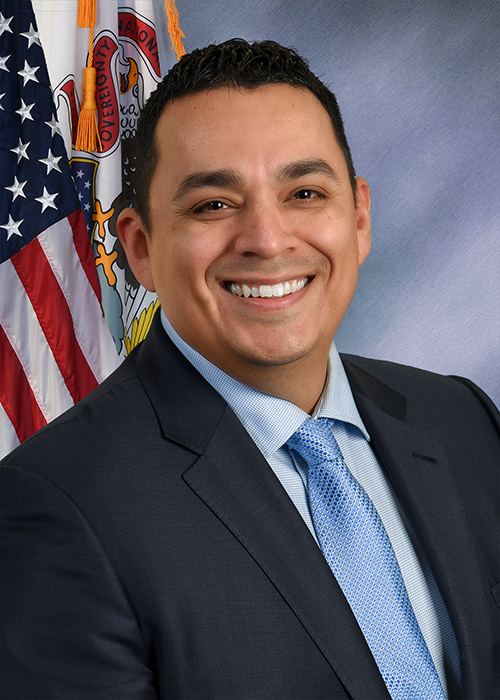
Joyce Mason
Joyce Mason House · District 61
D
Strong +
100% 40
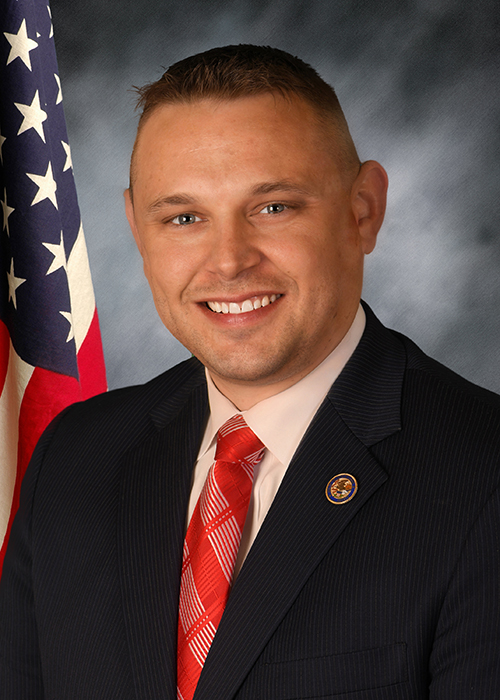
Justin Cochran
Justin Cochran House · District 55
D
Strong +
100% 19
Doris Turner
Doris Turner Senate · District 48
D
Strong +
100% 16
Don Harmon
Don Harmon Senate · District 39
D
Strong +
100% 13
Lilian Jiménez
Lilian Jiménez House · District 4
D
Strong +
99% 87
Marty McLaughlin
Marty McLaughlin House · District 52
R
Strong −
0% 42
Li Arellano
Li Arellano Senate · District 37
R
Strong −
0% 19
Brad Halbrook
Brad Halbrook House · District 107
R
Strong −
2% 48
Regan Deering
Regan Deering House · District 88
R
Strong −
2% 44
Neil Anderson
Neil Anderson Senate · District 47
R
Strong −
3% 33
Showing 321–330 of 733 bills

All criminal justice bills

in committee · Illinois · House Feb 18, 2025

HB 3818: COURT OF CLAIMS AWARDS

Amends the Court of Claims Act. Provides that the Court of Claims has exclusive jurisdiction to hear all claims against the State for time unjustly served in State prisons, in county jails, on parole, on intensive supervised probation, or registered as a sex offender if the person was unjustly convicted and received a pardon from the Governor on the ground of innocence of the crime for which the person was convicted or the person received a certificate of innocence. Removes language providing the amount of the award the court may give for a successful claim. Provides instead that the court shall make an award of $50,000 per year during which the person was wrongfully incarcerated and $25,000 for each year during which the person was wrongfully on parole, wrongfully on intensive supervised probation, or wrongfully required to register as a sex offender. Provides that the changes made by the amendatory Act apply to claims pending or filed on or after the effective date of the amendatory Act. Amends the Code of Civil Procedure. Allows any person who is convicted or adjudicated a delinquent and then serves any part of a sentence of incarceration in a State prison, in a county jail, on parole, on intensive supervised probation, or registered as a sex offender (rather than convicted and subsequently imprisoned) for one or more felonies by the State that the person did not commit may file a petition for certificate of innocence. Requires the court to make an award of reasonable attorney's fees, costs, and expenses after awarding a certificate of innocence. Provides that any person seeking a certificate of innocence based on the dismissal of a juvenile delinquency petition or an acquittal that occurred before the effective date of the amendatory Act shall file a petition within 4 years after the effective date of the amendatory Act, and any person seeking a certificate of innocence based on the dismissal of a juvenile delinquency petition or an acquittal that occurred on or after the effective date of the amendatory Act shall file a petition within 2 years after the dismissal or acquittal. Effective immediately.
in committee · Illinois · Senate Feb 6, 2025

SB 1823: VETERANS COURT-PTSD-PROCEDURES

Amends the Veterans and Servicemembers Court Treatment Act. Provides that if a veteran with a service-connected disability is arrested for or charged with a criminal offense and there is prima facie evidence that the veteran was suffering from an episode of post-traumatic stress disorder or a related mental health condition during the commission of the offense, there is a rebuttable presumption that the veteran is eligible to participate in a veterans and servicemembers court program, and after the arrest or charge, the following procedures shall take place: (1) the veteran shall be evaluated and treated as soon as practicable by a qualified medical professional for post-traumatic stress disorder and any other mental health condition or disorder; and (2) the court shall order a screening and clinical needs assessment and risk assessment and a mental health and substance use disorder screening and assessment. Provides that if a veteran with a service-connected disability is charged for the first time with a criminal offense, including a felony, except certain offenses that would make him or her ineligible to participate in a veterans and servicemembers court program, and suffered from post-traumatic stress disorder or a related mental health condition during the commission of the offense, then, upon successful completion of the terms and conditions of a court program, the court shall dismiss the original charges against the veteran or successfully terminate the veteran's sentence or otherwise discharge the veteran from any further proceedings against the participant in the original prosecution. Establishes certain procedures to be followed when a combat veteran who is a disabled veteran has an episode of post-traumatic syndrome disorder and needs assistance.
in committee · Illinois · Senate May 6, 2026

SB 86: CD CORR-PAROLE-25 YRS

Amends the Unified Code of Corrections. Provides that a committed person who has attained the age of 55 years and served at least 25 consecutive years of incarceration, excluding any person sentenced to natural life imprisonment for a Class X felony violation of criminal sexual assault, aggravated criminal sexual assault, or predatory criminal sexual assault of a child, shall be eligible to submit a petition to the Prisoner Review Board seeking parole. Specifies factors that the Board must consider as shown by the petition or as shown at the hearing. Provides that victims and victims' families shall be notified in a timely manner and be provided the opportunity to participate at the parole hearing concerning the petitioner's application for parole under this provision in accordance with the Rights of Crime Victims and Witnesses Act, the Open Parole Hearings Act, and this provision. Provides that Prisoner Review Board hearings under this provision shall be conducted by a panel of at least 3 members of the Board and a majority vote of the panel is required to grant the petition and release the petitioner on parole. Provides that the Board shall render its decision within a reasonable time after the hearing. Provides that when the panel votes to deny parole, a rationale shall be prepared by at least one member of the panel that states the basis for the denial, including the primary factors considered. Provides that in its decision, the Board shall set the person's time for parole or if it denies parole, it shall provide for a rehearing no later than 3 years after denial of parole. Provides that this provision applies retroactively to all persons serving any sentence that was or is imposed before, on, or after the effective date of the amendatory Act, and the period of incarceration for eligibility of each such person to submit a petition for parole is based on all previous consecutive years of incarceration served by that person before, on, and after the effective date of the amendatory Act.
in committee · Illinois · House Feb 25, 2025

HB 3891: $STATE'S ATT APPELLATE PROSEC

Appropriates $36,365,100 to the Office of the State's Attorneys Appellate Prosecutor for its ordinary and contingent expenses. Effective July 1, 2025.
Sub-Topics Appropriations
in committee · Illinois · House Mar 21, 2025

HB 3099: FOID-NONVIOLENT FELONY

Amends the Firearm Owners Identification Card Act. Requires each applicant for a Firearm Owner's Identification Card to submit evidence to the Illinois State Police that the applicant has not been convicted of a felony, unless the applicant has been granted a certificate of relief from disabilities, in which case the applicant shall submit a certified copy of the certificate of relief along with his or her application. Defines the term "forceible felony". Allows the Illinois State Police to deny an application for or revoke and seize a Firearm Owner's Identification Card if the person is or was convicted of a felony, unless the offense was not a forcible felony and the person has received a certificate of relief from disabilities. Amends the Unified Code of Corrections. Provides that a person sentenced to imprisonment shall lose the right to use or knowingly possess any firearm. Provides that this right shall be eligible for restoration 5 years after the person has completed the person's sentence, including applicable periods of probation or parole, under a certificate issued by the court, with certain requirements.
in committee · Illinois · Senate May 21, 2025

SB 1754: EAVESDROP-STATEWIDE GRAND JURY

Amends the Criminal Code of 2012. Provides that the offense of methamphetamine trafficking may be tried in any county. Permits the Attorney General to authorize certain eavesdropping requests from law enforcement. Amends the Code of Criminal Procedure of 1963. Permits the Attorney General or an Assistant Attorney General authorized by the Attorney General to authorize an application to a circuit judge or an associate judge assigned by the Chief Judge of the circuit for, and such judge may grant in conformity with the Judicial Supervision of the Use of Eavesdropping Devices Article of the Code, an order authorizing or approving the use of an eavesdropping device by a law enforcement officer or agency having the responsibility for the investigation of any felony under Illinois law where any one party to a conversation to be monitored, or previously monitored in the case of an emergency situation, has consented to such monitoring. Amends the Statewide Grand Jury Act. Provides that a Statewide Grand Jury may investigate, indict, and prosecute theft, retail theft, Internet offenses, continuing financial crimes enterprise, vehicular hijacking, aggravated vehicular hijacking, vehicular invasion, burglary, residential burglary, and home invasion if the offense involves acts occurring in more than one county of the State.
Sub-Topics Judges
in committee · Illinois · House Mar 27, 2026

HB 2764: CD CORR-EARNED REENTRY

Amends the Unified Code of Corrections. Provides that notwithstanding anything to the contrary in specified provisions of law, a person serving a term of imprisonment, including terms of natural life, in a Department of Corrections institution or facility is eligible for earned reentry. Provides that for the first year following the effective date of the amendatory Act, a person is eligible for earned reentry if he or she has served a term of imprisonment of at least 35 consecutive years. Provides that for the second year following the effective date of the amendatory Act, a person is eligible for earned reentry if he or she has served a term of imprisonment of at least 25 consecutive years. Provides that for the third year following the effective date of the amendatory Act and each year thereafter, a person is eligible for earned reentry if he or she has served a term of imprisonment of at least 20 consecutive years. Provides that hearings for earned reentry shall be administered by the Prisoner Review Board. Establishes procedures for the hearing. Removes provision that no person serving a term of natural life imprisonment may be paroled or released except through executive clemency. Provides that if any incarcerated person is released on earned reentry, his or her sentence shall be considered complete after the term of mandatory supervised release. Applies retroactively. Provides that nothing in the provision shall be construed to delay parole or mandatory supervised release consideration for petitioners who are or will be eligible for release earlier than the provision provides. Provides that nothing in the provision shall be construed as a limit, substitution, or bar on a person's right to sentencing relief, or any other manner of relief, obtained by order of a court in proceedings other than as provided in the provision. Contains a severability provision. Defines "earned reentry". Effective January 1, 2026.
in committee · Illinois · Senate Jan 24, 2025

SB 1204: CRIM CD-AGG DOMESTIC BATTERY

Amends the Criminal Code of 2012. Provides that a person who, in committing a domestic battery, other than by discharge of a firearm, knows the individual battered to be a person 60 years of age or older commits aggravated domestic battery.
Sub-Topics Firearms
in committee · Illinois · House Aug 13, 2026

HB 1477: CRIM PRO-PHONE CALLS-CONTACT

Amends the Code of Criminal Procedure of 1963. In a provision which specifies that a person who is in police custody shall have the right, upon being taken into police custody, to communicate free of charge with an attorney of his or her choice and members of his or her family, deletes a provision that required that right to be provided as soon as possible upon being taken into custody. Provides that, if a person who is in police custody is transferred to a new place of detention, that person has a right to make one telephone call (rather than 3 telephone calls) within 3 hours of arrival. Specifies that this right is not renewable. Provides that the person in police custody is prohibited from contacting the alleged victim or victims of the offense for which the person is charged. Provides that statements that are made by a person who is detained in police custody in violation of the right to communicate provisions of the Code may be used to evaluate whether those statements were voluntarily given and are reliable, based on the totality of the circumstances. Authorizes a custodial arrest of a person accused of an offense that is not a felony or Class A misdemeanor if necessary to verify the accused's identity.
Sub-Topics Policing
in committee · Illinois · House Jan 15, 2025

HB 72: HABITUAL MISDEMEANANT OFFENDER

Amends the Code of Criminal Procedure of 1963. Provides that, if a person has 3 or more pending charges for misdemeanor domestic battery, battery, violation of an order of protection, or criminal damage to property when the property belongs to a family or household member as defined in the Illinois Domestic Violence Act of 1986, the defendant may be charged as a habitual misdemeanant offender. Provides that the 3 or more charges alleged do not have to be for the same offense. Provides that any offense that results from or is connected with the same transaction, or results from an offense committed at the same time, shall be counted for the purposes of this provision as one offense. Provides that: (1) the third offense must have occurred after the second offense; (2) the second offense must have occurred after the first offense; and (3) all of the charged offenses must be proved at trial in order for the person to be adjudged a habitual misdemeanant offender. Provides that, once a person has been adjudged a habitual misdemeanant offender, any of the following charges for domestic battery, battery, violation of an order of protection, or criminal damage to property in which the property belongs to a family or household member as defined in the Illinois Domestic Violence Act of 1986 shall be charged as a Class 4 felony. Provides that a habitual misdemeanant offender shall be sentenced as a Class 4 felony offender for which the person shall be sentenced to a term of imprisonment of not less than one year and not more than 3 years. Provides that the court may deny pretrial release to a person charged as a habitual misdemeanant offender. Amends the Unified Code of Corrections to make conforming changes.
Sub-Topics Domestic Violence
Showing 321 to 330 of 733 bills
Previous 1 32 33 34 74 Next