Issue · Criminal Justice

Criminal Justice

Every criminal justice bill, vote, and legislator stance in Illinois, automatically classified by Maddy, our AI policy reader.

Total bills
513
104th Regular Session
Top supporter
Joyce Mason
100% support rate
Top opponent
Marty McLaughlin
0% support rate
Ranked legislators
10
5 support · 5 oppose
Key legislators

Who's moving criminal justice in Illinois

Legislators moving criminal justice in Illinois
Legislator Party Stance Support rate Votes
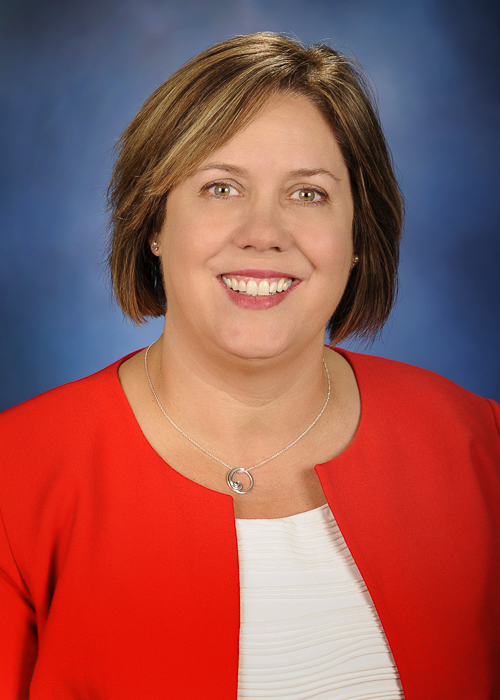
Joyce Mason
Joyce Mason House · District 61
D
Strong +
100% 124
Don Harmon
Don Harmon Senate · District 39
D
Strong +
100% 45
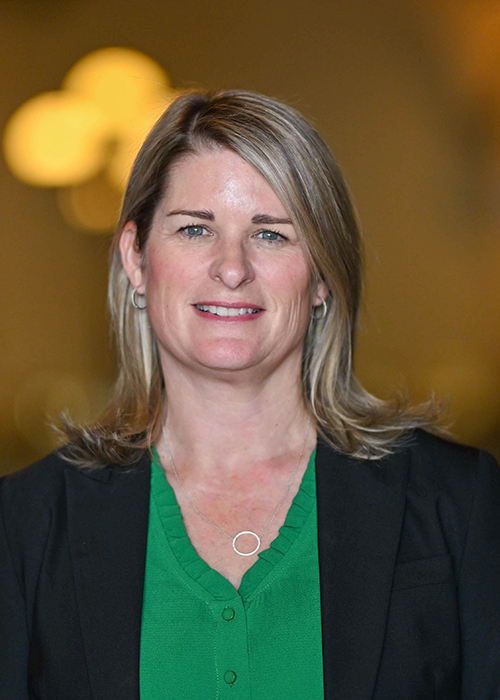
Doris Turner
Doris Turner Senate · District 48
D
Strong +
100% 47
LJ
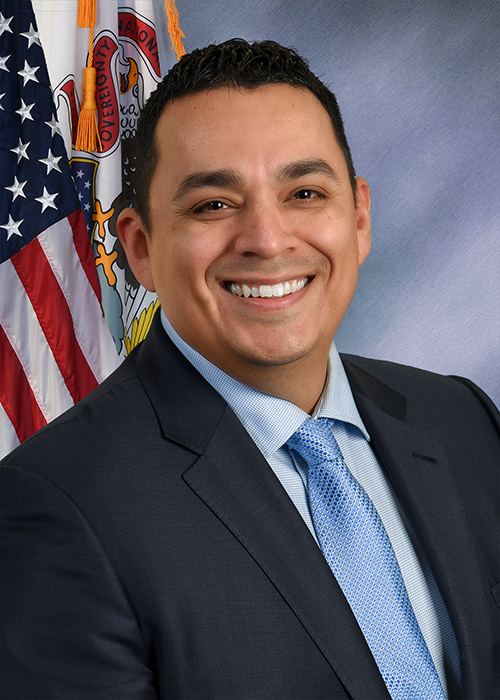
Lilian Jiménez House · District 4
D
Strong +
99% 195
Maurice West
Maurice West House · District 67
D
Strong +
99% 185
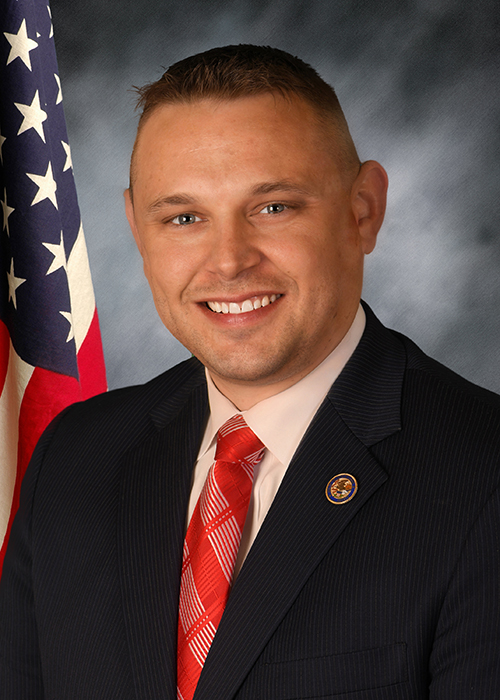
Marty McLaughlin
Marty McLaughlin House · District 52
R
Strong −
0% 129
Li Arellano
Li Arellano Senate · District 37
R
Strong −
0% 57
Brad Halbrook
Brad Halbrook House · District 107
R
Strong −
2% 131
Regan Deering
Regan Deering House · District 88
R
Strong −
2% 124
Neil Anderson
Neil Anderson Senate · District 47
R
Strong −
3% 100
Showing 111–120 of 513 bills

All criminal justice bills

in committee · Illinois · Senate Aug 25, 2026

SB 3242: SEX OFFENDER-FULL LEGAL NAME

Provides that the Act may be referred to as the Securing Against Future Exploitation of Kids in Digital Spaces (SAFEKIDS) Act. Amends the Criminal Code of 2012. Provides that a sex offender who is required to register under the Sex Offender Registration Act who has committed a criminal offense against a victim who is under 18 years of age shall not create or have control of an account on a social media platform unless the account displays his or her full legal name. Provides that a person who violates this provision is guilty of a Class A misdemeanor for the first offense and a Class 4 felony for a second or subsequent offense. Provides that the provision applies retroactively. Defines terms.
in committee · Illinois · Senate Apr 17, 2026

SB 4082: $FY27 ATTORNEY GENERAL

SB 4082 is an appropriations bill allocating $100.7 million from the General Revenue Fund to cover the Illinois Attorney General's operational expenses for fiscal year 2027. It also directs specific funding from other sources - like $11 million for crime victim assistance, $5 million for equal justice programs, $2.5 million for Medicaid fraud enforcement, and $7 million for child support enforcement - to support targeted AG office functions. The bill does not create new policies but provides dedicated funding streams for existing programs under the Attorney General’s jurisdiction. It takes effect July 1, 2026, and affects all state-level law enforcement and victim services administered by the Attorney General’s office.
in committee · Illinois · Senate Feb 4, 2026

SB 3345: CRIM CD-DOMESTIC ASSAULT

Amends the Criminal Code of 2012. Creates the offense of domestic assault. Provides that a person commits the offense when, without lawful authority, he or she knowingly engages in conduct that places any family or household member in reasonable apprehension of great bodily harm, or permanent disability or disfigurement. Provides that if the defendant is arrested for domestic assault, upon release of the defendant from custody pending trial, the court, at the preliminary examination, shall order that the defendant refrain from contact or communication with the victim of the domestic assault and refrain from entering or remaining at the victim's residence for a minimum of 72 consecutive hours. Provides that domestic assault is a Class A misdemeanor. Defines "family or household member".
in committee · Illinois · House Feb 19, 2026

HB 5666: $FY27 LETSB OCE

Makes appropriations for the ordinary and contingent expenses of the Illinois Law Enforcement Training Standards Board for the fiscal year beginning July 1, 2026, as follows: Other State Funds $133,287,910; Federal Funds $8,000,000; Total $141,287,910.
Sub-Topics Law Enforcement
in committee · Illinois · Senate Feb 6, 2026

SB 3941: PERSISTENT DV OFFENDER ACT

Creates the Persistent Domestic Violence Offender Database Act. Requires the Illinois State Police to establish and maintain a Statewide Persistent Domestic Violence Offender Database for the purpose of identifying persistent domestic violence offenders. Requires the Illinois State Police to maintain the database based upon information supplied by the court clerks and information available to the Illinois State Police from the Department of Corrections and local law enforcement agencies. Requires the Illinois State Police to make the information contained in the database accessible to the public on the agency's Internet home page and update that information as it deems necessary. Sets forth the information that must be stored in the database. Provides that if a person is convicted of a domestic violence offense and the person convicted has at least one prior conviction for a domestic violence offense or if a person has an order of protection granted against them and the person has at least one prior order of protection granted against them, then the court shall, upon proof of any prior domestic violence offense convictions or order of protection, order the person to register as a persistent domestic violence offender. Requires the court clerk to forward to the Illinois State Police a certified copy of the qualifying conviction or order of protection and the date of birth of any person ordered to register as a persistent domestic violence offender. Contains provisions on registration fees. Requires the Illinois State Police to remove a registered person's name and other information from the database after a specified number of years following the person's last conviction. Provides that the Act applies only to persons convicted of a domestic violence offense or to persons against whom an order of protection is granted on or after January 1, 2027; however, a prior conviction is not required to occur on or after January 1, 2027.
in committee · Illinois · House Mar 27, 2026

HB 5088: FAIL RPT SEXUAL ABUSE CHILD

Amends the Criminal Code of 2012. Provides that a person over the age of 18 commits failure to report sexual abuse of a child when he or she is aware of, has a reasonable belief, or personally observes (rather than just personally observes) sexual abuse, between a person who he or she knows is over the age of 18 and a person he or she knows is a child under the age of 13, and knowingly fails to report the sexual abuse to law enforcement.
Sub-Topics Law Enforcement
in committee · Illinois · Senate Mar 27, 2026

SB 3930: DRONE SAFETY & INTERFERENCE

Creates the Drone Safety and Interference Prevention Act. Creates the offenses of (1) unlawful imaging of an emergency response activity; (2) unlawful operation over critical infrastructure facilities; and (3) unlawful operation of a drone over a correctional institution or facility. Defines these offenses and establishes penalties. Provides that a private person or entity operating a drone in the State is prohibited from equipping or using on the drone any firearm, weaponized laser, kinetic impact projectile, chemical agent or irritant, or any other lethal or non-lethal weapon. Provides that a law enforcement officer may seize a drone and any attached equipment, including any image-capturing devices, storage media, or weapons, if the officer has probable cause to believe the drone was used or operated in violation of the Act. Provides that any drone or equipment seized under the Act is subject to forfeiture in accordance with the Criminal Code of 2012 and the Forfeiture Article of the Code of Criminal Procedure of 1963, as applicable. Provides that the State may use forfeited drones and equipment for law enforcement purposes, including training and counter-drone operations. Provides that prior to forfeiture, the court shall provide notice and an opportunity for hearing to the owner or operator of the drone, unless the drone was abandoned or unclaimed. Provides that, if the court determines, by a preponderance of the evidence, that the drone was used in violation of the Act, the drone shall be forfeited to the State. Provides that any images or data seized under the provision shall be retained only if there is a reasonable suspicion they contain evidence of a crime. Provides that all other data must be deleted within 30 days unless relevant to an ongoing investigation. Provides that the State, any unit of local government, any law enforcement agency or any officers or agents of those entities that are acting reasonably and in good faith to enforce the Act are not civilly liable for damage to or loss of a drone, except for willful or wanton misconduct. Provides that the Act shall be enforced by State and local law enforcement agencies. Provides that enforcement data under the Act shall be reported through the Illinois State Police's existing Uniform Crime Reporting program. Contains a severability provision. Effective January 1, 2027.
in committee · Illinois · House Feb 6, 2026

HB 4881: BUDGETING FOR RESULTS-ANALYSIS

Amends the State Budget Law of the Civil Administrative Code of Illinois. Sets forth additional requirements for the benefit cost analysis performed by the Budgeting for Results Commission as part of its annual report. Provides that the benefit cost analysis conducted for any crime prevention programs shall include data and information provided by crime prevention programs, victims rights groups, and law enforcement agencies in the State.
in committee · Illinois · House Mar 27, 2026

HB 5052: CRIME VICTIMS RIGHTS

Amends the Sexual Assault Survivors Emergency Treatment Act. Provides that beginning January 1, 2028, a treatment hospital, treatment hospital with approved pediatric transfer, or approved pediatric health care facility may submit a sexual assault treatment plan which includes the use of a TeleSANE interactive telecommunications system which allows a qualified medical provider to precept a medical forensic examination while located at a distant site. Amends the Juvenile Court Act of 1987. Provides that in inspection and copying of law enforcement records maintained by law enforcement agencies that relate to a minor who has been investigated, arrested, or taken into custody before the minor's 18th birthday by victims and their attorneys, the information identifying the nonrequesting victims shall be redacted in cases of multiple minor victims or multiple victims of sex offenses. Amends the Rights of Crime Victims and Witnesses Act. Provides that a victim shall not be excluded from any part of the trial unless a written motion to exclude a victim from trial was filed at least 60 days prior to the date set for trial. Makes other structural and technical changes in the Act. Makes other changes. Amends the Address Confidentiality for Victims of Domestic Violence, Sexual Assault, Human Trafficking, or Stalking Act. Defines "eligible person" as a person 18 years of age or older who is the victim of domestic violence, sexual assault, human trafficking, or stalking; the parent or guardian of a minor or disabled adult who is a victim of domestic violence, sexual assault, human trafficking, or stalking; and a household member of a victim of domestic violence, sexual assault, human trafficking, or stalking. Allows household members who are not victims to participate in the program. Provides that a participant whose certification has not been withdrawn or cancelled may reapply to the Address Confidentiality Program to renew certification for an additional 4 years. Changes notice process for certification cancellation. Allows the Attorney General discretion to continue the participation of participants who have a change of legal name and specifies notice in that process. Makes other changes.
in committee · Illinois · Senate May 21, 2026

SB 3354: CD CORR-SENTENCE CREDITS

Provides that the Act may be referred to as the Credit for Change Act. Amends the Unified Code of Corrections. Eliminates provisions that a person must serve various percentages for particular offenses. Provides that the rules and regulations shall provide that the individual in custody shall receive one day of sentence credit for each day of service in prison other than when a sentence of natural life imprisonment has been imposed. Provides that each day of sentence credit shall reduce by one day the incarcerated person's period of incarceration set by the court. Provides that within 6 months after the effective date of the amendatory Act, the Department of Corrections shall recalculate each incarcerated person's release date irrespective of the incarcerated person's conviction or sentencing date by crediting each person one day sentence credit for each day the incarcerated person has spent in prison on the current sentence. Provides that the Department shall award sentence credit accumulated prior to the effective date of the amendatory Act in a specified amount to a committed person serving a sentence for an offense committed after June 19, 1998, if the Department determines that the committed person is entitled to this sentence credit, based upon certain specified factors. Provides that the Department, in consultation with the Advisory Board, shall make available to all persons in its custody current materials about sentence credits, containing detailed information regarding eligibility, earning, revocation, calculation, and documentation of credit, in the following formats: (1) in print; (2) on the Department's website; and (3) in a visible location on the premises of each Department facility where notices are customarily posted. Makes technical changes. Effective January 1, 2027.
Showing 111 to 120 of 513 bills
Previous 1 11 12 13 52 Next