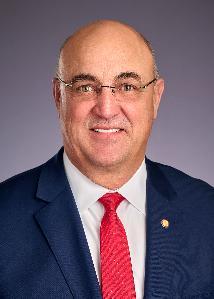
This bill allocates $880,000 in state funds to the Idaho Office of the Attorney General for fiscal years 2026 and 2027. The money is specifically designated for personnel costs within two programs: State Legal Services and Internet Crimes Against Children. These funds are drawn from the Consumer Protection Fund, which is intended to support the Attorney General's legal duties and activities. The legislation also declares an emergency to ensure the money for fiscal year 2026 becomes available immediately upon signing.
This bill amends Idaho state law to revise the structure, duties, and funding rules for the Idaho Digital Learning Academy, a public school-choice program that offers online courses to students. It establishes the Academy as a distinct governmental entity rather than a state department, outlines the responsibilities of its Board of Directors, and sets specific requirements for course offerings, staffing, and accreditation. Key provisions include limiting administrative staff to 30% of the budget, exempting teachers from certain employment classifications, defining course fees with a $40 cap for graduation-required classes, and allowing the Academy to contract with service providers for 24/7 online course delivery. The legislation also clarifies definitions for terms like "host district" and "custom section," while declaring an emergency to ensure immediate implementation of these changes.
This bill adjusts funding for Idaho's Division of Student Support for fiscal years 2026 and 2027, allocating $11.9 million from specific funds while reducing overall appropriations by nearly $10 million. The legislation lowers per-student funding for fully virtual schools, cuts $7.5 million in transportation reimbursements, and requires schools offering online classes to report enrollment and attendance data. It also modifies how English learner funds are distributed, establishes new requirements for technology education programs, and mandates a report on special education spending.
H 674 revises Idaho's rules for when telephone companies can stop providing service in a community. It requires companies to either provide equivalent service from another provider or follow federal FCC procedures before discontinuing service. The bill also adds a new section requiring Idaho's utility commission to accept the FCC's findings on service discontinuation under federal law. This directly affects telephone corporations operating in Idaho and their customers in areas where service might be withdrawn, with the law taking effect on July 1, 2026.
Idaho's H 542, the "Stop Harms from Addictive Social Media Act," targets major social media platforms (those earning $1+ billion in global ad revenue) operating in Idaho. It directly affects children under 16 by restricting platforms' use of specific "addictive interface features" like infinite scrolling, auto-play videos, and profile-based feeds. The law triggers two usage-based restrictions: after 25 cumulative hours in six months, platforms must notify parents; after 50 hours, they must disable addictive features for minors. The bill defines key terms and establishes enforcement mechanisms, focusing on protecting Idaho children's online experiences without banning social media use.
This bill appropriates $980,000 from the Consumer Protection Fund to the Idaho Office of the Attorney General for fiscal years 2026 and 2027. The funds are designated for two specific programs: $910,000 for State Legal Services and $70,000 for Internet Crimes Against Children initiatives. The legislation directs that these monies be used for personnel costs related to the Attorney General's duties under Idaho law. An emergency clause is included to allow immediate implementation of the funding for fiscal year 2026 upon passage.