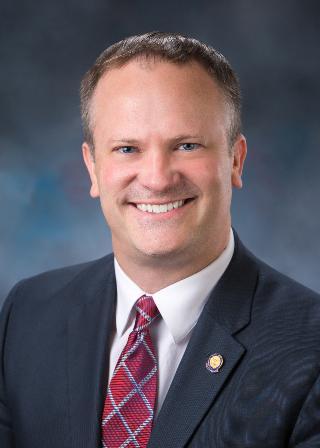
H 783 amends Idaho's medical savings account law to include health care sharing ministry expenses as eligible medical costs for tax deductions. This directly affects Idaho residents who use health care sharing ministries (alternative health cost-sharing groups) instead of traditional insurance, allowing them to deduct related expenses. The bill updates the definition of "eligible medical expense" in Section 63-3022K(3)(e) to explicitly cover payments made through these ministries for the account holder, spouse, dependents, or dependent children. It does not change existing deduction limits ($2,000 annually before 2014 or $10,000 after 2014). The change simplifies tax treatment for ministry members without altering contribution rules or penalties.
This Idaho bill (H 655) exempts physicians in primary care, psychiatry, or OB/GYN from needing prior approval for Medicaid-covered services if they provide 360+ hours of unpaid mentoring (preceptorship) to graduate students annually, with at least 60% of those hours in rural shortage areas. Physicians must track and report hours to the state health department, which verifies eligibility and grants a 12-month exemption starting the next calendar year. The exemption is limited to 100 physicians per specialty yearly, and the state can revoke it if claims review shows insufficient adherence to the program. This directly affects Idaho physicians mentoring students in rural areas, aiming to reduce administrative barriers for rural healthcare training.
Idaho's S 1284 would allow the state to join the Dietitian Licensure Compact, enabling dietitians licensed in Idaho to practice in other participating states without obtaining separate licenses in each. The compact establishes a "compact privilege" that is equivalent to a license in other member states, requiring dietitians to meet uniform standards for practice. It includes provisions for sharing disciplinary information among states to protect public health and specifically supports military members and their spouses who relocate across state lines. This bill would update Idaho's licensing law to implement the compact's framework for interstate practice.
This bill requires Idaho-resident students receiving state-funded medical or veterinary education to sign contracts committing to practice in Idaho for specific periods. Medical students must practice full-time in Idaho for four years after obtaining a license, finishing residency, or completing a fellowship. Veterinary students starting in fall 2027 must dedicate at least 600 annual hours to agricultural animal care (cattle, sheep, goats, swine) and complete a mixed practice program. Students who fail to meet these commitments must reimburse the state for their education costs over eight years without interest, with limited exceptions for hardship. A new reimbursement fund will manage these payments and distribute incentive grants to Idaho physicians.
This Idaho bill (H 787) establishes a new licensing framework for podiatrists by creating Chapter 6 of Title 54 in the Idaho Code. It requires all podiatrists to hold a state license, mandating completion of a U.S./Canadian podiatry school, a 24-month residency (with 12 surgical months), passing national exams, and background checks. Practicing without a license becomes a felony, and the State Board of Medicine gains authority to oversee licensing, discipline violations (like criminal convictions or fraud), and enforce continuing education requirements (30 hours every two years). The law directly affects podiatrists seeking to practice in Idaho and ensures standardized qualifications for foot and leg care.
S 1253 establishes the Idaho Rural Health Transformation Fund in the state treasury, funded by federal grants and potential legislative appropriations, to support federally approved rural health programs. It also creates a Rural Health Transformation Committee with six members (two from each legislative chamber and two nonvoting appointees by the governor) to oversee fund distribution. The committee must set funding rules by specific deadlines, require sustainability plans for funded projects, and receive quarterly progress reports from the Department of Health and Welfare. All fund expenditures must align with Idaho's federally approved rural health plan and be subject to annual public reporting. This bill directly affects rural health initiatives and providers receiving state funds under the federal program.
S 1312 revises Idaho's Medicaid payment rules for healthcare providers, directly affecting hospitals, mental health facilities, and home care services. It sets payment rates at 100% of Medicare for primary care and 90% for other services where Medicare equivalents exist, while requiring annual cost surveys (with 15% audits) for services without Medicare rates. The bill mandates providers to allocate funds to staff wages and employee costs, reduces general fund needs by $3.1 million in FY2020 and $8.72 million in FY2021, and transitions most hospitals to value-based payment systems by July 2021. It also nullifies specific administrative rules (IDAPA 16.03.26) after July 2026.
HJM 16 is a procedural resolution (not a bill) passed by the Idaho Legislature. It formally supports the Idaho Department of Insurance's efforts to protect Medicare beneficiaries and requests federal guidance from CMS on two specific issues: maintaining stable Medicare Advantage plan availability and clarifying how changes to insurance producer compensation affect consumer access. The resolution aims to prevent disruptions like sudden plan withdrawals or steering practices that limit beneficiary choice during enrollment periods. It directly affects Idaho Medicare beneficiaries and insurance companies operating in the state.
Idaho's H 753 establishes a framework for Assertive Community Treatment (ACT) programs to provide intensive, community-based mental health support. It directly affects individuals with serious mental illness who have experienced frequent hospitalizations, crisis services, or failed to benefit from standard outpatient care. The bill defines ACT as 24/7 multidisciplinary teams delivering comprehensive services in community settings, requiring specific staff composition (including clinicians, peer specialists, and substance use counselors). It mandates the Department of Health and Welfare to seek federal Medicaid approval by March 2026 to implement these programs, aiming to reduce hospitalizations and support community living. The law sets eligibility criteria based on medical need, functional impairment, and documented service failures.
Idaho's H 595 requires all public schools and charter schools to develop cardiac emergency response plans (CERPs) by the 2026-2027 school year. These plans must ensure AEDs are accessible within three minutes of a cardiac arrest, include staff training in CPR/AED use following American Heart Association guidelines, and integrate with existing emergency policies. Schools with athletic programs must also maintain AEDs at all sports venues and require coaches to be certified in CPR/AED use. The law takes effect July 1, 2026, and provides legal immunity for those following its requirements.