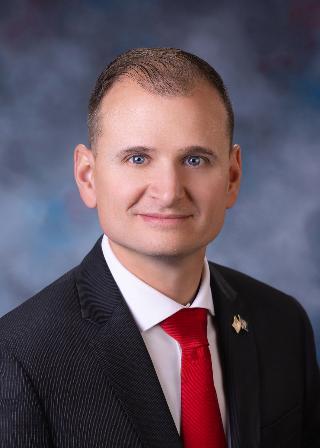
This bill provides additional funding to Idaho's Department of Juvenile Corrections for fiscal year 2027, covering personnel costs, operating expenses, and capital outlays from various state funds. It authorizes the department to hire six additional full-time equivalent positions and adjusts specific appropriation amounts, including a reduction of $327,000 for trustee and benefit payments from one fund. The legislation takes effect on July 1, 2026, and was signed into law by the Governor.
This bill updates the Idaho Honey Commission by clarifying definitions, revising appointment procedures, and removing outdated administrative rules. It establishes that the commission will consist of the state agriculture director plus three commercial beekeeper members appointed by the governor based on nominations from the Idaho honey industry association. The legislation also sets a five-cent annual tax on each bee colony or hive, exempts hobbyist beekeepers, and provides for penalties for violations. Additionally, it aligns honey grading standards with federal requirements and clarifies the director's authority over official honey samples.
H 722 revises Idaho's tax rules for rate-regulated electric and gas utility companies. It updates how property taxes are calculated and distributed to counties, requiring the state tax commission to verify utility investments every five years and establish a dedicated "rate-regulated tax fund." The bill changes the method for apportioning tax revenue based on 2025 property tax data and adjusts distributions when local taxing districts dissolve. These changes directly affect electric/gas utilities and local governments that receive tax revenue from these companies.
H 793 revises Idaho's beer excise tax revenue distribution, affecting state funds and the beer industry. It increases the portion of low-alcohol beer tax revenue (≤5% ABV) going to the substance abuse treatment fund from 12% to 20%, while allocating 33% to the Idaho law enforcement fund (with 60% dedicated to the Project Choice program) and the remainder to the general fund. For high-alcohol beer (>5% ABV), it temporarily adjusts funding to hop growers and wine producers (1.5%/3.5% in 2022-2023, rising to 5%/1.5% permanently from 2024), with the rest going to the general fund. The bill removes obsolete language and takes effect July 1, 2026.
Idaho's H 792 revises sales tax exemption rules for occasional sales and small sellers. It clarifies that home yard sales are exempt only if an individual sells under $5,000 total annually (up from no limit), and defines "small sellers" as Idaho residents with under $5,000 in annual sales who don’t collect state sales tax. The bill excludes sales of vehicles, alcohol, tobacco, boats, aircraft, and snowmobiles from these exemptions. It also updates technical references in tax code sections 63-3622K and 63-3622XX (formerly 63-3622YY) to align with current law. The bill affects individual sellers and small-scale vendors, not businesses.
This bill allocates $4,998,400 to Idaho's Office of the State Board of Education for fiscal year 2027, funding administrative operations through a combination of general fund and federal grant money. It simultaneously reduces the office's general fund appropriation by $510,500 and cuts four full-time equivalent positions from the office's authorized staffing level. The legislation takes effect on July 1, 2026, and was signed into law by the Governor.
This bill allocates $310,800 to Idaho's Military Division for fiscal years 2026 and 2027, funding operational expenses and trustee benefit payments for military management programs. It also transfers $17,800 from the General Fund to the Hazardous Substance Emergency Response Fund to reimburse costs related to emergency management activities. The legislation declares an emergency to allow immediate implementation of the fund transfer while the main appropriations take effect on July 1, 2026.
This bill provides $486,300 in state funding to the Idaho State Historical Society for fiscal year 2027, covering operating expenses and a small amount for capital projects. The money comes from the state's Miscellaneous Revenue Fund and will be used for the society's regular operations and facility improvements. Additionally, the bill allows the society to use leftover funds from the previous year to cover moving costs if they relocate their facilities. The funding becomes available on July 1, 2026, and the bill was signed into law by the governor.
This Idaho bill allocates state funds to the Department of Correction for fiscal years 2026 and 2027, with the majority of money designated for operating expenses at various prisons and correctional facilities. The legislation provides specific amounts for management services, prison administration, medical services, and community corrections programs, drawing from funds like the General Fund and Inmate Labor Fund. Additionally, the bill requires the department to conduct a review of community reentry center operations and submit findings to a legislative committee by November 1, 2026, evaluating efficiency, recidivism outcomes, and security considerations.
This bill allocates $13.1 million in funding to Idaho's Legislative Branch for fiscal year 2027, covering the Legislative Services Office and the Office of Performance Evaluations. The money comes from various state funds, including the General Fund, and is designated for personnel costs and operating expenses. The bill also allows these offices to transfer funds between expense categories without restrictions, while prohibiting transfers between different state funds unless the Legislature approves them. Additionally, it permits unused money from the American Rescue Plan Act recovery fund to be reused for nonrecurring technology expenses. The funding becomes effective on July 1, 2026.