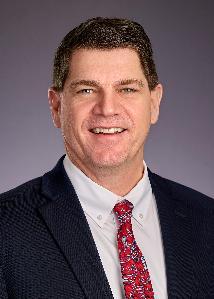
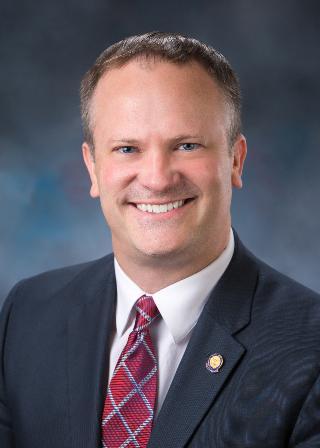
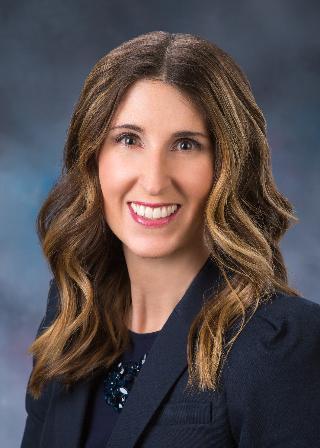
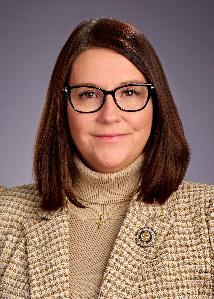
SJM 112 is a joint memorial from Idaho's legislature calling on Congress to propose a constitutional amendment requiring a balanced federal budget. It directly addresses U.S. Senators Mike Crapo, Jim Risch, and Representatives Mike Simpson and Russ Fulcher (Idaho's congressional delegation) to lead efforts in Congress. The memorial cites Idaho's concerns about the $38 trillion national debt and references Article V of the Constitution as the proper process for such an amendment. It does not create new law but formally requests federal action to address budget deficits.
H 793 revises Idaho's beer excise tax revenue distribution, affecting state funds and the beer industry. It increases the portion of low-alcohol beer tax revenue (≤5% ABV) going to the substance abuse treatment fund from 12% to 20%, while allocating 33% to the Idaho law enforcement fund (with 60% dedicated to the Project Choice program) and the remainder to the general fund. For high-alcohol beer (>5% ABV), it temporarily adjusts funding to hop growers and wine producers (1.5%/3.5% in 2022-2023, rising to 5%/1.5% permanently from 2024), with the rest going to the general fund. The bill removes obsolete language and takes effect July 1, 2026.
Idaho's H 792 revises sales tax exemption rules for occasional sales and small sellers. It clarifies that home yard sales are exempt only if an individual sells under $5,000 total annually (up from no limit), and defines "small sellers" as Idaho residents with under $5,000 in annual sales who don’t collect state sales tax. The bill excludes sales of vehicles, alcohol, tobacco, boats, aircraft, and snowmobiles from these exemptions. It also updates technical references in tax code sections 63-3622K and 63-3622XX (formerly 63-3622YY) to align with current law. The bill affects individual sellers and small-scale vendors, not businesses.
This bill amends Idaho state budget law to clarify how agencies can spend non-state funds and establish rules for interagency transactions. It requires prior approval from financial management officials before agencies can use outside money like insurance settlements or capital asset sales, with a $10 million annual limit on such spending. The legislation also creates a formal interagency billing system allowing state agencies to charge each other for goods and services, while maintaining existing rules for agencies selling to the public. These changes aim to improve financial accountability and standardize how state agencies handle internal and external revenue streams.
This bill appropriates $980,000 from the Consumer Protection Fund to the Idaho Office of the Attorney General for fiscal years 2026 and 2027. The funds are designated for two specific programs: $910,000 for State Legal Services and $70,000 for Internet Crimes Against Children initiatives. The legislation directs that these monies be used for personnel costs related to the Attorney General's duties under Idaho law. An emergency clause is included to allow immediate implementation of the funding for fiscal year 2026 upon passage.
This bill allocates $4,998,400 to Idaho's Office of the State Board of Education for fiscal year 2027, funding administrative operations through a combination of general fund and federal grant money. It simultaneously reduces the office's general fund appropriation by $510,500 and cuts four full-time equivalent positions from the office's authorized staffing level. The legislation takes effect on July 1, 2026, and was signed into law by the Governor.
This bill provides $486,300 in state funding to the Idaho State Historical Society for fiscal year 2027, covering operating expenses and a small amount for capital projects. The money comes from the state's Miscellaneous Revenue Fund and will be used for the society's regular operations and facility improvements. Additionally, the bill allows the society to use leftover funds from the previous year to cover moving costs if they relocate their facilities. The funding becomes available on July 1, 2026, and the bill was signed into law by the governor.
This Idaho bill allocates state funds to the Department of Correction for fiscal years 2026 and 2027, with the majority of money designated for operating expenses at various prisons and correctional facilities. The legislation provides specific amounts for management services, prison administration, medical services, and community corrections programs, drawing from funds like the General Fund and Inmate Labor Fund. Additionally, the bill requires the department to conduct a review of community reentry center operations and submit findings to a legislative committee by November 1, 2026, evaluating efficiency, recidivism outcomes, and security considerations.
This bill allocates $13.1 million in funding to Idaho's Legislative Branch for fiscal year 2027, covering the Legislative Services Office and the Office of Performance Evaluations. The money comes from various state funds, including the General Fund, and is designated for personnel costs and operating expenses. The bill also allows these offices to transfer funds between expense categories without restrictions, while prohibiting transfers between different state funds unless the Legislature approves them. Additionally, it permits unused money from the American Rescue Plan Act recovery fund to be reused for nonrecurring technology expenses. The funding becomes effective on July 1, 2026.
This bill allocates $963,600 to Idaho's Division of Veterans Services for fiscal year 2027, funding both operating expenses and capital projects from state and federal sources. It reduces the federal grant allocation by $51,000 for operations while allowing unspent funds from the previous year to be reused for specific construction projects at state veterans homes in Boise and Lewiston. The law takes effect on July 1, 2026, and includes emergency provisions to ensure immediate implementation of these funding changes.