Authorizes the Board of Land and Natural Resources to approve the operation of conservation banks and amends the Endangered Species Recovery Committee's membership and scope of authority. Effective upon approval.
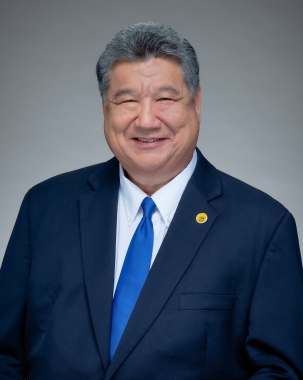
Sen. Ron Kouchi
Sponsored bills
Amends sections 208 and 209(a) of the Hawaiian Homes Commission Act, 1920, to include nieces and nephews who are at least one-quarter Native Hawaiian as qualifying relatives of lessees for the purposes of lease transfer and lease successorship.
Maddy summaryThis bill (SB 3161) has a very limited description in the provided context, with only a short title ("RELATING TO THE UNIVERSITY OF HAWAII") and procedural status. The official abstract states it is a "short form bill," which typically involves minor administrative or technical adjustments without major policy changes. No specific provisions, mechanisms, or direct effects on individuals or groups are described in the available information. Since the context lacks substantive details about the bill's content, a meaningful summary of its policy changes cannot be provided. The bill is currently in early stages (introduced January 26, 2026), with no further details on its purpose or scope.

Maddy summarySB 3141 updates Hawaii's Chapter 329 (Uniform Controlled Substances Act) to align with recent federal amendments required under state law. It directly affects state law enforcement, healthcare providers, and individuals operating under Hawaii's controlled substances regulations by ensuring state statutes match federal classifications. The bill makes no new policy changes but formally revises state law to maintain consistency with the Federal Controlled Substances Act. As a procedural update, it does not alter existing drug schedules or penalties.
Provides that a determination of personal liability for another person's unpaid general excise taxes is an assessment subject to the due process procedures and appeals available for other assessments.
Amends the deadlines for the upgrade or conversion of cesspools to Director of Health-approved wastewater system or connection of cesspools to a sewerage system. Requires priority 1 cesspools to be upgraded, converted, or connected by 12/31/2050, and phases the deadlines for lower priority cesspools in later years. Requires the Director of Health, in consultation with the counties, to determine the prioritization level of all cesspools in the State.
Maddy summarySB 2244 extends existing state ethics rules against nepotism to cover legislative and judicial employees, bringing them under the same standards currently applied to other state workers. The bill requires that no state employee in these branches can work with or supervise a close family member, aligning their hiring and employment practices with broader state ethics policies. This change directly affects staff in the state legislature and courts, ensuring they follow the same conflict-of-interest rules as employees in other state agencies. The bill has not yet advanced beyond its initial introduction stage.
Makes the Dwelling Unit Revolving Fund Equity Pilot Program permanent, with modifications. Repeals the sunset date for Act 92, Session Laws of Hawaii 2023.
Maddy summarySB 3087 would give the Hawaii Tourism Authority (HTA) the explicit power to market and promote film production in Hawaii. This change directly affects the HTA, expanding its existing duties to include actively supporting the film industry. The key provision adds film promotion to the HTA’s statutory responsibilities, allowing it to develop targeted campaigns and partnerships. This policy change clarifies the HTA’s role in attracting film productions without altering existing tourism or economic development laws. The bill is currently in early stages, having been introduced on January 26, 2026.
Appropriates moneys out of the Emergency and Budget Reserve Fund for fiscal year 2026-2027 to maintain the levels of programs determined to be essential to education, public health, and public welfare, to provide for counter cyclical economic and employment programs of economic downturn, to restore facilities destroyed or damaged or services disrupted by disaster, and to meet other emergencies declared by the governor or determined to be urgent by the legislature.