

Maddy summarySenate Resolution 60 clarifies that housing projects approved by the Hawaii Housing Finance and Development Corporation (HHFDC) before July 1, 2031, will retain eligibility for housing credits under Act 31 (2024) even after Act 31 is repealed. It requests HHFDC and all counties to include three specific details in project approvals: a developer's credit rights statement, the number of qualifying units, and available credits. This resolution directly affects housing developers and local governments administering housing credit programs.
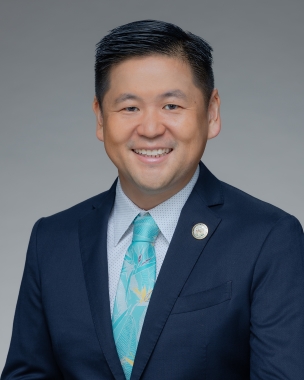
Sen. Troy Hashimoto
Sponsored bills
Maddy summaryThis Senate Resolution (SR 45) urges the Hawaii Housing Finance and Development Corporation (HHFDC) to create a plan for producing enough housing to meet statewide demand. It highlights Hawaii's severe housing shortage, noting the state builds far fewer units annually (2,902) than needed, with critical gaps in housing for middle- and upper-income households (120%+ of area median income). The resolution requests HHFDC submit its plan to the Legislature by January 2026, emphasizing the need to address housing as a key factor in retaining residents and workers. As a procedural resolution, it does not enact new law but directs agency action.
Maddy summaryThis Senate Resolution (SR 18) requests the Hawaii Department of Corrections and Rehabilitation to collaborate with the Department of Transportation to use existing inmate work furlough programs for state roadway and highway maintenance. It directly affects inmates participating in furlough programs (who gain work experience for reentry), the Corrections Department (which must coordinate the effort), and Transportation (which would gain additional maintenance staff). The resolution proposes using eligible inmates - already in furlough programs for reentry preparation - to perform routine road maintenance tasks like pothole repair and vegetation control. This is a procedural request, not a new law, aiming to support inmate rehabilitation while addressing workforce needs for highway upkeep.
Maddy summaryThis Senate Resolution (SR 25) encourages all Hawaii counties to develop their own localized biosecurity plans to address invasive species threats. It specifically urges counties to prioritize their unique needs - based on local climate, agriculture, and infrastructure - while collaborating with state agencies like the Department of Agriculture and the Hawaii Invasive Species Council. The resolution does not create new legal requirements but promotes coordinated, county-driven strategies to protect ecosystems, agriculture, and public health from invasive species. It applies directly to all 5 Hawaii counties (Honolulu, Hawaii, Kauai, Maui, and Molokai).
Maddy summarySenate Resolution 163 requests the University of Hawaii to study establishing an Alzheimer's Disease Research Center. It directs the university to assess its current research capabilities, evaluate benefits for Hawaii residents, and identify requirements to secure federal funding from the National Institute on Aging. The resolution requires the university to develop a phased plan with a timeline and submit a report by December 31, 2025. This resolution directly affects the University of Hawaii and aims to explore potential research opportunities for Alzheimer's disease, particularly considering Hawaii's unique demographic composition.
Maddy summarySenate Resolution 32 (SR 32) urges the University of Hawaii President and Board of Regents to establish a Bachelor of Science in Nursing (BSN) program at the University of Hawaii Maui College. Currently, Maui students complete associate nursing degrees locally but must leave the island to pursue BSNs, with most either enrolling in out-of-state programs or the Hawaii Statewide Nursing Consortium at UH Manoa. The resolution highlights Maui’s growing healthcare needs, available clinical placements, and the goal of creating a local pathway for nursing advancement without requiring students to relocate. It requests the Board of Regents allocate resources for faculty, curriculum, and facilities to develop the program, aiming to increase local nurse graduates and address statewide nursing shortages. This is a non-binding resolution, not a law, and focuses on encouraging UH system action.
Maddy summaryThis Senate Resolution (SR 43) requests the Hawaii Department of Land and Natural Resources (DLNR) to partner with the Kahoolawe Island Reserve Commission (KIRC) to collaboratively maintain and improve the Kihei Ramp in South Kihei, Maui. The ramp is used by the local community for recreational activities like fishing and diving, and KIRC relies on it for access to Kahoolawe and future visitor center plans. The resolution asks DLNR to work with KIRC to facilitate ongoing repairs, rehabilitation, and redevelopment of the ramp, potentially leveraging private investment. It does not create new laws or funding but formally encourages interagency collaboration for community and KIRC benefit.
Maddy summarySR 59 is a Senate resolution urging Hawaii's Department of Land and Natural Resources to consult with the Kahana Bay Steering Committee, Maui County, and the U.S. Army Corps of Engineers about moving forward with the stalled Kahana Bay Erosion Mitigation Project. The resolution addresses a $26-40 million project to restore eroded beaches, focusing on resolving disputes over ownership of protective rock groins and exploring whether the Army Corps could manage the project under federal law. It specifically directs agencies to consider legal options for groin ownership, Army Corps involvement, and financing alternatives, with a requirement to submit a progress report to the Legislature by December 2025. This resolution directly affects coastal property owners, the Steering Committee, and state/federal agencies involved in the project.
Maddy summarySCR 64 is a Senate Concurrent Resolution requesting the Hawaii Department of Human Resources Development to establish the Hawaii State Fellows Program. The program would create 10-11 month, paid fellowship positions for recent college graduates (requiring a bachelor's degree, 2.5 GPA, and U.S. work authorization) to work across state agencies. Key provisions include mandatory career development training, mentorship, and evaluation mechanisms to address the state's public employment vacancy crisis (24% vacancy rate, 31% of employees eligible to retire in five years). The resolution requires the Department to report on the program’s implementation, participation, and budget to the Legislature by 2026. This is a procedural request, not a law, directing an agency to create a workforce development initiative.
Maddy summarySenate Resolution 49 requests the Department of Human Resources Development to establish the Hawaii State Fellows Program. The resolution proposes a 10-11 month, paid fellowship for recent college graduates (requiring a bachelor's degree, 2.5 GPA, and U.S. work authorization) to address Hawaii's public sector recruitment and retention crisis. Key program elements include mentorship, leadership training, hands-on policy work across state agencies, and preference for applicants with local ties or commitment to long-term state leadership. The resolution requires the DHRD to report on the program's progress, budget, and outcomes to the Legislature by 2026. This is a procedural request, not binding legislation.