

Maddy summarySB 546 requires the state to enforce that all certified arborists working for the state - including contractors - follow established best management practices. The bill directly affects state-employed arborists and contractors performing tree care work under state contracts. It mandates that the state ensure compliance with these practices through its own oversight, rather than leaving enforcement to individual contractors. The bill is currently pending committee review and has not yet become law.
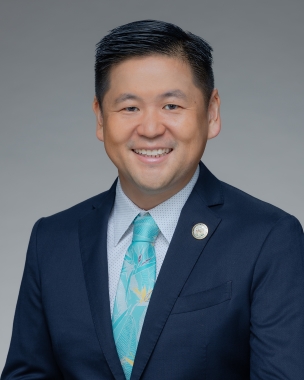
Sen. Troy Hashimoto
Sponsored bills
By 1/1/2028, requires the Department of Labor and Industrial Relations to establish a family and medical leave insurance program and begin collecting payroll contributions to finance payment of benefits. By 1/1/2029, requires the Department to start receiving claims and paying benefits under the program. Specifies eligibility requirements and employee protections under the program.
Establishes a working group to revise the State's Qualified Allocation Plan, the prioritization of the Rental Housing Revolving Fund, and the terms of loans made from the RHRF. Requires a report to the Legislature.
Beginning 7/1/2027, allows chiropractic students enrolled in a qualified chiropractic college to engage in clinical practice as part of their college instruction if directly supervised by a qualified licensed chiropractor. Requires the Hawaii Board of Chiropractic to adopt rules. Effective 7/1/2050. (SD2)
Maddy summarySB 500 sets clear labeling and advertising rules for coffee grown and processed entirely within the state, directly affecting local coffee producers and businesses selling such products. It defines "regional origin" to specify where coffee beans are sourced and processed, ensuring consumers receive accurate geographic information on labels. The bill requires producers to meet these new labeling standards for coffee sold in the state, replacing vague or inconsistent current practices. This change aims to provide transparency for shoppers about the origin of their coffee while standardizing requirements for in-state producers.
Establishes a two-year coconut rhinoceros beetle eradication pilot program in certain areas under the Department of Land and Natural Resources that incentivizes community members to collect and submit the coconut rhinoceros beetle and its larvae for compensation. Requires a report to the Legislature. Appropriates funds. Effective 7/1/3000. (HD1)
Requires the Department of Commerce and Consumer Affairs to adopt rules establishing privacy requirements for direct-to-consumer genetic testing in the State. Requires the Department's rules to specify whether consumers' genetic information may be used for purposes of investigative genetic genealogy.
Establishes a Local Agriculture Transportation Cost Reimbursement Program within the Department of Agriculture to reimburse eligible ranchers and farmers a portion of their costs to transport livestock, livestock products, agricultural commodities, and certain supplies, under certain conditions. Establishes a position to administer the Program. Appropriates funds. Effective 7/1/2050. (SD1)
Maddy summarySB 120 amends the responsibilities of the State Building Code Council. The bill's official abstract states it modifies the council's duties but does not specify the exact changes or who would be directly affected. As a procedural bill focused on administrative structure, it does not establish new requirements for building codes or impact specific entities like construction companies or homeowners. The bill is currently pending, having been referred to committees and scheduled for a public hearing in January 2025. No concrete policy changes or key mechanisms are described in the available context.
Establishes a Desalination Planning Task Force to examine the feasibility of, and develop a plan and timeline for, the use desalination as a source of potable water in the State. (SD1)