

Maddy summarySB 2406 clarifies labeling and advertising rules for coffee grown and processed entirely within the state, directly affecting local coffee producers and sellers. The bill defines "regional origin" to establish clear standards for claiming a coffee's specific geographic source. This creates a concrete requirement that labels must accurately reflect where the coffee was both grown and processed. The legislation aims to prevent misleading claims about coffee's origin while providing clear guidance for businesses operating under state regulations.
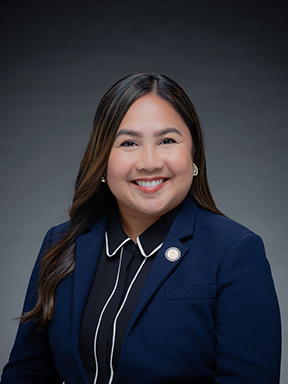
Sen. Rachele Lamosao
Sponsored bills
Excludes the sale of a motor vehicle to a lessor of rental motor vehicles for use as a rental motor vehicle as a sale at wholesale. Imposes the maximum allowable excise tax on the use of tangible personal property in the State for the importation or purchase of a motor vehicle by a lessor of rental motor vehicles for use as a rental motor vehicle. Establishes a Teacher Temporary Hazard Pay Special Fund to pay a temporary hazard pay bonus to certain eligible teachers. Beginning 7/1/2026 until 7/1/2030, deposits the additional tax revenue generated by this Act into the Teacher Temporary Hazard Pay Special Fund.
Requires each county Director of Finance to notify all applicable state and local agencies upon receipt of official notification of a vehicle transfer from a transferor. Requires each county Director of Finance to establish a centralized notification system to applicable agencies for every vehicle transfer by 7/1/2027.
Requires the Department of Business, Economic Development, and Tourism to provide public notice of certain information whenever a production obtains a permit or enters into a memorandum of agreement or understanding with DBEDT to film a visually recorded production at certain locations. Requires DBEDT to provide public notice of certain information whenever a production registers for pre-qualification or is determined to qualify for the Motion Picture, Digital Media, and Film Production Income Tax Credit and simultaneously post notice on a publicly accessible part of its website. Allows individuals to sign up to receive notice by electronic mail or postal mail.
Establishes a joint legislative Long-Term Care Financing Advisory Commission to examine the feasibility of different financing options for long-term care services and supports. Permits the Commission, through the Legislative Reference Bureau, to contract for services of a part-time project director and prepare proposals for contracts for consultants to support the work of the Commission. Requires the Commission to submit reports to the Legislature. Appropriates funds.
Establishes provisions regarding the volunteered administration of certain medications by authorized persons at public schools, including requirements for parent authorization, administration instruction, and liability protections. Expands permitted emergency treatments to include epinephrine, inhalers, seizure rescue medication, glucagon, insulin, and blood-glucose monitoring.
Beginning with the 2026-2027 school year, requires public charter schools participating in the National School Lunch Program to provide free meals to students whose family income is no more than three hundred per cent of the federal poverty level. Appropriates funds.
Permits the Department of Education and charter schools to hire unlicensed individuals as teachers on an emergency basis for five, rather than three, years. Requires the Hawaii Teacher Standards Board to adopt rules.
Maddy summarySB 2597 creates an income tax credit for dairy farmers who convert their operations to hog farming. The credit covers costs for building or upgrading facilities like pens, waste systems, or feed storage during the conversion process. This directly affects dairy farmers seeking to switch livestock operations by reducing their state income tax burden for these specific infrastructure expenses. The policy provides a concrete tax benefit for eligible conversion costs without altering broader tax rates or policies.
Repeals existing law that preempts local ordinances or regulations that regulate the sale of cigarettes, tobacco products, and electronic smoking devices and voids any existing local laws and regulations conflicting with the state law governing smoking. Allows counties to adopt ordinances that regulate the sale of cigarettes, tobacco products, and electronic smoking devices that do not conflict with and are more stringent than the state law that governs smoking.