

Maddy summaryHB 811 establishes penalties for property owners who fail to fix certain violations of residential property standards. It directly affects residential property owners who do not address required repairs or code violations. The bill's key provisions include imposing fines on owners who neglect remediation and, in specific cases, allowing foreclosure on the property to enforce compliance. This bill is currently pending in committee review and has not yet become law.
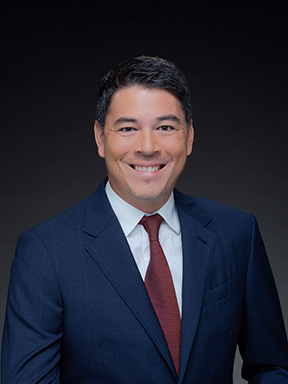
Rep. Sean Quinlan
Sponsored bills
Authorizes and decriminalizes the sale of raw milk, raw milk products, and raw milk dairy products directly from producers to consumers for human consumption, subject to certain restrictions. Authorizes the direct sale of raw goat milk for pet consumption. Establishes labeling requirements. Requires the Board of Agriculture and Department of Health to adopt rules no later than 7/1/2026.
Requires transient accommodations brokers and any other persons or entities to offer, list, advertise, or display a transient accommodations rental rate that includes all resort fees required for the furnishing of transient accommodations. Requires transient accommodations brokers and any other persons or entities to include all applicable taxes and fees imposed by a government on the stay in the total price to be paid before the consumer reserves the furnishing of transient accommodations. Establishes penalties. Effective 1/1/3000. (HD1)
Pursuant to a collective bargaining agreement negotiated for Bargaining Unit (5) and subject to the availability of funds, provides annual salary step increases for public school teachers who have completed a year's satisfactory service and comply with specified requirements. Effective 7/1/3000. (HD1)
Increases the minimum age for moped operators from fifteen to sixteen years. Increases the minimum age requirement for individuals prohibited from operating a moped unless they wear a safety helmet from eighteen to twenty-one years. Effective 7/1/3000. (HD1)
Requires the Department of Education, in collaboration with the Department of Health and State Public Charter School Commission, to conduct a study on the current practices of managing heat exposure in state public and charter schools to protect students' health during outdoor activities and to develop a plan if the current practices are insufficient in managing heat exposure. Effective 7/1/3000. (HD1)
Maddy summaryHB 694 establishes a refundable child tax credit for families with children, directly affecting households with qualifying dependents who file state income tax returns. The credit allows eligible families to receive money back from the state even if they owe no income tax, with the amount determined by the bill's specific formula (not detailed in the abstract). It applies to tax returns filed for taxable years starting after December 31, 2025, meaning the credit would first be available for 2026 tax filings. The bill is currently in committee referral and has not yet been voted on.
Establishes a licensing system for medical cannabis cultivation. Facilitates the transport of medical cannabis. Expands the scope of authorized actions for medical cannabis patients. Provides that qualifying out-of-state patients need not register with the Department of Health. Protects medical cannabis patients and cultivation licensees from undue discrimination.
Clarifies the definition of "covered employer" under the Hawaii Retirement Savings Act. Requires covered employers to automatically enroll covered employees into the Hawaii Retirement Savings Program unless the employee chooses to opt out. Repeals the limit on the total fees and expenses that can be spent for the Program each year. Appropriates funds to the Department of Labor and Industrial Relations for the development and operation of the Program. Effective 7/1/3000. (HD1)
Maddy summaryHB 213 allocates state funds to the Healthcare Education Loan Repayment Program, directly supporting healthcare professionals who took out education loans. The bill provides financial assistance to repay qualifying student loans for professionals working in underserved areas or specific healthcare roles. Key provisions include using state appropriations to cover a portion of eligible loan payments, reducing financial barriers for healthcare workers. The program becomes effective July 1, 3000 (a date likely indicating a placeholder or error in the abstract).