

Maddy summaryHB 554 designates the second new moon after the winter solstice each year as the state's official Lunar New Year observance, effective July 1, 3000. This is a symbolic designation with no near-term impact, as the effective date is over 995 years in the future. The bill does not change current holiday schedules or create new paid leave. It is a procedural measure to formally recognize Lunar New Year as a state holiday on a distant date. The committee recommended passage with amendments, but the bill will not affect any current or foreseeable legislative or policy implementation.
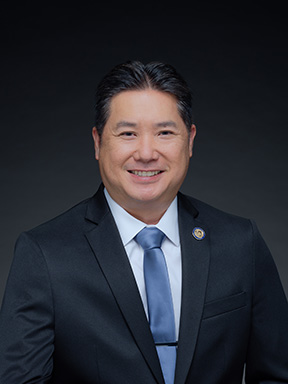
Rep. Cory Chun
Sponsored bills
Imposes a cap on charges for searching for, reviewing, and segregating government records under the Uniform Information Practices Act. Provides for a waiver of fees in certain circumstances when the public interest is served by a government record's disclosure.
Maddy summaryHB 665 establishes a data sharing and governance working group within the state's Office of Enterprise Technology Services to develop policies and best practices for sharing government data across agencies. The bill appropriates funds to support this group's work, which will help state agencies improve how they handle and share data. This bill directly affects state agencies that manage public data, as it creates a formal process for coordinating data sharing efforts. The key mechanism is the creation of this dedicated working group with dedicated funding, rather than changing existing data laws.
Appropriates funds to increase the funding for Medicaid in-home services, conditioned on the Department of Human Services obtaining the maximum federal matching funds. Effective 7/1/3000. (HD1)
Maddy summaryHB 444 removes the requirement that a person committing certain crimes must know or reasonably should know the victim is 60 years or older. This change directly affects seniors aged 60+ by making it easier to prosecute crimes against them, regardless of whether the perpetrator knew the victim's age. The bill modifies the legal standard for specific offenses, shifting the focus from the perpetrator's knowledge to the victim's age alone. It does not create new penalties but adjusts how existing crimes are evaluated when seniors are victims. The bill is currently pending in the 2026 legislative session.
Maddy summaryHB 1489 allocates state funds to the Department of Human Services (DHS) to administer core homelessness services. It directly affects individuals experiencing homelessness by providing resources for essential support programs, though the specific services (e.g., shelters, case management) are not detailed in the abstract. The bill’s key mechanism is funding distribution through DHS, requiring the department to manage these services under the state’s homelessness strategy. As of its current status, the bill is pending in the 2026 Regular Session after being referred to relevant committees in 2025.
Extends the State's energy-efficiency portfolio standards from 2030 to 2045 and updates the standards. Authorizes the public utilities commission to adjust the 2045 and interim standards.
Maddy summaryHB 507 allocates state funds to create a pilot program offering grants to homeowners for upgrading outdated cesspool systems. The program targets properties in specific areas to help meet environmental compliance standards, directly affecting homeowners with cesspools who may face replacement requirements. This is a temporary test project, not a permanent law, and will be evaluated after implementation to inform future policy.
Requires the Department of Transportation to adopt rules governing a clean fuel standard for alternative fuels in the State. Effective 7/1/3000. (HD1)
Maddy summaryHB 627 allocates funds to the Department of Education to hire staff positions focused on implementing and maintaining school safety measures. It directly affects public schools by providing resources to enhance safety protocols through dedicated personnel. The bill’s key provision is the appropriation of funding specifically for these safety-related roles, rather than altering existing safety standards. The measure is scheduled to take effect on July 1, 3000 (note: likely a typo for 2030, per standard legislative dates).