

Maddy summaryThis House Resolution requests the Executive Office on Aging to partner with the University of Hawaii at Manoa Center on Aging to create a "Kupuna Workforce Innovation Hub." The hub aims to implement short-term strategies from Hawaii's 2025 Strategic Plan to improve the state's direct care workforce for older adults (kupuna). Key actions include standardizing training for direct care workers, meeting with stakeholders to boost recruitment/retention, and analyzing workforce gaps to develop career pathways. The University must submit a report with findings and recommendations to the Executive Office by April 2026.
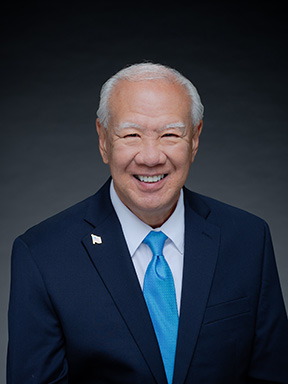
Rep. Gregg Takayama
Sponsored bills
Maddy summaryHCR 13 is a procedural resolution requesting the State Auditor to assess the social and financial impacts of proposed mandatory health insurance coverage for traditional Native Hawaiian healing practices. It specifically directs the Auditor to evaluate House Bill 641 (2023), which would require insurers to cover services like lomilomi massage and la’au lapa’au offered through federally qualified health centers or Native Hawaiian Health Care Systems. The resolution complies with Hawaii Revised Statutes §23-51, mandating this assessment before any such coverage mandate can be enacted. This resolution itself does not create new coverage requirements but seeks data to inform future legislative decisions.
Maddy summaryThis Hawaii House Resolution (HR 190) is a symbolic expression of support for Taiwan's democratic values and security, not a binding law. It urges the U.S. government to endorse Taiwan's observer status in international organizations like the World Health Organization, International Civil Aviation Organization, and International Criminal Police Organization. The resolution highlights Hawaii's longstanding sister-state relationship with Taiwan (since 1993), Taiwan's role as a semiconductor leader critical to global supply chains, and Hawaii's agricultural trade with Taiwan. It specifically calls for advancing U.S.-Taiwan trade initiatives, including a Bilateral Trade Agreement. The resolution has no legal effect but formally expresses Hawaii's position to federal officials and Taiwan.
Maddy summaryThis House Resolution (HR 31) requests the University of Hawaii to study whether nuclear energy development is viable in the state. It directly affects Hawaii residents by addressing the state's high electricity rates (over 100% above the national average) and heavy reliance on imported fossil fuels for 80% of energy. The study must examine nuclear energy's cost, safety, and utility, including potential impacts on Hawaii's environment and communities. The University must submit findings and recommendations to the Legislature and relevant officials by 2027. This resolution does not approve nuclear power plants or waste disposal - it only asks for a study.
Maddy summaryHCR 113 is a concurrent resolution requesting Hawaii's Director of Health to form a Water Fluoridation Working Group. The group, including health officials and county water department representatives, will study the feasibility of adding fluoride to public water systems and address obstacles to fluoridation. The group must submit findings and recommendations - including potential legislation - to the Legislature by January 2026, with the working group dissolving by June 2026. This resolution does not mandate fluoridation but seeks to evaluate it as a public health strategy.
Maddy summaryHCR 38 is a resolution requesting Hawaii's Tax Review Commission to study how to implement the state's existing Hawaii Long-Term Care Financing Program (established by Act 245 in 2002). It directs the Commission to identify possible financing methods, including reconsidering a 2003 proposal for a Long-Term Care Income Tax Credit, and to report findings to the Legislature by early 2026. The resolution does not create new law but asks the Commission to analyze implementation options and costs for the program, which aims to provide affordable long-term care for eligible residents regardless of income. This is a procedural step to advance a program framework that lacks operational details.
Maddy summaryHR 33 is a House Resolution requesting Hawaii's Tax Review Commission to study how to fund the existing Hawaii Long-Term Care Financing Program (established under Act 245, 2002). The resolution asks the Commission to identify specific funding mechanisms, including a revised version of a previously proposed Long-Term Care Income Tax Credit, and to report findings to the Legislature by January 2026. This resolution does not create new law but directs the Commission to analyze implementation options for a program designed to provide universal, affordable long-term care coverage. The Commission must evaluate possible financing methods, associated costs, and administrative requirements for the program.
Maddy summaryHCR 41 is a procedural resolution requesting Hawaii's Auditor to conduct a required social and financial assessment of a proposed mandate for health insurance coverage of Native Hawaiian healing practices. The resolution specifically targets practices like lomilomi and la’au lapa’au offered through federally qualified health centers or Native Hawaiian Health Care Systems, as referenced in pending House Bill 641. State law (HRS §23-51) mandates this assessment before any such coverage mandate can be considered. The Auditor must submit findings and recommendations to the legislature by January 2026, including potential legislative changes. This resolution itself does not change coverage but triggers the mandated evaluation process.
Maddy summaryThis Hawaii House Resolution (HR 146) requests the Department of Commerce and Consumer Affairs to create a Pharmacy Reimbursement Working Group. The group would study how health insurers pay pharmacists for clinical services (like medication management, immunizations, and chronic disease care) and propose legislation for the 2026 session requiring insurers to reimburse these services. It directly affects pharmacists, health insurers, and patients seeking care in underserved areas. The working group must include pharmacy representatives, insurers, and the Board of Pharmacy, and submit recommendations to the Legislature by early 2026.
Establishes factors under which officers may, without warrant, arrest and detain persons for petty misdemeanors and violations. Requires officers to record the factors that justified the warrantless arrest. (HD1)