

Maddy summaryHB 213 appropriates state funds to support the Healthcare Education Loan Repayment Program, which helps healthcare professionals repay educational loans. The program directly assists licensed healthcare workers, such as nurses and physicians, who serve in underserved areas or specific healthcare roles. The bill specifies funding allocation with an effective date of July 1, 3000, though this date appears to be a placeholder error. No additional details about eligibility, funding amounts, or program administration are provided in the available context.
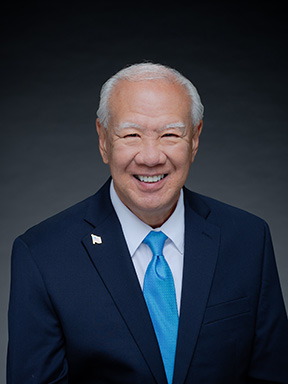
Rep. Gregg Takayama
Sponsored bills
Appropriates funds to the Judiciary to support services contracted with community-based organizations that deliver essential services, streamline judicial processes, and support the judiciary's capacity to effectively meet the needs of vulnerable households. Effective 4/23/2057. (SD1)
Establishes statewide, uniform standards to promote agricultural tourism activities in the State for all counties that have adopted an agricultural tourism ordinance. Requires agricultural tourism activities to be registered by the county planning department. Requires agricultural tourism activities to coexist with an agricultural activity on a farming operation and requires termination of the agricultural tourism activities upon cessation of the agricultural activity, except under certain circumstances. Makes conforming amendments. Effective 7/1/3000. (HD2)
Appropriates funds to the Department of Human Services to authorize Medicaid coverage through the Children's Health Insurance Program to income-qualified pregnant persons and children regardless of immigration status. Effective 7/1/3000. (HD1)
Maddy summaryThis concurrent resolution designates the State of Hawaii as a "Purple Heart State" to honor military personnel awarded the Purple Heart for combat wounds, death, or captivity. It does not create new laws or funding but formally recognizes Hawaii's support for veterans through legislative action. The resolution directs certified copies to the Governor and the Department of Defense's Veteran Services office. This symbolic gesture directly affects Purple Heart recipients and veterans in Hawaii by affirming state-level appreciation for their service.
Maddy summaryHCR 32 is a concurrent resolution requesting the University of Hawaii to study whether nuclear energy development would be viable in the state. The study would examine costs, safety, and practicality of nuclear power as a potential solution to Hawaii's high electricity rates (over 100% above national average) and heavy reliance on imported fossil fuels (80%+ of energy). The University must submit a report with findings and recommendations to the Legislature, federal officials, and local mayors by 2027. This resolution does not approve any nuclear construction or waste disposal, as explicitly stated in the bill. It is a procedural request for analysis, not a policy change.
Maddy summaryHCR 147 is a concurrent resolution urging Hawaii's Department of Health, Attorney General, and Department of Law Enforcement to coordinate an enforcement plan addressing illegal dispensaries selling cannabis labeled as hemp. It directly affects these state agencies and targets the surge of over 84 illegal operators selling cannabis (with THC over 0.3%) disguised as hemp, often near schools and in high-traffic areas like Waikiki. The resolution calls for interagency coordination to address gaps in enforcement, as current rules lack specific regulations for these illicit operations, which offer unregulated products without age checks or medical requirements. It does not create new laws but requests existing agencies use their authority under Hawaii Revised Statutes and administrative rules to combat this issue.
Maddy summaryThis House Resolution (HR 142) requests Hawaii’s Department of Health to create a task force that will develop minimum professional standards for community health worker training programs. The task force must include representatives from the Department of Health, community colleges, county health workers, advocacy groups, and healthcare organizations, with a report due by January 2026. It directly affects community health workers and training programs across Hawaii by aiming to establish consistent quality standards for their education and practice. The resolution does not create new law but seeks to improve workforce readiness and health outcomes through standardized training.
Maddy summaryHR 109 is a procedural resolution requesting Hawaii's Director of Health to convene a Water Fluoridation Working Group. The group would include the Director of Health (as chair) and county water department representatives from Honolulu, Kauai, Maui, and Hawaii counties. Its key task is to study best practices and obstacles for adding fluoride to public water systems, with a report due to the Legislature by August 2025. This resolution does not mandate fluoridation but seeks recommendations for potential future action.
Maddy summaryThis House Resolution (HR 141) urges Hawaii's Department of Health, Attorney General, and Department of Law Enforcement to create a coordinated enforcement plan addressing illegal dispensaries selling cannabis labeled as hemp. It directly affects state agencies responsible for public health and safety, noting over 84 such operations are selling unregulated cannabis near schools, airports, and residential areas without age checks or medical requirements. The resolution highlights that hemp (≤0.3% THC) and cannabis (over 0.3% THC) are chemically distinct, but illegal operators falsely label high-THC products as hemp, risking contaminated products. It references existing Hawaii laws (HRS Chapter 328G, HRS Chapter 11-37) but states no specific statutes currently cover these illegal operations. The resolution is non-binding and focuses on closing enforcement gaps, not creating new regulations.