

Establishes a basic housing allowance for legislators whose legal residence is on an island other than the island of Oahu during session. Appropriates funds.
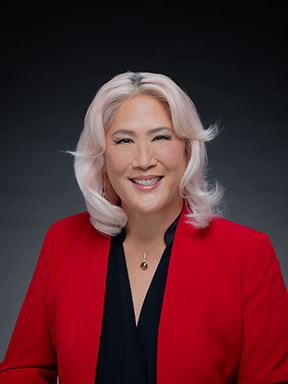
Rep. Kim Coco Iwamoto
Sponsored bills
Requires certain landlords to provide a specified notice to a tenant regarding the tenant's potential right to purchase the property, under certain conditions. Allows tenants, families, local governments, affordable housing nonprofits, and community land trusts forty-five days to match or beat the best bona fide offer to buy an eligible affordable housing property. Establishes conveyance tax rates for the sale of eligible affordable housing properties.
Requires the Civil Rights Commission to receive and investigate complaints related to acts of discrimination committed by transportation network company drivers against riders with service animals and report the results of its investigation to the Department of Transportation, which shall issue penalties to transportation network companies. Effective 7/1/3000. (HD1)
Appropriates funds to the Department of Agriculture for agricultural biosecurity and the prevention, detection, and control of invasive species in Maui County. Effective 7/1/2050. (SD1)
Exempts from the general excise tax amounts received by a nurse entrepreneur for health care-related goods and services purchased under Medicaid, Medicare, or TRICARE.
Beginning on 6/30/2030, requires all new playgrounds constructed on Department of Education school grounds to include accessible recreational playground equipment as part of the recreational apparatuses. Establishes the Accessible Recreational Playground Equipment Special Fund. Appropriates funds. Effective 7/1/3000. (HD2)
Part I: Establishes requirements for kauhale projects, including reporting requirements by the Statewide Office on Homelessness and Housing Solutions (OHHS). Requires the Auditor to conduct a management and performance audit of the kauhale initiative. Appropriates funds for the continued operation of the kauhale initiative. Part II: Establishes the Ohana Zones Program as a permanent program within OHHS. Appropriates funds to DHS for the continued implementation of the Ohana Zones Pilot Program. Part III: Requires OHHS to submit a report every four months to the Legislature detailing the expenditure of funds appropriated toward the kauhale and ohana zones initiatives and conduct a comprehensive needs assessment. Part IV: Changes references to the Governor's Coordinator on Homelessness to "Coordinator on Homelessness". Specifies that the Coordinator on Homelessness shall report directly to the Director of Human Services. (CD1)
Makes the Safe Spaces for Youth Pilot Program permanent within the Office of Youth Services. Requires the program to collaborate with certain state and county departments. Authorizes the Office of Youth Services to contract with nonprofit organizations to provide shelters for homeless youth or young adults. Requires annual reports to the Legislature. Appropriates funds. (CD1)
Expands existing crisis intervention programs by requiring, and appropriating funds for, the Department of Health to establish a Homeless Triage and Treatment Center Program within its Alcohol and Drug Abuse Division to serve homeless individuals and individuals at risk of homelessness with substance abuse issues or mental illness. Requires the Crisis Intervention and Diversion Services Program to redirect certain homeless persons to the appropriate health care system and services. Authorizes the program to include intensive mobile outreach services. Requires appropriations for the program to be used only for services contracted directly between the Department of Health and the service provider. (CD1)
Maddy summaryHB 474 allocates funds to the Department of Health to support its existing Fall Prevention Campaign. The bill directly affects the Department of Health by providing dedicated funding for ongoing fall prevention efforts, which target reducing injuries among older adults. Key provisions include appropriating specific budget resources to sustain current campaign activities like community outreach and safety education. This is a funding measure, not a new policy, and does not create new requirements for individuals or organizations.