

Expands the definitions of "preceptor" and "volunteer‑based supervised clinical training rotation" applicable to the Healthcare Preceptor Tax Credit to improve accessibility for providers to receive income tax credits for acting as preceptors, including removing "primary care" from the criteria to qualify as a preceptor. Adds physician assistants, dietitians, and social workers to the list of preceptors and eligible students. Expands eligibility for the tax credit to include accredited residency programs that require preceptor support. Adds the Director of Health and representatives of residency programs with eligible students to the Preceptor Credit Assurance Committee. Applies to taxable years beginning after 12/31/2026. Effective 7/1/2050. (SD2)
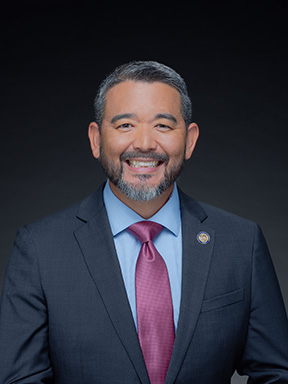
Rep. Andrew Garrett
Sponsored bills
Amends the private sector On-the-Job Training Work Experience Program to allow the Department of Labor and Industrial Relations to contract with employers and trade organizations or apprenticeship program sponsors without regard to chapters 103D and 103F, HRS; establish that an intern may become an apprentice in a registered apprenticeship program under certain conditions; require employers to pay $20 per hour for a maximum of 40 hours per week for all interns; provide, subject to certain limits, for the reimbursement of 100% of an intern's wages for employers, trade organizations, and sponsors having fewer than 50 employees, and 50% of an intern's wages for employers, trade organizations, and sponsors having 50 or more employees; and requires sponsors to pay, supervise, and train interns. Amends the State Internship and Workforce Development Program to require experience gained by interns to be applied towards the experience needed to meet minimum qualifications for civil service positions; require the Department of Labor and Industrial Relations and Department of Human Resources Development to develop guidelines for participation in the program; transfer certain program responsibilities from the Department of Labor and Industrial Relations to the Department of Human Resources Development. Appropriates funds. Effective 1/1/2077. (SD2)
Establishes a family caregiver tax credit for nonpaid family caregivers. Requires the Department of Taxation to submit annual reports to the Legislature. Appropriates funds. Applies to taxable years beginning after 12/31/2026. Effective 1/1/2050. (SD1)
Maddy summaryHB 1970 provides funding for the University of Hawaii Cancer Center's Hawaii Tumor Registry, which tracks cancer cases across the state. The bill directly supports the Cancer Center by enabling its data collection and analysis efforts. Key provisions include appropriating state funds to maintain and expand the registry's operations for cancer surveillance. This policy change focuses on strengthening statewide cancer data systems without altering patient care protocols or insurance coverage.
Establishes and appropriates funds in the form of grants for the Hawaii Farm to Families Program under the Department of Human Services to alleviate food shortages in the State. Requires reports to the Legislature. (SD1)
Requires the Hawaii Emergency Management Agency, fire chiefs, Law Enforcement Standards Board, and Department of Health to make available at least one hour of dementia‑specific training for first responders, including law enforcement officers, fire first responders, and emergency medical services personnel. Requires the Executive Office on Aging to take certain steps when reviewing and recommending dementia-specific training curricula. Effective 7/1/3000. (SD1)
Appropriates funds to the University of Hawaii at Manoa College of Tropical Agriculture and Human Resilience for the development of its human and community resilience institute. Effective 7/31/2055. (SD1)
Requires disclosure of the names of compensated officers of state and county contractors and grantees. Prohibits the compensated officers of certain state and county contractors and grantees from making, promising, or soliciting certain campaign contributions for the duration of the contract or grant. Provides that, for contributions received through a third-party payment processor website, whether received by check or directly deposited to the candidate or noncandidate committee, the date the contributor executes the transaction on the third-party payment processor website shall be deemed the date of receipt and the date of acceptance for campaign finance reporting and compliance requirements. Clarifies that monetary contributions and other campaign funds shall be deposited within 14 days of their physical receipt in a depository institution. Requires unlawful contributions to be returned to the contributor within 30 calendar days of receipt or escheat to the Hawaii Election Campaign Fund. Clarifies that where a violation of the prohibition against contributions and expenditures by lobbyists during legislative session occurs because of the acceptance or agreement to accept a prohibited contribution, and the contribution is by check, the date of violation shall be the date of the receipt of the check and not the date of deposit. Appropriates moneys. (SD3)
Maddy summaryThis bill requests the State Auditor of Hawaii to evaluate the social and financial impacts of a new law mandating health insurance coverage for biomarker testing. The assessment will focus on House Bill 1971, which requires insurers to cover medically necessary biomarker testing for diagnosing, treating, and monitoring diseases. The Auditor must submit a report with findings and recommendations to the Legislature before the 2027 session begins. This procedural measure ensures the state reviews the costs and effects of requiring insurance plans to cover this specific medical testing technology.
Maddy summaryThis bill requests the University of Hawaii Board of Regents to review and refine the operational missions of the system's four-year campuses to ensure each has a distinct and complementary role. The resolution asks the Board to consider workforce needs, student access, geographic service areas, and resource efficiency during this review. The Board is required to submit a report with findings and recommendations to the Legislature by twenty days before the 2027 Regular Session begins. The bill directly affects the University of Hawaii system, its Board of Regents, and the campuses at Manoa, West Oahu, and Hilo.