

Increases the maximum value of capital advancement contracts that may be executed by the Department of Transportation without legislative approval. Increases the minimum value of capital advancement contracts requirement for the Department of Transportation to obtain legislative approval through concurrent resolution. Increases the total aggregate value of capital advancement contracts that the Department of Transportation may enter into in a fiscal year. Establishes reporting requirements related to capital advancement contracts. (CD1)
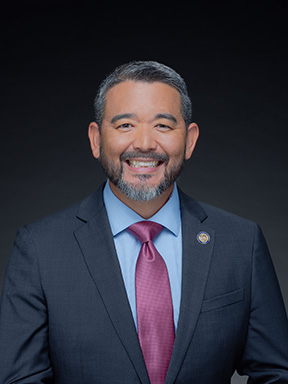
Rep. Andrew Garrett
Sponsored bills
Expands the Preschool Open Doors Program's eligibility criteria. Repeals the requirement that Preschool Open Doors Program providers be accredited. Effective 1/1/2026. (CD1)
Specifies for a county with a population of more than two hundred thousand but less than five hundred thousand, that the State or county may repair or maintain any street of which the ownership or jurisdiction is in dispute between the State and county. Specifies that the State or county that repaired or maintained the street may only be held liable for acts or omissions arising out of the repair or maintenance of that street that the State or county performed at any time. Deems that repair or maintenance of a street shall not confer ownership or jurisdiction over such street if the ownership or jurisdiction over the street is in dispute between the State and the county. Sunsets 7/1/2030. (CD1)
Maddy summaryHB 505 establishes a dedicated WAI Policy Coordinator to manage Red Hill-related initiatives and creates a Red Hill Remediation Special Fund to finance cleanup efforts. The bill directly affects Red Hill remediation projects by providing a centralized role for coordination and a dedicated funding source. Key provisions include appointing the coordinator to oversee initiatives and directing the special fund to support remediation activities without specifying project details. The bill is currently under review by the committee with a recommendation to pass.
Maddy summaryHB 713 allocates funds for Hawaii's Department of Human Services to study Medicaid home health service payment rates. This bill directly affects home health providers who receive Medicaid reimbursement in Hawaii by authorizing a rate study to determine appropriate payment levels. The key mechanism is a formal study process to assess current rates against costs and service needs. The bill does not change existing rates but sets the stage for potential future adjustments based on the study's findings. (3 sentences)
Exempts Department of Education purchases of local edible produce and packaged food products less than $250,000 from the electronic procurement system requirement. Requires at least three written quotes for Department of Education purchases of local edible produce and packaged food products of less than $250,000. Sunsets 6/30/2028. (CD1)
Creates a framework for the licensure of rural emergency hospitals at the state level by the Department of Health. Clarify Medicaid reimbursement policies for hospitals transitioning from a critical access hospital designation to a rural emergency hospital designation. (CD1)
Maddy summaryHB 110 adjusts existing targets and deadlines for the Department of Education to source locally grown food products for schools. It modifies the current timeline and specific goals the department must meet for purchasing locally produced agricultural items. The bill directly affects schools and the Department of Education by changing how they implement local food procurement requirements. These changes streamline the process without introducing new funding or penalties for compliance. The bill passed committee with amendments and is now moving forward in the legislative process.
Prohibits a person from installing, mounting, adhering, affixing, or using any sun screening device in conjunction with the glazing material of a motor vehicle with mirrored or high reflective finishes that produce a red, yellow, amber, or blue appearances from the exterior. Requires all drivers and passengers of motor vehicles with applied tint to fully roll down their windows when stopped by a law enforcement officer at a traffic stop, with certain exceptions. Clarifies the light transmittance levels on sun screening devices used in conjunction with glazing material for front side windows and wing windows. Exempts rear windows, including rear windshields on certain vehicles, and side windows to the rear of the driver on sedans from sun screening device requirements. Increases the minimum and maximum fines for violating sun screening device requirements. Specifies that failure of an installer to issue a required certificate to be a violation of sun screening device requirements. Makes the absence of the required certificate in a vehicle prima facie evidence that an installer is noncompliant with the law. (CD1)
Appropriates funds to the University of Hawaii John A. Burns School of Medicine for faculty positions in the fields of cardiovascular biology, tropical medicine, and quantitative health biostatistics, and an environmental health and safety officer staff position. (CD1)