

Requires and establishes deadlines for state facilities, except smaller facilities and facilities within the stadium development district, to implement cost-effective energy efficiency measures. Allows the department of accounting and general services to opt out of the cost-effective energy efficiency measures if a facility will be demolished within five years. Directs the Hawaii natural energy institute to collect utility bill and energy usage data for state-owned buildings and to make the data publicly available. Establishes a goal for the State to achieve at least a twenty-five percent reduction in the electricity consumption of state facilities. Provides that certain agencies that perform energy efficiency retrofitting may continue to receive appropriations for energy expenditures. Beginning 7/1/2022, requires, where feasible and cost-effective, the design of all new state building construction to maximize energy and water efficiency, maximize energy generation potential, and use building materials that reduce the carbon footprint of the project. Effective 7/1/2050. (SD1)
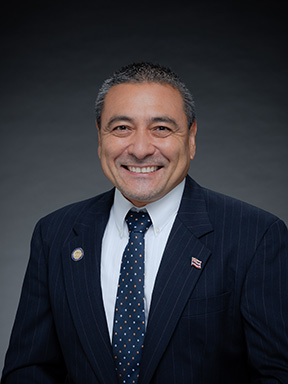
Rep. Mark Hashem
Sponsored bills
Expands the time period by which a civil action for childhood sexual abuse may be initiated. Extends the period during which a victim of childhood sexual abuse may bring an otherwise time-barred action against the victim's abuser or a legal entity having a duty of care. Allows recovery of treble damages in certain circumstances. Provides for training on trauma-informed response. Applies retroactively to 4/24/2020. (SD1)
Creates the clean energy and energy efficiency revolving loan fund in the Hawaii green infrastructure special fund to be administered by the Hawaii Green Infrastructure Authority. Amends the purpose of the revolving sub-fund to expand financing for state agencies and also includes the electrification of fleet vehicles. Repeals the building energy efficiency revolving loan fund. Appropriates funds from the clean energy and energy efficiency revolving loan fund to make loans for clean energy investments or other authorized uses. Effective 7/1/2050. (SD1)
Appropriates funds to support the ongoing operations of the Hawaii national guard youth challenge program. Effective 7/1/2050. (SD1)
Authorizes each county to adopt ordinances to enforce section 291-71, Hawaii Revised Statutes, including the establishment of penalties for failure to comply with its requirements or make reasonable efforts to maintain electric vehicle (EV) charging stations in working order. Clarifies that certain enforcement officers may enter private property to enforce EV parking space violations. Requires new EV charging systems installed pursuant to the EV charging system requirement to be at least Level 2 and network-capable beginning 1/1/2022. Changes EV charging equipped parking requirements per one hundred stalls from one stall by 2012 to five stalls by 2025 and ten stalls by 2030. Takes effect 7/1/2050. (SD1)
Exempts any person from the post-arrival mandatory selfquarantine if the person receives a negative test result prior to arrival. Allows the governor to establish statewide conditions for exemption. Requires certain COVID-19 tests for travelers who do not have a test result upon arrival to avoid mandatory self-quarantine. Requires any person who does not obtain a negative test result for COVID-19 pre-arrival to be responsible for all costs associated with that person's mandatory self-quarantine. Prohibits the suspension of this Act except by legislative approval via a concurrent resolution. Repeals on 12/31/2021. Effective 7/1/2050. (HD2)
Requires sellers to disclose whether the real property lies within the sea level rise exposure area designated by the Hawaii climate change mitigation and adaptation commission or its successor. Effective 1/1/2050. (HD2)
Exempts from general excise tax law amounts received from the interisland transportation and related loading and unloading of agricultural commodities. Effective 1/1/2050. (HD2)
Prohibits drivers from operating vehicles with more than four wheels and high-passenger cars in the left lane, or close to the left-hand curb or left-hand edge, of a state or county roadway. Exempts drivers operating public transportation vehicles in a zipper lane or diamond lane.