Requires the Department of Agriculture and Agribusiness Development Corporation to annually lease at least fifty per cent of land leased or up for lease renewal to operations whose primary business is local food production beginning 1/1/2022. Requires the Department of Agriculture and Agribusiness Development Corporation to submit reports to the legislature on leasing activities.
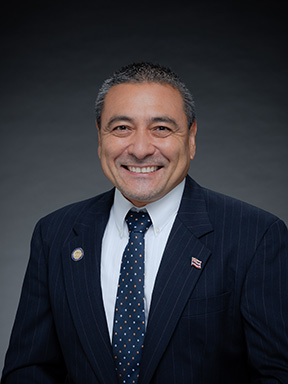
Rep. Mark Hashem
Sponsored bills
Increases the Board of Agriculture Chairperson's authority to approve agricultural loans and aquacultural loans not to exceed $50,000 of state funds, rather than $25,000.
Authorizes each county to adopt ordinances to enforce section 291-71, Hawaii Revised Statutes, including the establishment of penalties for failure to comply with its requirements or make reasonable efforts to maintain electric vehicle (EV) charging stations in working order. Clarifies that certain enforcement officers may enter private property to enforce EV parking space violations. Requires new EV charging systems installed pursuant to the EV charging system requirement to be at least Level 2 and network-capable beginning 1/1/2022. Changes EV charging equipped parking requirements per one hundred stalls from one stall by 2012 to five stalls by 2025 and ten stalls by 2030. Takes effect 7/1/2050. (SD1)
Authorizes counties to establish a program for commissioned volunteer enforcement officers to assist their police department with specified enforcement actions within their traffic division.
Establishes a road connectivity task force to assess and identify ways of improving road access in rural areas and in subdivisions with substandard roads. Requires a report to the legislature.
Allows county governments to enter into private-public partnerships for the services and transferring, or joint venturing of one or more of their wastewater treatment facilities to a private entity, or its wholly owned nonprofit management entity, for the delivery of those services.
Allows boards to use interactive conference technology to remotely conduct public meetings under the sunshine law in conjunction with in-person meetings, even when no emergency has been declared by government authorities. Authorizes boards to exclude the public from nonpublic locations, such as homes, where board members are physically present when remote board meetings are held by interactive conference technology. Establishes requirements for the conduct of remote meetings. Establishes a new notice requirement to provide the board's contact information for the submission of written testimony by electronic or postal mail. Amends existing option to hold in-person meetings at multiple public meeting sites connected by interactive conference technology to require termination of meeting only if audio communication is lost and cannot be reestablished within an hour and the board had not provided reasonable notice of how the meeting would be continued. Allows for additional courtesy sites open to the public for remote and in-person meetings held by interactive conference technology. Allows for contact tracing and social distancing during states of emergency caused by contagious diseases. Effective 7/1/2050. (HD1)
Requires sellers to disclose whether the real property lies within the sea level rise exposure area designated by the Hawaii climate change mitigation and adaptation commission or its successor. Effective 1/1/2050. (HD2)
Includes the line of voters at a voter service center, place of deposit, or its appurtenances in the prohibition of campaign related activities taking place within the 200-foot perimeter surrounding voter service centers, place of deposits, and appurtenances.
Requires and establishes deadlines for state facilities, except smaller facilities and facilities within the stadium development district, to implement cost-effective energy efficiency measures. Allows the department of accounting and general services to opt out of the cost-effective energy efficiency measures if a facility will be demolished within five years. Directs the Hawaii natural energy institute to collect utility bill and energy usage data for state-owned buildings and to make the data publicly available. Establishes a goal for the State to achieve at least a twenty-five percent reduction in the electricity consumption of state facilities. Provides that certain agencies that perform energy efficiency retrofitting may continue to receive appropriations for energy expenditures. Beginning 7/1/2022, requires, where feasible and cost-effective, the design of all new state building construction to maximize energy and water efficiency, maximize energy generation potential, and use building materials that reduce the carbon footprint of the project. Effective 7/1/2050. (SD1)