

Maddy summaryHB 1448 appropriates funds for capital improvement projects within the Nineteenth Representative District. The bill directly affects residents and local infrastructure in that district by providing financial resources for projects like facility repairs, upgrades, or new construction. Key provisions involve allocating state funds specifically for these district-focused capital improvements, without creating new regulations or requirements. As a funding bill, it does not change existing laws but enables targeted investments in local infrastructure. (2 sentences, consistent with procedural bill guidelines)
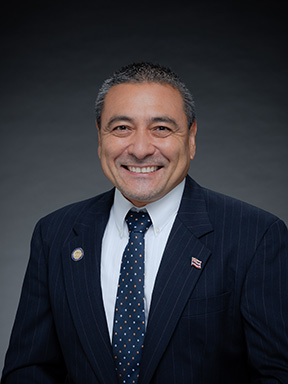
Rep. Mark Hashem
Sponsored bills
Restricts the use of solitary confinement in state-operated and state-contracted correctional facilities, with certain specified exceptions. Requires the Department of Corrections and Rehabilitation to develop written policies and procedures regarding solitary confinement by 7/1/2026. Requires the Hawaii Correctional System Oversight Commission to review certain housing placements. Requires the Department to develop policies and procedures to review committed persons placed in solitary confinement and develop a plan for committed persons currently in solitary confinement by 4/1/2026. Requires a report to the Legislature and Hawaii Correctional System Oversight Commission. Effective 7/1/2026.
Directs the Department of Human Services to adopt rules to expand Medicaid eligibility to all children in the State from birth to age 5 years without regard to household income. Appropriates moneys.
Maddy summaryHB 913 allocates state funds to create new staff positions within the Department of Land and Natural Resources' Division of Aquatic Resources. This bill directly affects the division by enabling it to hire additional personnel for managing aquatic resources. It is a procedural funding measure with no policy changes, solely providing resources for staffing. The bill was introduced on January 21, 2025, and passed its first reading on January 23, 2025.
Maddy summaryHB 40 is a short-form bill introduced to the Washington Legislature that relates to government operations but does not specify any concrete policy changes or direct impacts on individuals or organizations. The bill was recently referred to the Ways and Means Committee for further review, with no additional details provided in the official abstract about its specific provisions or mechanisms. As a procedural measure, it currently lacks substantive content that would allow for a detailed description of its effects or requirements.
Adds a minimum penalty and amends the maximum penalty per violation of the State Water Code, expands the types of potential violations of the State Water Code, and makes each day that a violation exists or continues to exist a separate offense. Requires the Commission on Water Resource Management to consider certain factors when imposing penalties.
Authorizes the Department of Land and Natural Resources to operate and approve conservation banks and amends the Endangered Species Recovery Committee's membership and scope of authority. Effective upon approval.
Establishes a process, beginning on January 1, 2026, for automatically preregistering or registering public, charter, and private school-enrolled students who are at least 16 years old to vote.
Maddy summaryBased solely on the provided context, HB 39 is a procedural bill with no substantive details available. The official abstract states only "Short form bill relating to land use" without describing specific provisions, mechanisms, or affected parties. No key policy changes or concrete impacts are indicated in the summary or recent actions (which only show procedural steps like referral and introduction). Without additional bill text or committee details, a meaningful summary cannot be generated. For specifics, consult the full bill text or official legislative resources.
Defines "isolated wetlands" and "wetlands". Clarifies the definition of "state waters" to include wetlands and isolated wetlands. Requires the Director of Health to determine all wetlands in the State, including whether a wetland is an isolated wetland or is included in the waters of the United States. Prohibit persons from discharging any water pollutant into or at any location that enters state waters.