

RELATING TO TAXATION.
Establishes a nonrefundable state child tax credit.
In committee Dec 10, 2021
0 co-sponsors
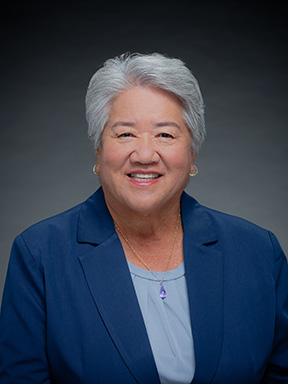
Establishes a nonrefundable state child tax credit.
Clarifies that "customary and traditional subsistence farming", which is customary and traditional subsistence farming conducted by a native Hawaiian cultural practitioner in certain situations, is included as a protected activity under the Hawaii Right to Farm Act. Clarifies that the cultivation of crops and activities related to game, fish, and livestock on agricultural lands may be for economic use or customary and traditional subsistence farming. Provides that one of the State's policies under the Hawaii State Planning Act's agricultural objectives is to assure the right of native Hawaiian cultural practitioners to engage in customary and traditional subsistence farming for direct personal or family consumption. Effective 7/1/2060. (HD1)
Increases the Board of Agriculture Chairperson's authority to approve agricultural loans and aquacultural loans not to exceed $50,000 of state funds, rather than $25,000.
Limits the government's use of facial recognition systems, except in certain circumstances. Does not apply to personal use of a privately owned facial recognition system when acting in an unofficial capacity.
Exempts Waikiki from certain coastal zone management program policies relating to beach protection.
Beginning 1/1/2031, prohibits underground injection unless authorized by a National Pollutant Discharge Elimination System permit obtained from the director of health.
Increases the amount of tax credit allowable for household and dependent care services from $2,400 to $4,800 for a qualifying individual and from $4,800 to $9,600 for two or more qualifying individuals.
Requires the state building code council to make determinations on the financial impact, including the impact on amortized utility costs, of the adoption of a code or standard on single-family and multi-family homes and include the determinations in its annual reports to the governor. Effective 1/1/2050. (HD1)
Allows persons with a mental illness to participate in the vending facilities program. Limits vending facilities owned or operated by persons with mental health disorders to only those state or county public buildings not currently occupied by blind or visually handicapped vendors.
Establishes an office of the housing advocate within the office of the governor.