

Maddy summaryThis House Resolution urges the University of Hawaii President and Board of Regents to establish a Bachelor of Science in Nursing (BSN) program at the University of Hawaii Maui College. It directly affects Maui residents, particularly nursing students who currently face barriers to completing BSN degrees locally - most either cannot complete the statewide consortium due to remaining in Maui's workforce or enroll in out-of-state online programs. The resolution proposes creating a local pathway to advance nursing education without requiring students to relocate, addressing gaps in the current associate-to-bachelor's transition. It does not create binding law but requests the university allocate resources for faculty, curriculum, and facilities to develop the program.
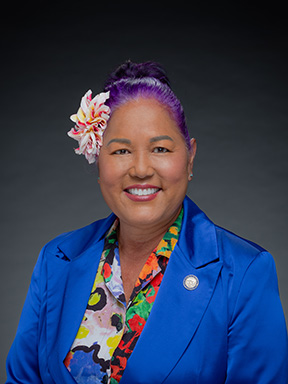
Rep. Elle Cochran
Sponsored bills
Maddy summaryThis House Resolution (HR 99) urges Hawaii’s counties to adopt local zoning ordinances requiring owners of agricultural-zoned land to sign and record declarations acknowledging state and county agricultural land use rules and penalties for noncompliance. It directly affects agricultural landowners statewide, particularly those on land designated for farming but not actively used for crops or grazing (only ~8% of such land is currently used for crops). The key mechanism is mandating these declarations - similar to Maui County’s existing requirement for building permits - to ensure future owners understand regulations and to encourage active agricultural use. The resolution also encourages counties to share information about farm mentorship programs (like GoFarm Hawaii) to help landowners transition to production. As a resolution, it does not create new law but seeks to align county policies with state goals of increasing farmland productivity and food security.
Maddy summaryHR 156 is a non-binding House Resolution urging the City and County of Honolulu, County of Maui, County of Hawaii, and County of Kauai to establish new sister city relationships with Pacific Island municipalities. It cites the 2024 Festival of Pacific Arts as inspiration, noting existing sister city ties (30 in the Pacific region) and emphasizing cultural, educational, and business exchanges. The resolution has no legal force but recommends these counties expand partnerships to strengthen regional ties and mutual cultural appreciation. It does not create new obligations or funding.
Maddy summaryThis House Resolution (HR 158) urges the Hawaii State Foundation on Culture and the Arts to create an annual festival celebrating Pacific Island cultures and arts. It directly addresses the Foundation, referencing the success of Hawaii's 2024 FestPAC event (which drew 500,000 visitors) as a model. The resolution does not create new law but formally requests the Foundation, in consultation with other agencies, to establish this recurring event to promote Pacific cultural heritage and regional connections.
Maddy summaryHCR 161 is a concurrent resolution urging Hawaii's four counties (Honolulu, Maui, Hawaii, and Kauai) to establish new sister city partnerships with Pacific Island municipalities. It does not create new laws but formally encourages these counties to expand existing relationships, building on Hawaii's current 30 Pacific Island sister cities out of 89 worldwide. The resolution highlights shared cultural ties and the value of exchanges in areas like arts, education, and community development, referencing the 2024 Festival of Pacific Arts as a catalyst. It specifically directs county mayors and the Hawaii State Foundation on Culture and the Arts to pursue these partnerships.
Maddy summaryThis Hawaii House Resolution (HR 213) commends the U.S. Coast Guard Station Maui for its response to the August 2023 Lahaina wildfire. It specifically recognizes the station’s crew for saving 17 lives, assisting 40 people in peril, extracting 90 vessels from Lahaina Harbor, and removing 10,000 gallons of petroleum from the marine environment during extreme conditions. The resolution honors the crew’s actions, including navigating through flames and hazardous seas to rescue stranded residents. As a symbolic gesture, it does not create new laws or policies - it expresses the Hawaii Legislature’s appreciation for the Coast Guard’s service.
Exempts the donation of wild game meat or meat products, including axis deer, to a charitable, religious, or nonprofit organization for the purpose of feeding needy individuals from certain laws regarding the inspection and transportation of meat. Effective 12/31/2050. (SD1)
Allows the Department of Hawaiian Home Lands to utilize the Dwelling Unit Revolving Fund as collateral when the Department acts as an eligible borrower for a loan agreement under section 184A of the Housing and Community Development Act of 1992, as amended. Appropriates funds. Effective 7/1/3000. (HD1)
Maddy summaryHCR 160 is a formal request from Hawaii's legislature urging the Peace Corps to restart a mission in the Marshall Islands. It directly addresses the Marshall Islands' challenges, including high rates of obesity and diabetes linked to food imports, limited education access, and health issues from historical nuclear testing. The resolution asks the Peace Corps to establish a mission and coordinate with agencies like USAID, the U.S. Department of Defense, and the Red Cross to support economic relief and food security. As a non-binding resolution, it does not change laws but seeks to revive a past partnership to address these specific community needs.
Maddy summaryThis bill (HCR 20) requests the Honolulu Auditor to audit the city's current permitting, inspection, and penalty processes for "monster homes" - oversized residential structures that bypass zoning and building codes. It directs the Auditor to identify flaws in these processes and recommend specific improvements, including stronger penalties (based on property value, demolition costs, or correction costs), clearer compliance deadlines, and better enforcement steps. The resolution does not change laws but requires a report with actionable recommendations to the Mayor, City Council, and Legislature by early 2026. The goal is to prevent future violations and protect neighborhood integrity through more effective oversight.