

Specifies that an engineering study is not required to be considered when reducing the maximum speed limit within ten miles per hour of the current speed limit for that road. Requires the Department of Transportation or a county, to the extent practicable, to consider National Association of City Transportation Officials guidance when setting a maximum speed limit for sections of highways with residential or commercial areas or schools immediately on a highway. (CD1)
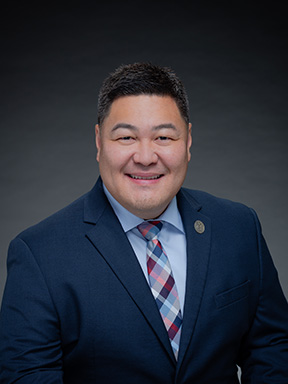
Rep. Tyson Miyake
Sponsored bills
Establishes and appropriates funds for fiscal year 2025-2026 for a three-year new wastewater system and individual wastewater system technology testing pilot program within the University of Hawaii Water Resources Research Center. Requires interim and final reports to the Legislature. (CD1)
Appropriates funds to the Department of Business, Economic Development, and Tourism for providing education and support to local businesses regarding the United States Food and Drug Administration's guidance on colored sea salt. (CD1)
Allows a pathway for foreign medical school graduates to be licensed as physicians that was previously only available to graduates who passed the qualifying examination of the Educational Commission for Foreign Medical Graduates before 1984. Establishes an alternative pathway for the licensure as physicians for foreign medical graduates who passed certain examinations, possess an Educational Commission for Foreign Medical Graduates certificate, and have completed two years of post-graduate medical training. (SD1)
Establishes the Mixed-Income Subaccount within the Rental Housing Revolving Fund, and sunsets the Subaccount on 6/30/2030. Requires the Transit-Oriented Development Infrastructure Improvement District Board to consider the infrastructure needs of transit-supportive density requirements. Requires the strategic plan developed by the Hawaii Interagency Council for Transit-Oriented Development to delineate transit-oriented development areas for each county. (CD1)
Amends covered offender registration laws by expanding the definition of "sexual offense" to include additional sexual offenses from the Penal Code. Provides that the exception to covered offender registry public access requirements for a first-time misdemeanor offense does not apply when the covered offense was committed against a minor. Clarifies that a person who is required to report their location of residence in person every year under the covered offender registration requirements shall report during the thirty-day period following the offender's birthday, rather than from the offender's actual date of birth. Specifies how certain covered offenses are to be tiered for purposes of seeking termination of registration requirements. (CD1)
Prohibits drug manufacturers from denying, restricting, or prohibiting the acquisition, shipping, or delivery of a 340B drug to pharmacies contracted with 340B covered entities under the federal 340B Drug Pricing Program. Authorizes 340B covered entities and the Attorney General to bring a civil action for enforcement within four years of a violation. Beginning 7/1/2026, requires each 340B covered entity in the State to report certain information annually to the hospital trade association operating in the State and requires the hospital trade association to prepare and publicly post an aggregate report of reports submitted by each 340B covered entity. (CD1)
Creates a framework for the licensure of rural emergency hospitals at the state level by the Department of Health. Clarify Medicaid reimbursement policies for hospitals transitioning from a critical access hospital designation to a rural emergency hospital designation. (CD1)
Establishes a two-year Librarian Pilot Program to serve one school complex on Oahu and one school complex on an island other than Oahu. Appropriates funds. (CD1)
Maddy summaryHB 862 allows school districts to use motorcoaches, small buses, and vans for student transportation services, provided they meet specific safety and operational requirements. This bill directly affects public school districts that rely on transportation services for students. The key provision expands the types of vehicles eligible for school bus use beyond standard school buses, while requiring compliance with established safety standards. The bill passed committee with amendments in February 2025 but has not yet become law.