Establishes a Medi-Medi Project within the Executive Office on Aging to assist older adults, Medicare beneficiaries, individuals with disabilities, and other underserved populations who may qualify for various low-income subsidy programs to gain access to their benefits. Requires the Executive Office on Aging to submit reports to the Legislature. Appropriates funds for staff and operating expenses. Requires and appropriates funds for the Executive Office on Aging to develop a one-year pilot project to provide the Medi-Medi Project to kupuna and families living in a disadvantaged community, specifically the Kalihi Valley catchment areas. (CD1)
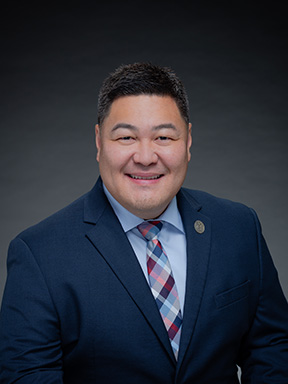
Rep. Tyson Miyake
Sponsored bills
Maddy summaryHB 703 extends the deadline for the State Rent Supplement Program for Kupuna (Hawaiian elders) from its original sunset date to June 30, 2028. This bill directly affects low-income Kupuna residents in Hawaii who rely on the program to help cover housing costs. The key provision is simply extending the program's operational deadline, ensuring continued eligibility for participants without altering the program's structure or funding. As a procedural extension, the bill does not introduce new benefits or requirements.
Appropriates funds for the Family Health Services Division of the Department of Health to establish and oversee peer-to-peer support programs for children from birth to age five and their families, including the establishment of program specialist positions. (CD1)
Authorizes the Hawaii Housing Finance and Development Corporation to utilize revenue bonds when obtaining a line of credit or other instrument of indebtedness for the Bond Volume Cap Recycling Program. (CD1)
Permits the Department of Labor and Industrial Relations to enter into contracts with eligible employers or registered apprenticeship programs in the private sector to provide on-the-job training to eligible interns. Establishes a state internship and workforce development program. Requires the Department of Labor and Industrial Relations to collaborate with the Department of Human Resources Development for placement of interns in state executive branch departments, agencies, and programs. Provides that the State shall be the responsible employer for purposes of workers' compensation coverage for students or recent graduates in the on-the-job-training work experience program, subject to certain limitations. Appropriates funds. (CD1)
Appropriates funds to the Department of Law Enforcement to conduct fireworks sting operations and establish an explosives and firearms laboratory. (CD1)
Establishes various criminal offenses and penalties related to fireworks or articles pyrotechnic. Amends multiple definitions and penalties for fireworks offenses, including heightened penalties if another person suffers substantial bodily injury, serious bodily injury, or death as a result of the fireworks offenses. Adds fireworks infractions to the existing adjudication of infractions process for traffic and emergency period infractions. (CD2)
Allows recordings made by law enforcement agencies who are using, controlling, or operating unmanned aerial vehicles to establish probable cause for arrests under the Fireworks Control Law if the unmanned aerial vehicle is recording directly above public property and the act leading to the arrest is committed on public property. (CD1)
Part I: Renames the Department of Agriculture as the Department of Agriculture and Biosecurity (Department) and the Board of Agriculture as the Board of Agriculture and Biosecurity. Part II: Establishes a Deputy Chairperson for Biosecurity. Part III: Authorizes and specifies conditions under which the Department may declare a biosecurity emergency, during which the Department and Governor may take certain actions to prevent the establishment or spread of pests and prohibited or restricted organisms. Broadens the objectives and general actions of the Biosecurity Program. Part IV: Authorizes the Department to establish transitional facilities. Requires the Department to certify and train biosecurity compliance auditors to inspect imported plants and animals. Requires inspection of various items transported interisland. Increases penalties for illegally transporting plants, animals, and microorganisms. Part V: Authorizes the Department to enter into government‑industry agreements for readiness and response to unwanted organisms in the State. Authorizes biosecurity and pest management plans to address, contain, or eradicate pests. Requires the Department to establish a pest dashboard by 12/1/2025. Part VI: Authorizes the Department to adopt rules to establish and enforce the Plant Care Component Program. Authorizes the Department to assess administrative penalties for the enforcement of the Plant Care Component Program. Part VII: Transfers the Hawaii Invasive Species Council from the Department of Land and Natural Resources to the Department. Part VIII: Appropriates funds. (CD1)

Prohibits the sale of any raw processed ahi by retail establishments without a label that states the country where the ahi was landed. Effective 7/1/2026. (CD1)