

Maddy summaryHB 1288 would create a Rare Disease Advisory Council within the state Department of Health. The council would provide direct input to the state on the needs of individuals living with rare diseases. Its key mechanism is to advise state health officials on policies and resources affecting rare disease patients. The bill, introduced in January 2025 but not yet enacted, focuses on establishing this advisory body to address gaps in care coordination and support.
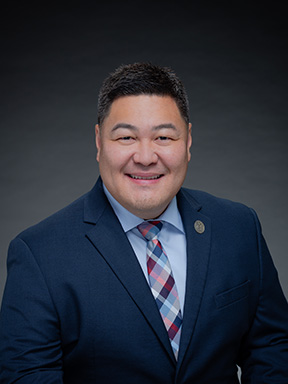
Rep. Tyson Miyake
Sponsored bills
Requires the Hawaii Community Development Authority to prepare environmental impact statements for the Iwilei/Kapalama and University of Hawaii West Oahu transit-oriented development infrastructure improvement districts on the island of Oahu. Effective 7/1/3000. (HD1)
Repeals the leasing restriction on owner-builders who obtain an owner-builder exemption to act as their own contractor and who build or improve residential or farm buildings or structures on property they own or lease and do not offer the buildings or structures for sale. Requires an owner or lessee to provide signed written notice that the structure for lease or sublease was built or improved by an individual who is not a licensed contractor. Effective 7/1/3000. (HD1)
Maddy summaryHB 327 allocates state funds to create a childcare center for state employees and their families, managed by the Office of the Governor. The bill directs the Governor's office to establish this facility, which would provide childcare services directly to eligible state workers. It appropriates the necessary funding to operate the center, effective July 1, 3000 (a date likely intended as a placeholder). This policy change creates a new childcare resource specifically for state employees, without altering existing childcare programs or funding for other groups.
Expands workers' compensation medical benefits for firefighters to include coverage for adenocarcinoma or mesothelioma of the respiratory system; cancer of the buccal cavity, colon, pharynx, and thyroid; and malignant melanoma. Specifies that an employer may prove that the cancer or disease was not associated with the firefighting duties to deny medical benefits under workers' compensation law. Effective 7/1/3000. (HD1)
Clarifies that dwelling units eligible under the Rent-to-Own Program shall be units that are for sale in fee simple or leasehold on state or county land under a lease with an initial term of no less than ninety-nine years. Increases the time the sale price under the program must remain fixed from five years to ten years. Effective 7/1/3000. (HD1)
Maddy summaryHB 626 allocates state funds to the Hawaii Department of Education for its Hoʻākea Program, effective July 1, 3000. The bill provides budgetary resources to support the program's operations, though specific activities or eligibility details are not outlined in the abstract. It directly affects the Department of Education and the program's designated beneficiaries, such as students or schools participating in the initiative. The legislation focuses solely on funding allocation, without specifying additional requirements or changes to existing policies.
Authorizes the issuance of special number plates to recognize the island of Kahoolawe. Specifies the decal size for all special number organizational plates. Effective 7/1/3000. (SD1)
Appropriates funds for critical repairs, maintenance, demolition, design, and construction for facilities of the College of Tropical Agriculture and Human Resilience at the University of Hawaii at Manoa. Establishes and appropriates funds for positions within the University of Hawaii for the College of Tropical Agriculture and Human Resilience. Effective 7/1/3000. (HD1)
Maddy summaryHB 178 appropriates state funds to establish a dedicated "state tea agent" position at the University of Hawaiʻi at Mānoa's College of Tropical Agriculture and Human Resources (CTAHR). This bill directly affects UH Mānoa CTAHR by funding a specific staff role focused on tea-related agricultural support. The bill does not change existing laws or regulations but allocates budget resources for this new position. As a funding measure, it is procedural in nature with no broader policy implications.