

Maddy summaryHB 1733 increases the maximum bond amount authorized under the state's Hula Mae Multifamily Housing Program, allowing more funds to finance affordable rental housing statewide. This directly affects developers building or maintaining low-income housing projects and residents relying on these affordable units. The bill raises the funding ceiling to prevent the program from hitting current limits, ensuring continued support for housing affordability. It does not change eligibility rules but expands available capital for housing projects across the state.
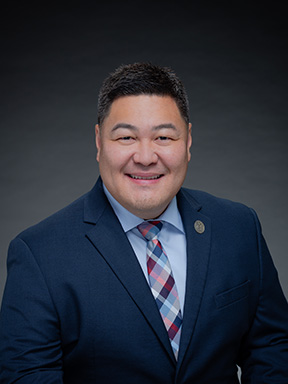
Rep. Tyson Miyake
Sponsored bills
Authorizes HHFDC to designate certain for-sale units as permanently affordable housing, subject to certain restrictions. Clarifies that certain resale and occupancy restrictions apply only to projects developed prior to a certain date. Amends the definition of "qualified resident" for the purposes of HHFDC housing development programs. Effective 7/1/3000. (SD1)
Makes the Dwelling Unit Revolving Fund Equity Pilot Program permanent, with modifications that include changing the method for computation of interest for purchasers of certain real property. Expands the use of proceeds in the Dwelling Unit Revolving Fund to include purchasing equity in for-sale housing development projects and interim primary or secondary financing. Exempts disbursements from the Affordable Homeownership Revolving Fund from appropriation and allotment requirements. Effective 7/1/2050. (SD1)
Authorizes supporting documents used to transfer ownership of a motor vehicle to an insurance company after payment of damages from the result of a total loss insurance settlement to be signed electronically. Requires insurance companies to indemnify and hold harmless the Director of Finance for any claims resulting from the issuance of motor vehicle titles utilizing documents signed electronically without a notary. Effective 7/1/2027. (SD1)
Establishes the Maternal Health Monitoring Pilot Program within the Department of Health to offer eligible participants improved maternal health care through remote patient monitoring for maternal hypertension and maternal diabetes. Appropriates funds. Effective 1/1/2050. (SD1)
Implements certain recommendations of the SPEED Task Force. Requires the State Building Code Council to provide annual training to state and county permitting agency employees. Appropriates funds for the training, subject to a matching requirement from the counties. Effective 7/1/2055. (SD1)
Clarifies that the Board of Education, through the State Librarian, has exclusive authority over the development, use, support, and improvement and maintenance of public library system facilities. Allows the Board of Education to authorize the State Librarian to exercise exclusive control of certain land for development or expansion purposes, subject to legislative appropriation. Requires the Department of Education to expeditiously cooperate with the State Librarian and Hawaii State Public Library System to effectuate any project authorized by the Board of Education on certain lands. Effective 7/31/2055. (SD1)
Expands workers' compensation medical benefits for firefighters to include coverage for adenocarcinoma or mesothelioma of the respiratory system; cancer of the buccal cavity, cervix, colon, esophagus, ovary, pharynx, skin, female reproductive organs, including the uterus, endometrium, and fallopian tubes, and thyroid; and malignant melanoma. Specifies that an employer may deny medical benefits under workers' compensation law only if they prove that the cancer or disease was not associated with firefighting duties. Effective 7/1/3000. (HD1)
Establishes the Electronic Posting Pilot Project for any county with a population between one hundred thousand and 175,000, to be administered by the county clerk of each participating county. Allows county agencies to satisfy county-wide public notice requirements by posting notices on official county websites, while retaining publication as an option. Requires a report to the Legislature. Effective 1/1/2525. (SD1)
Appropriates funds to the Office of Community Services (OCS) to award grants to certain nonprofit organizations. Establishes an evaluation and selection committee to oversee the awarding of grants. Requires an applicant for a grant to provide certain documentation on activities that qualify for community engagement hours to qualify for the grant. Appropriates funds for positions in OCS and for the Department of the Attorney General to assist OCS in reviewing contracts and monitoring costs. Effective 7/1/3000. (HD2)