

Establishes the Mixed-Income Subaccount within the Rental Housing Revolving Fund to prioritize development of workforce rental and for-sale housing projects for qualified residents. Requires the Hawaii Housing Finance and Development Corporation to adopt administrative rules. Appropriates moneys. Effective 7/1/2050. (SD2)
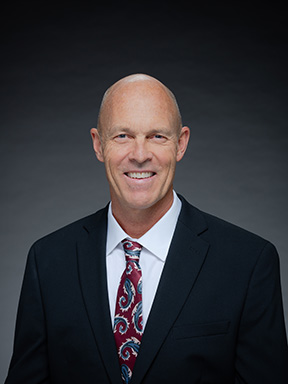
Rep. Matthias Kusch
Sponsored bills
Maddy summaryHB 784 appropriates funds for an additional ambulance based in Makalei on the island of Hawaii, effective July 1, 2050. This bill directly affects emergency medical services on the island by expanding ambulance capacity in the Makalei area. The measure is a straightforward funding allocation with no additional policy changes or regulatory provisions. It was recommended for passage by the Health Committee with amendments in February 2025.
Clarifies the labeling and advertising requirements for coffee that is grown and processed in the State. Defines "regional origin". Effective 7/1/2050. (SD1)
Requires the Department of Corrections and Rehabilitation to submit an annual report to the Legislature. Appropriates funds to the Department of Corrections and Rehabilitation for reentry services to connect offenders with community-based services. Effective 7/1/3000. (SD1)
Maddy summaryThis bill asks Hawaii's Department of Human Services to create a task force that will study how to make community care foster family homes more accessible for private-pay individuals. Currently, state law generally limits these homes to one private-pay client at a time, with exceptions only for married couples or civil unions. The task force will examine ways to streamline application processes for couples and potentially allow unrelated private-pay individuals to live together in the same home. The group will include representatives from health services, care home organizations, and case management agencies, and must submit its recommendations to the Legislature by early 2027. The bill also requests that the department publish annual statistics on applications from couples seeking to live together in these homes.
Maddy summaryThis bill requests that the Legislative Reference Bureau conduct a feasibility study on creating a guaranteed universal basic income program for working families in Hawaii. The study will be carried out in collaboration with state agencies and the University of Hawaii Economic Research Organization to assess the practicality of such a program. Key areas of analysis include potential program structures, estimated costs and funding sources, impacts on poverty and workforce participation, and lessons from similar programs in other locations. The final report with findings and recommendations is due to the Legislature before the 2027 session begins.
Maddy summaryThis bill requests a feasibility study to explore establishing a guaranteed universal basic income program for working families in Hawaii. The study will be conducted by the Legislative Reference Bureau in consultation with state departments and the University of Hawaii Economic Research Organization. It will examine program structures, costs, potential impacts on poverty and workforce participation, and lessons from similar programs elsewhere. The final report with recommendations is due before the 2027 legislative session.
Maddy summaryThis bill requests the Hawaii Department of Human Services to form a task force to study how to allow two unrelated private-pay individuals to live together in community care foster family homes. Currently, state law generally restricts these homes to one private-pay client at a time, or two only if they are married or in a civil union. The task force will examine ways to simplify application processes for couples and potentially expand housing options for unrelated individuals while considering impacts on Medicaid recipients. The group will include representatives from health services, care home organizations, and other relevant stakeholders, and must submit its findings and recommendations to the Legislature by early 2027.
Maddy summaryThis bill is a concurrent resolution that formally acknowledges the health risks posed by air pollution from internal combustion engine vehicles to communities across Hawaii. It highlights how traffic-related pollution disproportionately affects vulnerable populations, including children, older adults, and lower-income communities living near major roadways. The resolution affirms the state's commitment to transitioning toward cleaner transportation options to improve public health and air quality. It does not create new laws or funding but serves to recognize these issues and direct copies to relevant state officials.
Maddy summaryThis House Resolution acknowledges the public health risks posed by air pollution from internal combustion engine vehicles, particularly in communities near busy roadways and among vulnerable populations like children and older adults. It highlights how traffic-related pollutants can affect both outdoor and indoor air quality, potentially contributing to respiratory issues, cardiovascular disease, and other health problems. The resolution affirms the state's commitment to transitioning toward cleaner transportation options and directs copies of the document to key state officials to inform future policy decisions.