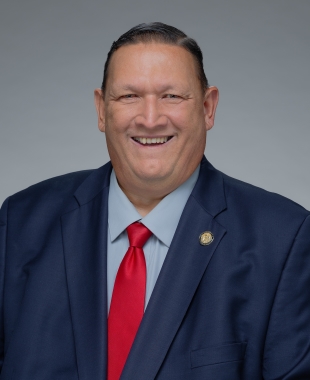
This bill requests that Hawaii's Public Utilities Commission impose specific conditions before approving any costs related to liquefied natural gas infrastructure, operations, or fuel supply. It directly affects utility companies and ratepayers by requiring that all LNG costs be fully recovered by 2045, eliminating obligations for stranded investments, and ensuring fuel supply agreements allow for a complete phase-out by 2045. The resolution also mandates that LNG approvals must not increase costs for customers in Hawaii, Kauai, or Maui counties, must include protections against fuel price volatility through utility sharing mechanisms, and must deny costs if cleaner alternatives are available or if the commitment exceeds renewable energy needs. Additionally, the bill directs the commission to consider how LNG approvals might impact renewable energy development and to evaluate risks from stranded assets and reliance on single fuel suppliers when reviewing utility costs.
This bill requests the Hawaii Department of Health to conduct a study on the accuracy and clarity of recyclable, biodegradable, and compostable product labels sold in the state. The study will examine whether these labels match actual recycling and composting capabilities, identify common contaminants caused by misleading claims, and review existing industry standards. It specifically asks the department to assess products with the chasing arrows symbol, evaluate biodegradable and compostable claims, and analyze the differences between home and industrial composting conditions. The department must submit a report with findings and recommendations to the Legislature by early 2027, which may include proposed new labeling guidelines.
This bill requests the Office of Planning and Sustainable Development to form a working group focused on reducing construction and demolition waste in Hawaii. The group will bring together representatives from government agencies, private industries, and community organizations to develop strategies for deconstruction, material reuse, and sustainable building practices. Members will include leaders from construction, demolition, real estate, and waste management sectors, along with experts in architecture, urban planning, and environmental justice. The working group is tasked with creating policy recommendations and economic incentives to minimize landfill use while supporting the state's carbon neutrality goals, and it must submit annual reports to the Legislature.
This House Resolution urges the U.S. Navy to attend in-person community meetings regarding the cleanup of the Red Hill fuel storage facility on Oahu, where fuel leaks have contaminated local drinking water. The bill specifically addresses the removal of the Navy's obligation to attend Community Representation Initiative meetings under a 2026 engagement plan, requesting their consistent presence to maintain transparency with affected residents. It also asks the Navy to provide regular public updates on water quality testing, remediation timelines, and environmental safeguards to affected communities. The resolution is directed at the Commander of the U.S. Indo-Pacific Command and focuses on restoring open dialogue between the Navy and local stakeholders impacted by the environmental contamination.
This House Resolution asks Hawaii's Department of Health to study how recyclable, biodegradable, and compostable product labels are used in the state to check if they are accurate and not misleading. The study will examine whether products with common symbols like the chasing arrows triangle are actually recyclable in Hawaii, and whether items labeled as biodegradable or compostable will break down under local conditions. It will also compare consumer expectations with what recycling and composting facilities can actually handle, and review existing labeling standards to find ways to reduce contamination and improve waste sorting. The department must submit a report with findings and recommendations to the Legislature by early 2027.
Requires and appropriates funds for the Hawaii Climate Change Mitigation and Adaptation Commission to develop, implement, and maintain a centralized resource website to connect residents to support and resources to address affordability, health, safety, and the impacts of climate change. Effective 7/1/3000. (SD1)
Amends the renewable energy technologies income tax credit by: for taxable years beginning after 12/31/26, prohibiting taxpayers with an adjusted gross income of $250,000 or greater if filing as an individual or $350,000 or greater if filing jointly from claiming the credit for certain solar energy systems installed and placed in service on a single-family residential property; limiting credit claims for certain solar energy systems for single-family residential property to two systems per single-family residential property and requiring systems to have a total output capacity of at least five kilowatts; and increasing the adjusted gross income threshold below which an individual taxpayer may elect to have any excess credits refunded. Effective 7/1/3000. (HD1)
Establishes a State Noxious Weed Coordinator position and updates the process for designating and managing noxious weeds. Allows public proposals to add, amend, or remove noxious weed designations. Requires notice and public reporting. Clarifies the authority of the Department and Board of Agriculture and Biosecurity. Authorizes updates to the noxious weed list to be adopted by order and classifies noxious weeds into three categories. Strengthens enforcement and penalties. Updates departmental duties for noxious weed control and eradication. Effective 7/1/3000. (SD1)
Establishes a two-year Conservation and Agriculture Environmental Stewardship Pilot Program within the Department of Agriculture and Biosecurity. Requires a report to the Legislature. Appropriates funds. Effective 7/1/2050. (SD1)
HB 2426 authorizes state funds to expand Wailuku River State Park. The bill allocates specific funding for adding new land or facilities to the park. This expansion would directly benefit park visitors and the local community by increasing available recreational space. The bill is currently pending committee review after its introduction on January 27, 2026.