

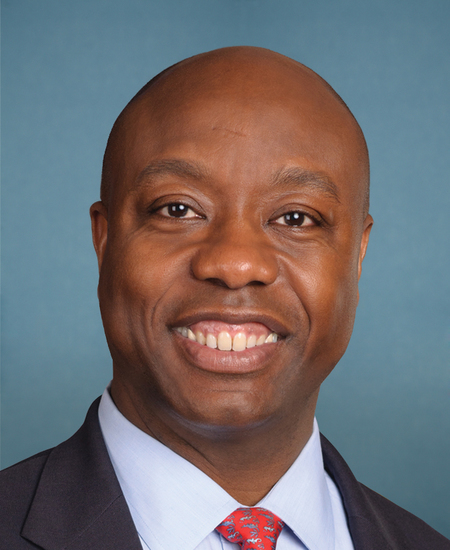
Financial Integrity and Regulation Management Act or the FIRM Act This bill prohibits the consideration of reputational risk by federal banking agencies when regulating, examining, or supervising a depository institution or credit union. The bill defines reputational risk as the potential for negative publicity or public attention to decrease confidence in the institution, lead to litigation, reduce revenues, or result in other adverse impacts to the institution. Agencies must report on the implementation of this bill.
Sponsored bills
Maddy summaryThis bill repeals federal waivers that allow California to set its own vehicle and engine emission standards under the Clean Air Act. It directly affects California's Air Resources Board (CARB), prohibiting the state from adopting or enforcing standards for nonroad engines (like construction equipment, farm vehicles, and locomotives) or new motor vehicles. Key provisions include removing federal authorization for California's vehicle standards (Section 177) and invalidating all existing waivers for state emission rules. The bill would eliminate California's ability to enforce its own emission requirements for these categories, shifting authority entirely to federal standards.
Maddy summaryThis bill, the Major Richard Star Act (S 1032), allows veterans with combat-related disabilities to receive both their military retired pay and Veterans Affairs disability compensation simultaneously. It amends U.S. Code sections to remove the automatic reduction in retired pay that previously forced these veterans to choose between the two payments. The key change ensures veterans with combat-related disabilities qualify for full retired pay without offset against their VA disability benefits, effective for payments starting after the bill's enactment date. This directly affects veterans receiving military retired pay under Chapter 61 who also qualify for VA disability compensation for combat-related injuries.
Maddy summaryThe FIGHT China Act of 2025 restricts U.S. investments in Chinese companies with ties to China's military or surveillance sectors. It prohibits U.S. persons from engaging in transactions involving "prohibited technologies" such as advanced semiconductors (with specific technical specifications), AI systems, quantum computing, and hypersonic weapons, while requiring notification for certain "notifiable technology" investments. The bill mandates that U.S. investors divest from companies on the Non-SDN Chinese Military-Industrial Complex Companies List within one year of enactment. It establishes a process for identifying Chinese entities subject to these restrictions, with annual reports to Congress required for seven years.
Preserving Patient Access to Home Infusion Act This bill specifically includes pharmacy services and home infusion drugs that are administered without a pump as part of covered home infusion therapy under Medicare. The bill also allows nurses and physician assistants to establish and review the plan of care for home infusion therapy, and it specifies that payment may be made regardless of whether a practitioner is physically present in the home at the time the drug is administered.
Maddy summaryThe FOCA Act (S 1064) requires federal agencies to ensure open competition on construction projects by prohibiting them from mandating or banning contractors from entering into labor agreements (like union contracts) or discriminating against contractors based on such agreements. It directly affects federal contractors, subcontractors, and agencies awarding construction contracts or grants for projects involving federal funds. Key provisions ban specific bid specifications or project documents from requiring labor affiliations, apply to all contracts after enactment, and mandate updates to federal procurement rules within 60 days. The bill aims to reduce taxpayer costs, expand opportunities for small businesses, and maintain federal neutrality in labor relations for construction projects.
This joint resolution nullifies the rule titled Gross Proceeds Reporting by Brokers That Regularly Provide Services Effectuating Digital Asset Sales and issued by the Internal Revenue Service (IRS) on December 30, 2024. The rule generally requires persons effectuating decentralized financial (DeFi) transactions to report certain information regarding digital asset sales to the IRS.
Maddy summaryS 990, the Freedom to Haul Act of 2025, prohibits the Environmental Protection Agency (EPA) from implementing or enforcing Phase 3 greenhouse gas emissions standards for heavy-duty vehicles (finalized in April 2024). It amends the Clean Air Act to require that future emissions rules for vehicles cannot mandate specific technologies or limit the availability of new trucks based on engine type. This directly affects EPA regulatory authority and vehicle manufacturers, ensuring a broader range of new truck options remains available. The bill focuses on preventing regulatory restrictions on vehicle choice, not on emissions outcomes.
Maddy summaryThis bill repeals the EPA's 2024 emissions standards for light- and medium-duty vehicles and amends the Clean Air Act to prevent future regulations from mandating specific technologies or limiting new vehicle availability based on engine type. It directly affects the EPA's regulatory authority and vehicle manufacturers by blocking technology mandates and restrictions on engine types in new vehicles. Key provisions require the EPA to revise regulations within 24 months to align with these changes, ensuring no federal rules limit vehicle choices based on engine technology. The bill's title is misleading, as it does not address automobile retail sales or consumer choice at dealerships.
Maddy summaryThis bill amends the Clean Air Act to prevent states from imposing standards that limit the sale or use of new internal combustion engine vehicles. It adds a new requirement that state standards must not directly or indirectly restrict such vehicles, and it prohibits the EPA from considering pre-2025 state standards as valid under existing waivers. The bill also requires the EPA to revoke certain existing waivers granted between January 2022 and the bill's enactment date if those waivers don't comply with the new standard. This directly affects states with their own vehicle emission rules (like California's ZEV program), limiting their ability to regulate internal combustion engine vehicles through EPA-approved standards.