

Maddy summaryThe Hospital Adoption Education Act of 2025 requires the U.S. Department of Health and Human Services to develop and distribute accessible resources - such as digital tools and print materials - to help hospital staff understand adoption sensitivities and interact appropriately with prospective birth mothers and adoptive families. It mandates that the Secretary create an online resource hub for healthcare workers and establish a committee of adoption experts, including maternal health and child welfare professionals, to guide this effort. The bill also funds grants to nonprofit organizations providing non-directive adoption education to hospital staff, prohibiting entities tied to child-placing agencies or abortion services from receiving these funds. Finally, it requires a congressional report within three years assessing how many hospitals adopt the training and how many staff complete it.
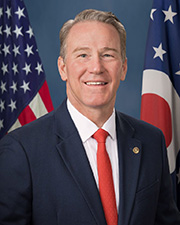
Sen. Jon Husted
Sponsored bills
Maddy summarySRES 499 is a symbolic Senate resolution designating November 12, 2025, as Creutzfeldt-Jakob Disease (CJD) Awareness Day. It expresses the Senate's support for raising public awareness about CJD, a rare, fatal brain disorder affecting approximately 600 people annually in the U.S., and emphasizes the importance of prion disease surveillance. The resolution has no policy or funding implications - it solely recognizes the need for greater understanding of CJD and its challenges for affected families and caregivers.
Maddy summarySRES 482 is a ceremonial Senate resolution recognizing November 3-7, 2025, as "National Veterans Small Business Week." It does not create new laws or policies but formally acknowledges veteran-owned small businesses, which employ nearly 3.3 million people and generate over $952 billion in annual sales. The resolution expresses support for these businesses and appreciation for veterans' entrepreneurship, while highlighting the Senate Committee on Small Business and Entrepreneurship’s annual observance of this week. It has no direct impact on regulations, funding, or veteran business operations.
Maddy summaryThis bill ensures military personnel and their support staff continue receiving pay during government funding gaps in fiscal year 2026. It authorizes funds from the Treasury to cover pay and allowances for active-duty service members, reserves, military support civilians (including Coast Guard staff), and qualifying contractors if regular budget appropriations aren't approved. The funding remains available until the earliest of: a new budget passing, a continuing resolution without this funding, or January 1, 2027. It directly affects all active-duty military, reserve components, and civilian/contractor support staff within the Department of Defense and Coast Guard.
Maddy summaryThe Nuclear REFUEL Act of 2025 amends the Atomic Energy Act to clarify that certain nuclear fuel reprocessing activities are excluded from the legal definition of a "production facility." Specifically, it removes a prior exclusion for uranium enrichment and adds that reprocessing spent nuclear fuel *without* separating plutonium from other transuranic elements is no longer considered a production facility. This change directly affects nuclear energy companies and facilities engaged in this specific type of fuel reprocessing, as it would exempt them from certain regulatory requirements tied to production facilities. The bill focuses on updating regulatory definitions rather than creating new policy mandates.
Maddy summaryS 3030, the Pay Our Military Act of 2025, ensures that active-duty military members, reservists, civilian Defense personnel, and supporting contractors continue receiving pay and essential benefits during any funding gap in fiscal year 2026. It appropriates necessary funds from the Treasury to cover pay, allowances, housing, travel, and other payments if Congress hasn’t passed full-year appropriations by September 30, 2026. These funds are charged to future appropriations when regular funding is enacted, preventing delays in military compensation. The bill takes effect retroactively as of September 30, 2025, to cover any missed payments during the prior fiscal year.
Maddy summaryThis bill ensures uninterrupted food assistance benefits for SNAP recipients during a government funding gap. If Congress fails to pass full funding for the Department of Agriculture by September 30, 2025, the bill directs the Treasury to provide necessary funds to keep SNAP benefits flowing without interruption. It also covers missed benefits retroactively from September 30, 2025, through the bill’s enactment date. The funding stops once Congress enacts actual fiscal year 2026 appropriations for the Department of Agriculture. This directly affects approximately 40 million low-income individuals and families who rely on SNAP benefits.
Maddy summaryThis bill requires all commercial driver's license (CDL) testing - including knowledge tests, entry-level training, and third-party assessments - to be conducted solely in English. It also mandates that new CDL applicants must hold a standard driver's license for at least one year before applying for a CDL, though current CDL holders are exempt. States issuing non-domiciled CDLs (licenses to non-residents) risk losing that authority if they fail to comply with these rules or federal standards. The law directly affects new commercial drivers seeking CDLs and states managing non-domiciled license programs.
Maddy summaryThis resolution (SRES 438) condemns Hamas for the October 7, 2023, terrorist attack on Israel that killed approximately 1,200 people - including 40 U.S. citizens - and took 251 hostages. It supports an outcome ensuring Israel’s "forever survival," destroying Hamas’s ability to regroup, and securing the release of all remaining hostages, including two U.S. citizens held in Gaza. The resolution also condemns antisemitic protests in the U.S. that damaged property and threatened Jewish Americans’ safety. As a non-binding Senate resolution, it expresses symbolic support for U.S. policy toward Israel but does not create new laws or allocate funds. It directly affects U.S. diplomatic positioning on the Israel-Hamas conflict and hostage negotiations.
Maddy summarySRES 430 is a ceremonial Senate resolution designating October 4, 2025, as "National Energy Appreciation Day." It honors energy workers across all sectors (including oil, gas, coal, nuclear, hydro, and renewables) who power the U.S. economy and support daily life. The resolution encourages federal, state, local, and private entities to observe the day with educational events highlighting energy's role in economic growth, job creation, and global poverty reduction. This is a symbolic gesture with no new policy or funding; it solely aims to raise awareness of the energy industry's contributions.