

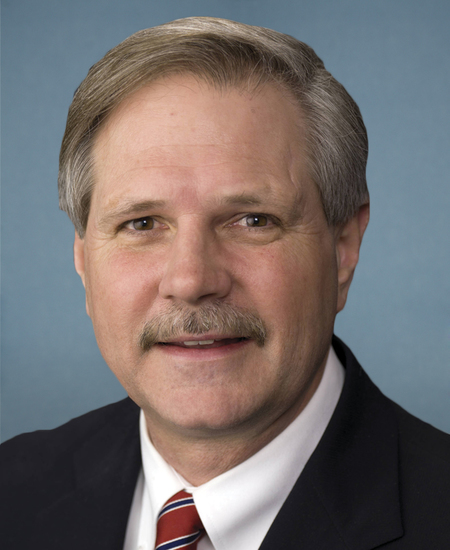
Photo of John Hoeven
R United States Senate · North Dakota

Sen. John Hoeven

Compare
Total votes
1,037
all sessions
Attendance
100%
4 missed
Higher than 86% of chamber peers
With party
96%
of cast votes
Higher than 86% of chamber peers
Bipartisan score
2%
crosses aisle rarely
Lower than 90% of chamber peers
Sponsored
913
bills & resolutions
Lower than 84% of chamber peers
Committees
15
assignments
913 bills and resolutions

Sponsored bills

Total
913
Primary
71
Co-sponsor
842
This page
913
matching current filters
Co-sponsor S 541
In committee · Georgia Senate · Co-sponsor
ELITE Vehicles Act

Maddy summaryThe ELITE Vehicles Act repeals three key tax credits for electric vehicles under the Internal Revenue Code: the clean vehicle credit (Section 30D), the credit for previously-owned clean vehicles (Section 25E), and the credit for qualified commercial clean vehicles (Section 45W). It also excludes electric vehicle recharging property from the alternative fuel vehicle refueling credit. These changes directly affect individuals and businesses purchasing new or used electric vehicles, as well as those installing EV charging infrastructure, by eliminating the associated tax benefits. The repeal applies to vehicles purchased or under binding contract after 30 days following the bill's enactment.

In committee Feb 12, 2025 1 co-sponsor
Co-sponsor S 556
In committee · Georgia Senate · Co-sponsor
Enhanced Iran Sanctions Act of 2025

Maddy summaryThis bill imposes new sanctions on foreign entities (including banks, insurers, and logistics companies) that knowingly facilitate Iran's oil, gas, LNG, or petrochemical exports. It blocks U.S. property of sanctioned entities and bars targeted individuals from entering the U.S. via visa restrictions or revocation. Exceptions cover goods imports and certain international obligations, while the President may grant limited 180-day waivers for national security reasons, subject to congressional reporting. The law aims to disrupt Iran's energy revenue streams used for terrorism, weapons programs, and repression, with enforcement coordinated through a new interagency working group.

In committee Feb 12, 2025 1 co-sponsor
Co-sponsor S 522
In committee · Georgia Senate · Co-sponsor
Credit Union Board Modernization Act

Credit Union Board Modernization Act This bill revises the required frequency of meetings held by a credit union's board of directors. Specifically, new credit unions and credit unions with a low soundness rating must meet monthly. All other credit unions must hold at least six meetings annually, with at least one meeting held during each fiscal quarter. Currently, all credit union boards must meet at least once a month.

In committee Feb 11, 2025 1 co-sponsor
Co-sponsor S 525
In committee · Georgia Senate · Co-sponsor
A bill to transfer the functions, duties, responsibilities, assets, liabilities, orders, determinations, rules, regulations, permits, grants, loans, contracts, agreements, certificates, licenses, and privileges of the United States Agency for International Development relating to implementing and administering the Food for Peace Act to the Department of Agriculture.

Maddy summaryThis bill transfers all U.S. Agency for International Development (USAID) responsibilities related to the Food for Peace Act - including managing food aid programs, grants, permits, and regulations - to the U.S. Department of Agriculture (USDA). It directly affects USAID's Food for Peace operations and shifts program administration to the USDA Secretary, who will now handle all associated duties, assets, and legal authorities. The bill ensures continuity by requiring legal references to USAID to automatically apply to the USDA, and mandates the USDA to continue operating the Famine Early Warning Systems Network. Key provisions include immediate regulatory adjustments for program continuity and ongoing consultation with the State Department on food aid efforts.

In committee Feb 11, 2025 1 co-sponsor
Co-sponsor SJRES 16
In committee · Georgia Senate · Co-sponsor
A joint resolution proposing an amendment to the Constitution of the United States to require that the Supreme Court of the United States be composed of nine justices.

Maddy summaryThis joint resolution proposes a constitutional amendment to permanently set the number of justices on the Supreme Court at nine. It would require the Supreme Court to always consist of exactly nine justices, directly affecting the Court's composition. The amendment would become part of the Constitution only if ratified by three-fourths of state legislatures within seven years. This is a procedural change to the Constitution's structure, not a policy affecting other areas.

In committee Feb 6, 2025 1 co-sponsor
Co-sponsor S 456
In committee · Georgia Senate · Co-sponsor
STEAM Act

Maddy summaryS 456, the STEAM Act, amends the Energy Policy Act of 2005 to include geothermal resources under existing environmental review requirements for energy projects. It updates Section 390 of the Energy Policy Act to explicitly add "geothermal" alongside "gas" in provisions governing National Environmental Policy Act (NEPA) reviews for exploration and development. This change directly affects geothermal energy developers by extending the same federal permitting and environmental review processes currently applied to gas projects. The bill modifies legal language to ensure geothermal projects undergo the same federal environmental assessments as gas projects, without creating new programs or altering funding.

In committee Feb 6, 2025 1 co-sponsor
Co-sponsor S 460
In committee · Georgia Senate · Co-sponsor
Supporting Made in America Energy Act

Supporting Made in America Energy Act This bill requires oil and natural gas lease sales that include certain public land and waters, prohibits lease sales in other areas, and establishes related requirements. Beginning in FY2025, the Department of the Interior must conduct a minimum of four onshore lease sales annually in each state that has federal land available for oil and natural gas leasing. If a lease sale is canceled, delayed, or deferred, Interior must conduct a replacement sale during the same year.  Beginning in FY2026, Interior must conduct a minimum of two offshore, region-wide lease sales annually in the Gulf of Mexico Region of the Outer Continental Shelf (OCS) by specified dates. The sales must include the Central Gulf of Mexico Planning Area and the Western Gulf of Mexico Planning Area. Interior must also conduct a minimum of six offshore lease sales of at least 1 million acres each over a 10-year period in the Cook Inlet Planning Area. The bill sets a 12.5% royalty rate for such leases. Interior must plan and approve the subsequent OCS oil and gas leasing programs by specified deadlines. The bill extends through 2035 a moratorium on oil and gas leasing in certain eastern and central portions of the Gulf of Mexico and expands the moratorium to include the South Atlantic Planning Area and the Straits of Florida Planning Area. The bill also requires the President to obtain congressional approval before impeding or circumventing certain federal energy mineral leasing processes.

In committee Feb 6, 2025 1 co-sponsor
Co-sponsor S 469
In committee · Georgia Senate · Co-sponsor
Family Farm and Small Business Exemption Act

Maddy summaryThis bill amends the Higher Education Act of 1965 to exempt certain family-owned assets from financial need calculations for college students. Specifically, it removes the net value of a family farm (where the family resides) or a small business (with 100 or fewer full-time equivalent employees) owned and controlled by the family from being counted as assets when determining federal financial aid eligibility. The change applies to need analysis for award years starting after the bill's enactment date. This policy directly affects students from qualifying family farms or small businesses when applying for federal student aid under Title IV programs.

In committee Feb 6, 2025 1 co-sponsor
Co-sponsor S 479
In committee · Georgia Senate · Co-sponsor
New Markets Tax Credit Extension Act of 2025

Maddy summaryThis bill permanently extends the New Markets Tax Credit (NMTC) program, which incentivizes private investment in low-income communities. It modifies the tax code to keep the credit available beyond 2025 (replacing "2020 through 2025" with "2020 and each calendar year thereafter") and adds automatic annual inflation adjustments to the credit amount starting in 2026. The bill also provides tax relief by allowing NMTC credits to offset the alternative minimum tax, specifically for investments made after December 2024. This directly affects community development financial institutions (CDFIs) and investors who fund projects in designated low-income areas.

In committee Feb 6, 2025 1 co-sponsor
Showing 191 to 200 of 913 bills
Previous 1 19 20 21 92 Next