

Maddy summaryThe Keep Public Funds in Public Schools Act of 2026 eliminates a federal tax credit that allowed parents to deduct contributions to scholarship granting organizations from their income. By removing these specific tax breaks, the bill prevents the use of public tax dollars to support private school vouchers and scholarship programs. This change directly affects families who currently rely on these tax incentives to fund education outside the public school system. The provisions take effect for taxable years beginning after December 31, 2026.
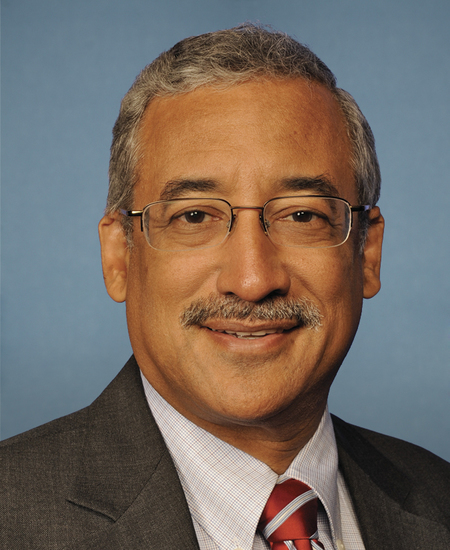
Rep. Robert C. "Bobby" Scott
Sponsored bills
Maddy summaryThis joint resolution seeks to reject a specific rule issued by the Department of Health and Human Services regarding the Child Care and Development Fund. By invoking a statutory process, the bill aims to prevent the rule from taking effect, which would stop the Department from implementing the proposed changes to child care funding flexibility. The measure directly impacts the administration of federal child care assistance programs and affects families and organizations relying on the CCDF. If passed, the original regulations published in May 2026 would be nullified and have no legal force.
Maddy summaryThis resolution expresses support for designating June 5, 2026, as National Gun Violence Awareness Day and June 2026 as National Gun Violence Awareness Month. The bill calls on the public to wear orange on the designated day to honor victims and promote awareness of gun safety. It highlights statistics on gun-related deaths and injuries to underscore the need for community discussions on making neighborhoods safer.
Maddy summaryThe Equal Remedies Act of 2026 expands the types of damages available to individuals who file discrimination lawsuits under federal employment laws. Specifically, it allows victims of race discrimination to receive compensation for non-financial harms, such as emotional pain and loss of enjoyment of life, and permits any party in such cases to request a jury trial. Additionally, the bill extends these expanded remedies to age discrimination claims, enabling affected workers to seek the same legal and equitable relief available in sex and race discrimination cases. These changes directly impact employees and employers by altering the potential financial and procedural outcomes of discrimination lawsuits.
Maddy summaryThis resolution commemorates the 120th anniversary of the 1906 arrival of Filipino plantation workers, known as Sakadas, in Hawai'i. It honors their historical contributions to the state's economy and culture while acknowledging the difficult working conditions they faced and their role in organizing labor movements. The text highlights how these immigrants and their descendants became a major part of Hawai'i's population and left a lasting impact on the islands' social and cultural fabric. By formally recognizing this milestone, the House of Representatives aims to preserve the legacy of these pioneering workers in the official record.
Maddy summaryThis resolution honors the 80th anniversary of diplomatic relations between the United States and the Philippines, which began on July 4, 1946. It formally recognizes the historical contributions of Filipino Americans and Filipino servicemembers, including their roles during World War II and in modern healthcare and business sectors. The document reaffirms the mutual defense treaty between the two nations and expresses support for strengthening economic and security cooperation in the Indo-Pacific region. As a non-binding statement of intent, it does not create new laws or funding but encourages the public and government to celebrate this milestone through appropriate programs.
Maddy summaryThis bill, known as the Arlington National Cemetery Viewshed Protection Act, restricts the construction of large triumphal arches in the Washington, D.C. area to preserve visual sightlines. It specifically bans the building of any such arches within Lady Bird Johnson Park and prohibits the use of federal funds for these structures there. Additionally, the law prevents the erection of triumphal arches taller than 50 feet on any land managed by the National Park Service unless Congress explicitly approves them. These measures aim to limit new monumental structures that could obstruct views of the Arlington National Cemetery from the capital region.
Maddy summaryThis joint resolution seeks to officially reject a final rule issued by the Department of Education regarding federal student loan programs. If passed, the measure would prevent the new regulations from taking effect, leaving the previous rules in place. The bill directly impacts borrowers, lenders, and the Department of Education by nullifying the specific changes outlined in the "Reimagining and Improving Student Education" proposal. It is a procedural action that uses the Congressional Review Act to disapprove the agency's policy without altering the underlying law.
Maddy summaryThis resolution expresses support for designating May 2026 as Awareness Month for Progressive Supranuclear Palsy and Corticobasal Degeneration, two rare and complex neurodegenerative diseases. The measure highlights the challenges faced by the approximately 32,000 Americans living with these conditions, including difficulties with diagnosis, limited treatment options, and the significant impact on families and caregivers. By officially recognizing this month, the House aims to encourage increased public awareness, promote research into better treatments and cures, and honor the resilience of the affected community.
Maddy summaryThis bill authorizes the U.S. Mint to produce commemorative $5 gold and $1 silver coins marking the 25th anniversary of the September 11, 2001, terrorist attacks. The coins must feature designs honoring victims and first responders (including the inscription "Never Forget") and will be sold only during 2027-2028. All surcharges ($35 per gold coin, $10 per silver coin) collected from sales will fund the National September 11 Memorial and Museum at the World Trade Center, with no net cost to the federal government. The coins are legal tender but primarily intended for collectors, not circulation.