

Maddy summaryThis bill directs the U.S. Treasury to mint commemorative coins marking the Marine Corps' 250th anniversary in 2025. It authorizes three coin types: $5 gold coins (max 50,000), $1 silver coins (max 400,000), and half-dollar coins (max 750,000), with surcharges of $35, $10, and $5 respectively. The surcharge proceeds will fund the Marine Corps Heritage Center's educational programs, with no net cost to taxpayers as the Treasury must recover all minting costs through the surcharges. The coins can only be issued during 2025, and the Treasury must ensure all costs are covered before distributing funds to the Heritage Foundation.
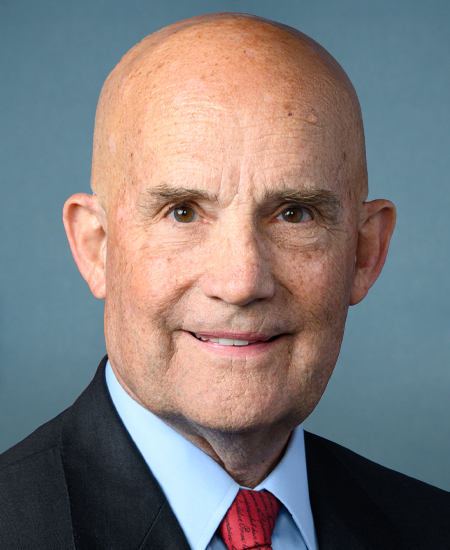
Rep. Keith Self
Sponsored bills
Maddy summaryHR 592 requires the Department of Veterans Affairs (VA) to obtain specific certifications before expanding or continuing its electronic health record system at VA facilities. For existing facilities, the VA must certify the system achieves 99.9% monthly uptime for four consecutive months and completes all pre-enactment system improvements. For new facility implementations, the VA must certify the system build is accurate, staff/infrastructure are ready, and implementation won’t harm patient safety, wait times, or care quality. This bill directly affects VA hospitals and the Veterans Health Administration by setting concrete technical and operational requirements before system changes can proceed.
Maddy summaryHR 4721, the Main Street Tax Certainty Act, makes a permanent the 20% tax deduction for eligible small business owners under Section 199A of the tax code. This provision directly affects pass-through business owners (like S-corps, partnerships, and sole proprietorships) who qualify for the deduction. The bill achieves this by removing the temporary expiration language (subsection (i)) from the existing tax code provision. The key change is ending the need for annual congressional extensions of this deduction, providing long-term tax certainty for small businesses.
Maddy summaryThis bill, the Veteran Care Improvement Act of 2023, establishes new standards for when veterans can receive care from private providers instead of the Department of Veterans Affairs (VA). It requires the VA to allow veterans to seek community care if they cannot get an in-person appointment within 30 days for primary care or 60 days for specialty care at a VA facility within a 30 or 60-minute drive, respectively. The legislation also mandates that the VA notify veterans of their eligibility for community care within two business days, provide information about telehealth options, and explain reasons for denied care requests along with appeal instructions. Additional provisions include requiring the VA to conduct outreach to inform veterans about community care options, mandate the use of value-based reimbursement models for community care, and establish a pilot program to improve care administration through scheduling improvements and provider incentives. The bill also extends the deadline for health care entities to submit claims under the prompt payment standard from 180 days to one year, and requires the VA Inspector General to assess VA medical center performance in implementing community care programs within three years of enactment.
Maddy summaryHR 3952 limits the flags that can be flown over Department of Veterans Affairs (VA) facilities to just six specific flags: the U.S. flag, any state flag, any federally recognized tribal government flag, the VA department flag, any military branch flag, and the POW/MIA flag. This applies directly to all VA buildings and properties nationwide. The bill explicitly restricts all other flags, including political or commemorative flags, from being displayed on these facilities.
Maddy summaryThis bill prohibits U.S. individuals and entities from buying or selling stocks or investment vehicles tied to Chinese companies operating in defense, surveillance technology, or supporting China's military-industrial complex. The Treasury Department would designate covered companies, expanding an existing sanctions list (NS-CMIC List) to include subsidiaries, successors, and financial service providers for these entities. It also requires consistent application of sanctions across all relevant laws, with the President needing to notify Congress 20 days before waiving sanctions for national security reasons. The law directly affects U.S. investors, financial institutions, and companies holding or trading securities in targeted Chinese firms.
This resolution expresses the sense of the House of Representatives that research and promotion boards support efforts to develop new markets and strengthen existing markets via research, education, and promotion.
Maddy summaryThis bill restricts eligibility for federal electric vehicle tax credits by barring manufacturers majority-owned by foreign adversaries (as defined in federal regulations) or their related entities from claiming these credits. It amends the Internal Revenue Code to require EV manufacturers to certify they meet this ownership standard to qualify for Section 30D tax credits. The provision applies to vehicles placed in service after the bill's enactment date. This directly affects EV manufacturers with significant ties to designated foreign governments, altering which companies can access these tax incentives.
Saving Organs One Flight at a Time Act This bill requires the Transportation Security Administration (TSA) and the Federal Aviation Administration (FAA) to jointly issue regulations, as necessary, to enable air carriers to transport human organs for transplant above wing (i.e., in the cabin of an aircraft). Among other things, the regulations must include consideration of protocols for air control outages; a requirement that air carriers implement a protocol for a person to accompany organs to and from the aircraft and between connecting flights; and a standardized process for commercial air carriers to accept, handle, and manage organs in transit. The TSA and the FAA must also consult with the Organ Procurement and Transplantation Network to identify metrics for the handling of organs and organ-related tissue by air carriers.
Maddy summaryHR 4321 prohibits the U.S. government from providing any federal loans, grants, or financial assistance to state or local governments that enact reparations programs based on slavery, race, ethnicity, national origin, or related historical practices. This bill directly affects state and local governments that pass such reparations laws by blocking access to federal funds for those specific programs. The key provision bans all forms of federal financial aid - including from the Federal Reserve and independent agencies - to the jurisdiction enacting the reparations program, without applying to other government functions. The bill focuses solely on restricting federal funding for these programs, not on creating or funding reparations themselves.