

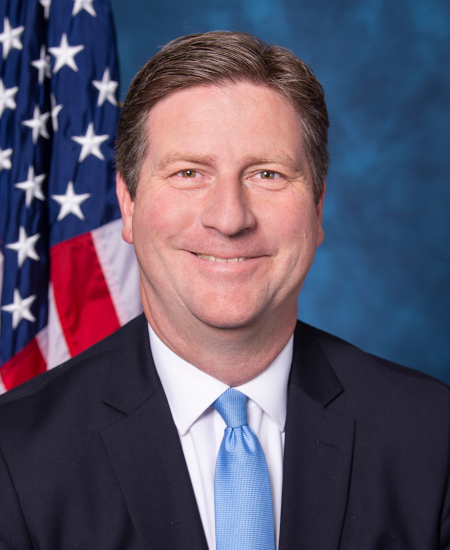
Photo of Greg Stanton
D United States House · District 4 · Arizona On the 2026 ballot

Rep. Greg Stanton

Compare
Total votes
2,818
all sessions
Attendance
99%
30 missed
Near the chamber average
With party
95%
of cast votes
Lower than 78% of chamber peers
Bipartisan score
2%
crosses aisle rarely
Higher than 77% of chamber peers
Sponsored
940
bills & resolutions
Near the chamber average
Committees
6
assignments
940 bills and resolutions

Sponsored bills

Total
940
Primary
68
Co-sponsor
872
This page
940
matching current filters
Co-sponsor HR 6820
In committee · Georgia House · Co-sponsor
Airline Passenger Compensation Act of 2025

Maddy summaryHR 6820, the Airline Passenger Compensation Act of 2025, requires airlines to compensate passengers for significant delays or cancellations caused by the airline itself. It mandates $300 compensation for delays of 3-9 hours and $775 for delays of 9+ hours on domestic or international flights, plus free rebooking on the next available flight if a connection is missed. The Transportation Secretary must issue these regulations within one year of the bill's enactment. This directly affects travelers experiencing airline-caused disruptions, providing specific financial and logistical relief.

In committee Feb 2, 2026 1 co-sponsor
Co-sponsor HR 6491
In committee · Georgia House · Co-sponsor
Streamline Transit Projects Act

Maddy summaryThe Streamline Transit Projects Act (HR 6491) allows large urban transit agencies (with populations over 200,000) to assume responsibility for environmental reviews of routine transit projects, such as bus lanes or minor station upgrades, that typically qualify as "categorical exclusions" under federal law. This means qualifying agencies - like major city transit authorities - can skip full environmental impact studies for these standard projects, instead conducting their own reviews under federal guidelines. The bill requires agencies to meet capacity standards, enter formal agreements with the federal government, and handle all legal liability for compliance, while still maintaining public access to information. The change directly affects large metropolitan transit agencies by shifting environmental review responsibilities from federal officials to local entities, aiming to accelerate project timelines without altering environmental standards.

In committee Feb 2, 2026 1 co-sponsor
Co-sponsor HR 6463
In committee · Georgia House · Co-sponsor
Emergency Alert Grant Fairness Act

Maddy summaryThe Emergency Alert Grant Fairness Act requires the Federal Emergency Management Agency (FEMA) to open applications for its Next Generation Warning System grants for at least 30 days each year. It also explicitly includes public broadcasting entities (as defined in the Communications Act of 1934) as eligible recipients for these grants. This bill directly affects FEMA's grant administration process and public broadcasting organizations that provide emergency alert services. The key change is standardizing the application window and expanding eligibility to ensure public broadcasters can access funding for emergency alert systems.

In committee Feb 2, 2026 1 co-sponsor
Co-sponsor HR 4242
In committee · Georgia House · Co-sponsor
Innovate Less Lethal to De-Escalate Tax Modernization Act

Maddy summaryThis bill exempts certain less-than-lethal projectile devices from federal sales taxes and National Firearms Act restrictions. It directly affects manufacturers, importers, and producers of these devices, which are defined as non-lethal tools (like rubber bullets or beanbag rounds) designed not to cause serious injury and unable to be easily converted to use standard firearm ammunition. Key mechanisms include a 90-day classification process for manufacturers seeking exemption, an annual public list of approved devices, and annual congressional reports on devices excluded from the exemption. The policy change applies to devices meeting specific safety criteria, such as projectile velocity limits and design features preventing misuse as conventional weapons.

In committee Feb 2, 2026 1 co-sponsor
Co-sponsor HJRES 144
In committee · Georgia House · Co-sponsor
Providing for congressional disapproval under chapter 8 of title 5, United States Code, of the rule submitted by the Department of Veterans Affairs relating to "Reproductive Health Services".

Maddy summaryHJRES 144 is a congressional disapproval resolution targeting a specific rule issued by the Department of Veterans Affairs (VA) on December 31, 2025, which addressed "Reproductive Health Services" (90 Fed. Reg. 61310). This resolution directs Congress to disapprove the VA rule under Chapter 8 of Title 5, U.S. Code, meaning the rule would have no legal effect if passed. The bill directly affects the VA's implementation of reproductive health services for veterans, as it seeks to nullify the agency's existing policy. This is a procedural measure, not a substantive policy change, aimed solely at blocking the VA's rule through congressional action.

In committee Jan 27, 2026 1 co-sponsor
Co-sponsor HR 7271
In committee · Georgia House · Co-sponsor
Evan Anzoo Memorial Act

Maddy summaryHR 7271, the Evan Anzoo Memorial Act, requires the Comptroller General to produce a report investigating deaths linked to USAID service cuts. The bill mandates a one-year report estimating 2025 deaths and five-year future deaths due to USAID stop-work orders, plus an assessment of whether specific individuals (like Evan Anzoo, 5, South Sudan, who died after losing HIV treatment) died because of lost USAID services. It also requires an interim update within 180 days and a list of other verified deaths tied to these service disruptions. The act does not change USAID policy but directs a factual review of impacts from prior USAID service reductions.

In committee Jan 27, 2026 1 co-sponsor
Co-sponsor HCONRES 68
Failed · Georgia House · Co-sponsor
To direct the removal of United States Armed Forces from Venezuela that have not been authorized by Congress.

Maddy summaryHCONRES 68 would require the President to remove U.S. military forces from Venezuela unless Congress has explicitly authorized their use through a declaration of war or a specific law. This applies to any U.S. Armed Forces currently stationed in Venezuela without such authorization. The resolution is based on the War Powers Resolution, which mandates congressional oversight of military deployments. It directs the immediate withdrawal of unapproved forces without adding new time limits or conditions.

Failed Jan 22, 2026 1 co-sponsor
Co-sponsor HR 7230
In committee · Georgia House · Co-sponsor
Buying American Cotton Act of 2026

Maddy summaryThis bill creates a tax credit for businesses selling products made with U.S.-grown cotton. The credit equals 24% of the cotton's market value if processed only in the U.S. or in countries with U.S. trade deals, or 18% for other processing locations. To qualify, cotton must be digitally traced from U.S. farms to finished products and certified by the USDA as meeting origin requirements. It directly affects clothing and textile manufacturers selling qualifying products in the U.S. market.

In committee Jan 22, 2026 1 co-sponsor
Primary HR 4532
In committee · Georgia House · Lead sponsor
American Cooperation with Our Neighbors Act

Maddy summaryThis bill directs the State Department to create a strategy within 270 days to strengthen local-level cooperation between U.S. and Mexican authorities focused on stopping fentanyl trafficking. The strategy must include law enforcement coordination, professional exchanges, data sharing (with congressional notification required first), and support for border communities. It also requires a review of financial access for Caribbean Community (CARICOM) nations, examining embassy presence, anti-narcotics financing rules, and capital access programs. The strategy and a two-year update will be submitted to specific congressional committees. The bill affects U.S. agencies, Mexican local/state governments, and CARICOM financial systems.

In committee Jan 21, 2026 0 co-sponsors
Co-sponsor HR 7163
In committee · Georgia House · Co-sponsor
PUBLIC SAFETY Act

Maddy summaryHR 7163, the PUBLIC SAFETY Act, increases federal funding for local law enforcement by amending two key programs. It extends the deadline for COPS Hiring Program grants to September 30, 2030, and waives certain requirements for smaller jurisdictions (under 175 officers) and tribal governments to access funds. The bill appropriates $45 billion for fiscal year 2025 for the Byrne Justice Assistance Grant (JAG) Program, available until September 30, 2029. These changes directly affect local police departments, counties, municipalities, and tribal governments seeking federal funding to hire officers and support public safety initiatives. The core policy change is expanding access to funding for smaller agencies while significantly increasing overall grant availability.

In committee Jan 20, 2026 1 co-sponsor
Showing 91 to 100 of 940 bills
Previous 1 9 10 11 94 Next