

Maddy summaryThis bill requires investment companies and transfer agents to collect contact information for a trusted person when serving "specified adults" (individuals aged 65+ or with a mental/physical impairment affecting their financial decision-making). It allows these firms to temporarily delay redemptions of securities for up to 15 business days (extendable by 10 more days with notification) if they reasonably suspect financial exploitation is occurring. Firms must document all delays, conduct internal reviews, and retain records for regulatory oversight. The law directly affects vulnerable account holders and the financial institutions managing their investments, aiming to prevent scams through proactive safeguards.
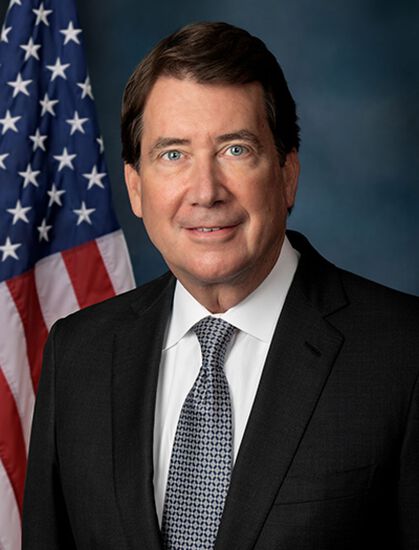
Sen. Bill Hagerty
Sponsored bills
Maddy summarySRES 391 is a symbolic Senate resolution condemning the assassination of Charlie Kirk, a conservative campus advocate and founder of Turning Point USA, who was killed on September 10, 2025, at Utah Valley University. The resolution expresses the Senate’s strongest condemnation of the killing, extends condolences to his family (including his wife Erika and two children), and honors his work promoting civil discourse on college campuses. As a non-binding resolution, it does not create policy changes or affect any individuals through legislative action.
Maddy summaryThis bill mandates that new or significantly renovated federal public buildings costing over $50 million (adjusted for inflation) prioritize classical or traditional architectural styles - such as Neoclassical, Georgian, or Greek Revival - over modern styles like Brutalist or Deconstructivist. It requires federal agencies, particularly the General Services Administration (GSA), to seek community input on designs, ensure architects reviewing projects have classical architecture expertise, and justify any deviation from preferred styles with detailed cost and aesthetic analyses. The law applies to courthouses, agency headquarters, and National Capital region buildings, excluding infrastructure projects. Annual reports to Congress will track compliance with these architectural standards.
Maddy summaryThis bill limits "youth offender" status in DC to individuals 18 or younger, replacing the previous 24-year age limit. It requires the Attorney General to create a public website publishing monthly, detailed juvenile crime statistics - including arrest numbers broken down by age, race, sex, crime type (like vandalism or violent offenses), first-time vs. repeat offenses, and sentencing outcomes - while prohibiting personally identifiable information. The bill also prohibits the DC Council from changing mandatory minimum sentences or sentencing guidelines during its effective period. These changes directly affect DC youth in the justice system and provide transparency on juvenile crime data.
Maddy summaryThis resolution commemorates the one-year anniversary of the July 13, 2024, attempted assassination of President Donald J. Trump in Butler, Pennsylvania. It condemns the attack and other threats against political officials, honors victims Corey D. Comperatore (who died shielding his family), David Dutch, and James Copenhaver (who were injured), and expresses gratitude to first responders. The resolution also condemns incitement of violence against elected officials and calls for unity against political violence. As a symbolic gesture, it does not create new laws or policies but formally states the Senate’s position.
Maddy summaryThis bill amends the Bank Holding Company Act to require a minimum 15-year holding period for merchant banking investments. Banks would need to hold these investments - where they make equity stakes in non-financial companies - for at least 15 years before selling, applying to both new investments and existing ones held on the bill's enactment date. The change directly affects banks engaged in merchant banking activities by altering the regulatory timeframe for holding such investments. It modifies specific provisions of the Bank Holding Company Act without creating new programs or altering eligibility.
Maddy summaryThis bill prohibits noncitizens from voting in all District of Columbia elections, including local elections for public office and ballot initiatives. It directly affects noncitizen residents of Washington D.C. who previously could vote under the repealed 2022 law. The bill repeals the Local Resident Voting Rights Amendment Act of 2022, restoring the prior rule that limited voting in D.C. elections to U.S. citizens. This change would require noncitizen D.C. residents to obtain citizenship to vote in local elections.
Maddy summaryThis bill amends U.S. immigration law to make certain DUI convictions automatically lead to immigration consequences. Non-citizens convicted of driving while intoxicated or impaired (including DUI under state law) would be barred from entering the U.S. (inadmissible) or face deportation, regardless of whether their offense was classified as a misdemeanor or felony locally. The key mechanism adds new grounds for inadmissibility and deportability under the Immigration and Nationality Act, treating DUI offenses as serious immigration violations. It directly affects non-citizens with such convictions, expanding immigration enforcement to include these offenses. The bill does not change state DUI laws but links them to federal immigration outcomes.
Maddy summaryThis resolution (SRES 342) is a symbolic gesture honoring small firearm manufacturers in the U.S., recognizing their economic contributions and role in recreational shooting traditions. It specifically designates August 2025 as "National Shooting Sports Month" and commends these businesses for supporting 380,000 jobs and $91 billion in annual economic output. The resolution does not create new laws or funding but formally acknowledges small manufacturers’ role in preserving Second Amendment-related activities and outdoor culture. It is a commemorative statement with no binding policy impact.
Maddy summaryThis bill establishes an independent Inspector General (IG) office for the Neighborhood Reinvestment Corporation (NRC), a federal agency focused on community development. It requires the NRC to undergo annual audits by independent certified public accountants following standard auditing practices, separate from the IG's internal work. The IG cannot take over the NRC's core program responsibilities, such as overseeing grants or assessments. These changes aim to strengthen oversight of the NRC's operations and finances.