

Maddy summaryThis Senate resolution expresses the non-binding opinion that federal laws regarding medication abortion should rely on scientific evidence rather than political influence. It specifically calls for the FDA to maintain its approval of mifepristone, a drug proven safe and effective over 25 years, and to allow patients to access it through telemedicine or mail-order pharmacies. The measure highlights that current restrictions disproportionately harm marginalized communities, including people of color, low-income individuals, and those in rural areas. By stating these points, the resolution aims to encourage policymakers to ensure equitable and transparent access to abortion care based on medical consensus.
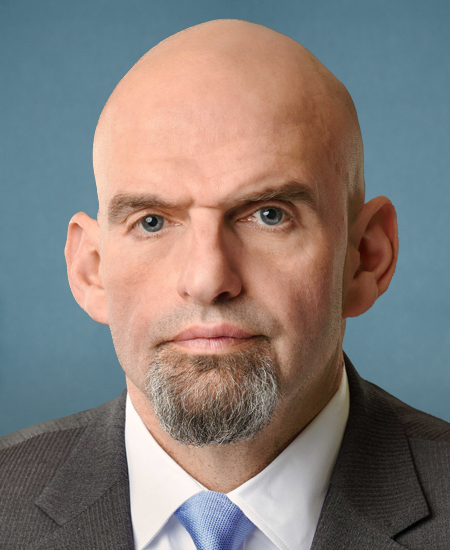
Sen. John Fetterman
Sponsored bills
Maddy summaryThe Reproductive Health Care Accessibility Act aims to improve access to reproductive health services for individuals with disabilities by addressing barriers such as inaccessible facilities and a lack of provider training. The bill creates several new funding programs to train medical professionals on disability-specific needs, recruit more disabled students into reproductive health careers, and provide accessible educational materials to patients. It authorizes millions of dollars in grants over five years to support these workforce development initiatives and establishes a national center to offer technical assistance on accessible care standards. Additionally, the legislation funds a study to identify effective programs and coordinate efforts across federal, state, and local agencies to ensure equitable health outcomes.
Maddy summaryThe LNG Export Security Act amends the Natural Gas Act to redefine 'public interest' when evaluating natural gas projects. This change requires federal officials to explicitly consider the development of U.S. gas facilities, domestic supply levels, economic interests, and national security. The bill directly affects regulators and companies involved in natural gas exports by adding specific criteria they must weigh in their decisions.
Maddy summaryThe Universal School Meals Program Act of 2026 mandates that all children enrolled in participating schools receive free breakfast and free lunch, eliminating previous income-based eligibility requirements. The bill establishes specific funding rates for these meals, adjusts them annually for inflation, and requires states to disburse funds directly to selected schools. Additionally, the legislation prohibits schools from collecting unpaid meal debts from parents and forbids practices like segregating students or publicly identifying those who cannot pay. The act also expands summer food programs to include all children, updates poverty measurement standards for federal data, and extends free lunch eligibility to incarcerated juveniles in eligible detention centers.
Maddy summaryThe Patients Before Monopolies Act prohibits companies from owning both pharmacy benefit managers and insurance businesses or pharmacies to eliminate conflicts of interest. It requires existing violators to sell off their pharmacy operations within one year and grants the Federal Trade Commission and Department of Justice the power to block new mergers that would recreate these combined ownership structures. The bill also allows private citizens and state officials to sue for violations, seeking penalties like disgorgement of profits and treble damages if the law is broken.
Maddy summaryThe Full-Service Community School Expansion Act of 2026 authorizes billions of dollars in federal funding to expand a program that transforms public schools into community hubs offering integrated student supports, expanded learning time, and active family engagement. This legislation primarily affects local educational agencies, schools serving high-poverty populations, and eligible entities such as school districts, tribes, and nonprofits that apply for grants to implement or expand these school models. Key provisions establish new roles like community school coordinators and directors, mandate the creation of diverse leadership teams including parents and community members, and require schools to provide services such as health care, housing assistance, and after-school programs. The bill also updates definitions within the Elementary and Secondary Education Act to clarify eligibility criteria and outlines specific reporting requirements to track student outcomes and program effectiveness.
Maddy summaryThe ABLE Tomorrow Act expands and strengthens the ABLE program, which allows people with disabilities to save money in tax-advantaged accounts without risking their eligibility for essential government benefits like Medicaid and Supplemental Security Income. Key changes include removing limits on transferring funds from 529 college savings plans into ABLE accounts and creating exceptions to annual contribution caps for specific lump-sum payments. The bill also permits employers to contribute directly to an employee's ABLE account as part of a retirement plan and requires various federal agencies to inform beneficiaries about these savings opportunities. Additionally, the legislation authorizes $50 million in grants over five years to help states and tribes promote ABLE accounts and increase participation among eligible individuals.
Maddy summaryThis bill clarifies that individuals are legally permitted to use direct deposit to make contributions to ABLE accounts, which are savings plans designed to help people with disabilities save for qualified expenses. By explicitly stating that no existing law prohibits this method of payment, the legislation removes potential confusion or barriers for donors and financial institutions. The change does not alter the core rules of ABLE programs but simply confirms a practical way for people to fund these accounts.
Maddy summaryThis bill creates a new federal tax credit that matches contributions to ABLE savings accounts, which are designed to help people with disabilities save for qualified expenses. The government will contribute up to 100% of an individual's annual contributions, capped at $2,000, provided the taxpayer's income falls below specific thresholds that phase out the benefit. To receive the match, individuals must file a tax return claiming the credit, and the funds are typically deposited directly into their ABLE account. The legislation also requires state programs to report demographic data about account holders and authorizes $5 million in annual grants to help states promote these savings accounts.
Maddy summaryThis resolution honors the life and legacy of Dirk Kempthorne, a former U.S. Senator, Governor of Idaho, and Secretary of the Interior. It formally acknowledges his public service across various roles, including his work on environmental conservation, veterans' support, and economic development in Idaho. The Senate expresses its sorrow over his death and directs that a copy of the resolution be sent to his family. Additionally, the Senate stands in adjournment as a final mark of respect to his memory.