

Safeguard American Voter Eligibility Act or the SAVE America Act This bill requires individuals to provide documentary proof of U.S. citizenship when registering to vote, and requires photo identification to vote, in federal elections. Specifically, the bill prohibits states from accepting and processing an application to register to vote in a federal election unless the applicant presents documentary proof of U.S. citizenship. The bill specifies what documents are considered acceptable proof of U.S. citizenship, such as identification that complies with the REAL ID Act of 2005 that indicates U.S. citizenship. Further, the bill (1) prohibits states from registering an individual to vote in a federal election unless, at the time the individual applies to register to vote, the individual provides documentary proof of U.S. citizenship; and (2) requires states to establish an alternative process to demonstrate U.S. citizenship. Each state must take affirmative steps on an ongoing basis to ensure that only U.S. citizens are registered to vote, which shall include establishing a program to identify individuals who are not U.S. citizens using information supplied by certain sources. Additionally, states must remove noncitizens from their official lists of eligible voters. The bill (1) provides for a private right of action for certain violations, and (2) establishes criminal penalties for certain offenses. Individuals voting in federal elections must present an eligible photo identification document. An individual who votes by absentee ballot must submit a copy of their identification document with both the request for, and the submission of, the absentee ballot.
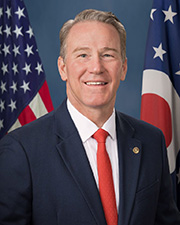
Sen. Jon Husted
Sponsored bills
Maddy summaryThe Delivering for Rural Seniors Act of 2026 creates a pilot program to provide home delivery of food commodities from the Commodity Supplemental Food Program (CSFP) to low-income seniors in rural areas. It authorizes $10 million annually for fiscal years 2027-2029 to fund competitive grants to state agencies, which must use funds for transportation, staffing, and outreach related to home delivery services - with priority for rural communities. State agencies must report annually on program outcomes, including delivery numbers, cost per delivery, and effectiveness evaluations. The bill directly affects low-income seniors enrolled in CSFP who live in rural areas, aiming to improve their access to food assistance through home delivery.
Maddy summaryThis resolution designates the week of January 25-31, 2026, as "National School Choice Week" to recognize educational options for K-12 students. It encourages parents to learn about school choices and urges the public to host events raising awareness about diverse education environments, including public schools, charter schools, private schools, and homeschooling. The resolution has no policy or funding impact - it is a ceremonial designation acknowledging existing annual events celebrating educational choice.
Maddy summaryThis bill expands access to VA disability examinations for rural veterans by allowing a broader range of health care professionals to conduct these exams under temporary contracts. It revises eligibility requirements to include any licensed health care professional (replacing specific titles like "physicians assistants" with a general category) who meets state licensing standards and is contracted by the VA. The bill extends the temporary authority for these contracts until September 30, 2031, and requires the VA to report on exam volume, costs, and accuracy within 15 months of enactment. These changes aim to improve timely benefit access in rural areas where specialized examiners may be scarce.
Maddy summaryS 3627, the Pregnant Students’ Rights Act, requires colleges and universities participating in federal student aid programs to provide clear information about pregnancy-related resources and accommodations to all enrolled students. The bill mandates annual email notifications, inclusion in student handbooks and orientations, and availability at health centers and websites, detailing campus/community resources, available accommodations, and how to file Title IX complaints. It specifically covers students planning to or currently pregnant who wish to carry a baby to term. The law focuses solely on disseminating existing information and does not create new rights or accommodations. (Bill text amended under Section 485 of the Higher Education Act.)
Maddy summarySRES 585 is a commemorative resolution honoring Ben Nighthorse Campbell, a former U.S. Senator from Colorado and the first Native American to chair the Senate Committee on Indian Affairs. It recognizes his military service, Olympic judo career, legislative work (including authoring the National Museum of the American Indian Act), and advocacy for tribal communities. The resolution has no policy impact - it formally expresses the Senate’s respect for his legacy, requests transmission to his family, and directs a moment of silence. It directly affects Campbell’s legacy and family, not any current policy or population. (Note: This is a procedural resolution, not a bill with legislative provisions.)
Maddy summaryThis bill expands a federal grant program to help rural communities address water infrastructure needs. It directly affects small rural communities with populations under 35,000 (up from 10,000) by allowing them to apply for grants. Key changes include broadening eligible uses to cover potable water, wastewater, storm drainage, and solid waste facilities, and increasing the population cap for program eligibility. The bill modifies existing provisions under the Consolidated Farm and Rural Development Act to make these changes. It does not create new funding but adjusts who qualifies for existing grant opportunities.
Maddy summaryThis bill amends the Small Business Act to require the Small Business Administration (SBA) to provide guidance and support to small businesses on using artificial intelligence (AI). Specifically, it adds a new provision directing the SBA to help small businesses evaluate AI for operations - including best practices, planning for disruptions, protecting data and intellectual property, improving cybersecurity, and ensuring regulatory compliance. The guidance will include training and outreach on integrating AI into business workflows. The bill does not authorize new funding for these activities.
Great Lakes Fishery Research Reauthorization Act This act reauthorizes through FY2030 research and monitoring conducted by the U.S. Geological Survey in support of binational fisheries within the Great Lakes Basin. This research is completed through the Great Lakes Science Center and may involve invasive species science, studies on fishery resources, and the use of biological assessment tools and other capabilities to support fishery management decisions.
Maddy summaryThis is a Senate resolution (SRES 573), not a legislative bill, expressing the Senate's position on U.S. leadership in religious freedom. It reaffirms the U.S. commitment to promoting religious freedom globally, encourages the Secretary of State to use diplomatic tools to address foreign violations, and supports existing roles like the Ambassador-at-Large for International Religious Freedom. The resolution does not create new laws or change policies but serves as a symbolic statement urging continued U.S. engagement on this issue. It directly affects U.S. diplomatic efforts and messaging toward countries with religious freedom concerns, such as China and Nicaragua, as cited in the resolution's background.