

Maddy summaryThe ATTAIN Mental Health Act requires the U.S. Department of Health and Human Services to create a public online dashboard that makes federal mental health and substance use disorder grant information easier to find. The dashboard will list grant names, show current application status (open, closed, or awarded), and provide direct links to apply, while being accessible under the Americans with Disabilities Act. It will help schools, health providers, tribal organizations, community groups, and other potential applicants quickly locate funding opportunities by location and program type. The dashboard must be updated regularly to reflect current grant openings and be designed with input from diverse stakeholders like hospitals and tribal entities.
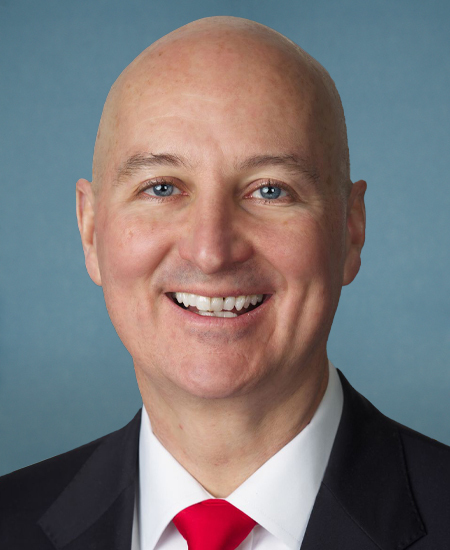
Sen. Pete Ricketts
Sponsored bills
Maddy summaryS 2430 amends the 1986 Emergency Planning and Community Right-To-Know Act to exclude certain air emissions from animal waste at farms from emergency notification requirements. This bill directly affects agricultural operations that handle animal waste, removing a requirement to report specific airborne emissions to emergency planners and the public. The key provision adds a new exception (B) to the notification rules, explicitly excluding "air emissions from animal waste (including decomposing waste) at a farm" as defined under related environmental law. This change simplifies reporting obligations for farms while maintaining other emergency planning requirements under the Act.
Maddy summaryS 2452, the Biomanufacturing and Jobs Act of 2023, requires federal agencies to annually increase their purchases of biobased products made from agricultural commodities like corn and soybeans. It updates the USDA's BioPreferred Program by mandating yearly procurement targets for biobased-only contracts, establishing a new Biobased Task Force to coordinate USDA efforts, and requiring federal agencies to update procurement systems to identify biobased products. The bill also adds training for federal staff on biobased purchasing, improves labeling verification, and mandates public reporting on biobased product usage. These changes directly affect federal procurement departments, agricultural producers, and manufacturers of biobased products. The goal is to expand domestic manufacturing of biobased goods while supporting rural economies through increased federal demand.
Maddy summaryThe WATCH Act requires foreign laboratories receiving U.S. federal funds for animal research to undergo quarterly inspections to ensure compliance with U.S. animal welfare standards. It directly affects overseas labs conducting NIH-funded studies involving animals, mandating regular checks of their animal care committees, treatment reviews, and record-keeping. Labs must maintain certification of compliance, with public access to these certificates, and face potential suspension of funding if they fail to correct violations after a warning. The bill establishes a process for U.S. authorities to coordinate inspections with foreign governments while upholding U.S. research standards.
Maddy summaryS 2372, the Accelerating Kids’ Access to Care Act, streamlines enrollment for out-of-state healthcare providers who treat Medicaid-eligible children under 21 with medically complex conditions. It requires states to adopt a process allowing these providers to join state Medicaid/CHIP programs without extra state-level screening, provided they already meet federal Medicare or home-state program requirements and pose low fraud risk. The bill establishes a 5-year enrollment period for eligible providers, directly affecting children needing specialized care across state lines and the providers serving them. Key provisions remove barriers to interstate care coordination while maintaining federal oversight standards.
Maddy summaryThe Community and Hydropower Improvement Act amends the Federal Power Act to streamline hydropower licensing while strengthening tribal consultation and environmental review. It requires the Federal Energy Regulatory Commission to consult with Indian Tribes before approving conditions affecting tribal resources, establishes a fund to reimburse tribes for administrative costs, and creates expedited processes for certain projects like nonpowered dams and pumped storage. The bill updates environmental review requirements to better consider ongoing project effects and includes new procedures for license surrender. It directly affects hydropower developers, tribal nations, and federal agencies involved in licensing decisions.
Maddy summarySRES 269 is a symbolic Senate resolution designating July 22, 2023, as "National Day of the American Cowboy." It does not create new laws or affect specific groups, but encourages the general public to observe the day through ceremonies and activities. The resolution highlights the cultural significance of cowboys, citing their embodiment of values like honesty and work ethic, their economic contributions through ranching, and their role in American traditions and media. This is a ceremonial designation with no direct policy impact or funding changes.
Maddy summaryThis bill modifies SNAP (food stamp) rules to help unemployed or underemployed recipients access job training. It defines "covered individuals" as SNAP households not receiving TANF aid and not enrolled in state job programs, allowing states to use SNAP administrative funds for WIOA job training programs. States must also create publicly available online calculators showing how future earnings compare to SNAP benefits. The law directly affects SNAP recipients facing employment barriers, aiming to ease transitions into work without losing benefits.
Maddy summaryThis bill requires the Federal Housing Finance Agency (FHFA) to immediately revert to the previous mortgage pricing structure (effective April 30, 2023) by eliminating the "recalibrated" fee system for single-family mortgages. It directly affects lenders and borrowers by banning fees based on debt-to-income ratios and mandating that future fee adjustments must align with risk-based pricing principles. The bill also mandates a 14-month GAO study to analyze the previous pricing changes' methodology, economic impacts on borrowers and lenders, and effects on affordable housing. This reverses recent FHFA policy changes without altering the underlying regulatory framework for mortgage enterprises.
Maddy summaryS 2230, the Protecting Investors’ Personally Identifiable Information Act, prevents the Securities and Exchange Commission (SEC) from requiring financial exchanges and their members to report investors' personal details like names, addresses, or Social Security numbers under routine data reporting rules. The SEC may only request such information during an investigation into suspected securities law violations, and must destroy it within 24 hours after the investigation concludes. This directly affects national securities exchanges, associations, and their members who handle market participant data. The bill aims to limit unnecessary collection and retention of sensitive investor information while maintaining enforcement capabilities.