

Maddy summaryThis joint resolution (SJRES 99) seeks congressional disapproval of a specific U.S. Citizenship and Immigration Services (USCIS) rule that removed automatic extensions for Employment Authorization Documents (EADs). The rule, published in the Federal Register on October 30, 2025, ended the prior practice of automatically extending work permits for certain immigrants while their renewal applications were pending. If approved, this resolution would block the rule from taking effect, restoring the automatic extension process for EAD holders. The policy change directly affects non-citizens in the U.S. who hold EADs and are waiting for renewal processing, preventing potential gaps in work authorization.
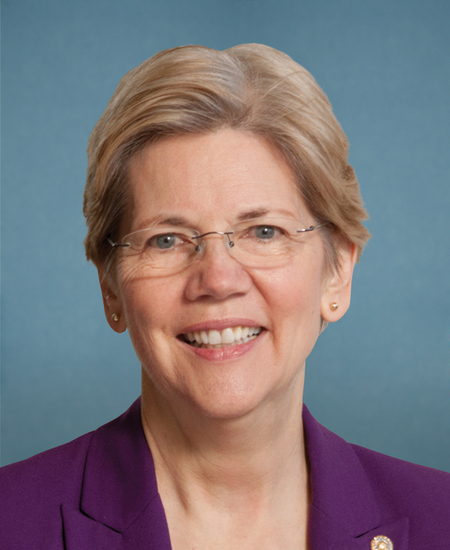
Sen. Elizabeth Warren
Sponsored bills
Maddy summaryThe Protecting America's Workers Act expands workplace safety protections by including public employees and voluntary emergency responders under federal safety laws, while also strengthening whistleblower safeguards against retaliation. Key provisions require employers to report serious work-related injuries and deaths, mandate the posting of employee rights, and establish a process for victims and families to participate in enforcement proceedings. The bill also increases civil and criminal penalties for safety violations, improves oversight of state safety plans, and authorizes additional funding for training and hazard evaluations.
Maddy summaryThe Investing in the American Dream Act expands eligibility for Small Business Administration loans to include businesses owned by certain immigrants, such as refugees, asylees, and individuals with deferred action. To qualify, these businesses must be located in the United States and at least 51 percent owned and controlled by U.S. citizens or nationals of the United States. The law explicitly states that businesses meeting these ownership and location requirements cannot be denied loans solely because they are owned by eligible immigrants. Additionally, the bill clarifies that it does not grant the SBA authority to increase the 51 percent ownership threshold for any type of loan.
Maddy summaryThis bill proposes a new amendment to the U.S. Constitution that would establish voting as a fundamental right for all citizens of legal voting age. It requires any government denial of this right to be narrowly tailored to serve a compelling interest, while also repealing specific language from the 14th Amendment related to voting rights. The amendment would grant Congress the authority to pass laws enforcing these protections against any denial or abridgment of the right to vote.
Maddy summaryThe HELP Separated Children Act directs the Department of Homeland Security to identify parents of U.S. children during immigration enforcement actions and ensures they can make phone calls to arrange care for their children. It requires officials to notify child welfare agencies only when a parent cannot arrange care for their child or when there is an imminent risk of harm to the child. The bill also mandates that detained parents be allowed regular contact with their children, participate in family court proceedings, and be considered for release if it serves the child's best interests. Additionally, the legislation requires federal employees involved in these actions to receive training on minimizing trauma to children and establishes a system for collecting data on how the law is implemented.
Maddy summaryThe Housing Survivors of Major Disasters Act of 2026 expands disaster relief assistance to individuals who lived in disaster areas but lacked formal proof of ownership or were not renting, including those who were homeless or stayed in temporary accommodations. It allows these eligible households to use federal funds to pay for obtaining property titles, such as costs for land surveys and associated taxes, by accepting a wide range of documents like utility bills, driver's licenses, and school records as evidence of their connection to the property. The bill also requires FEMA to create a simple, non-notarized form for applicants to self-certify their eligibility and mandates that the agency consult with the Department of Housing and Urban Development to coordinate temporary rental assistance programs for displaced residents. Additionally, the legislation amends existing disaster housing rules to focus on ensuring residences are habitable during long-term recovery and permits temporary housing if the President deems it a cost-effective alternative to other solutions.
Maddy summaryThis bill establishes a Climate Change Education Program within the National Oceanic and Atmospheric Administration to increase public understanding of climate change and its solutions. It authorizes funding to provide grants to schools, universities, and community organizations for developing curricula, training teachers, and supporting student-led climate projects. The legislation requires that 40 percent of certain grant funds be directed toward environmental justice communities and mandates annual reporting to Congress on the program's effectiveness. Funding is authorized at $50 million per year from 2027 through 2032 to support these educational initiatives.
Maddy summaryThis bill, known as the Absentee and Mail Voter Protection Act, aims to overturn a specific executive order by repealing it and prohibiting the use of federal funds to implement similar directives in the future. It directly affects the United States Postal Service, various federal agencies, and state election officials by restricting their ability to regulate mail-in ballots or create national citizenship lists for voting purposes. Key provisions ban federal agencies from sharing voter registration data, compel the Postal Service to continue delivering state-issued mail ballots without interference, and forbid the use of taxpayer money to enforce rules that would require states to adopt specific citizenship verification methods. The legislation seeks to preserve the current system where states manage their own election administration while the Postal Service delivers ballots, citing historical precedents and the high volume of mail-in voting used by Americans.
Maddy summaryThe Hazard Pay for Health Care Heroes Act establishes a federal grant program to provide extra pay and safety resources to essential health care workers during declared emergencies or disasters. This legislation directly affects medical staff, janitorial workers, and other non-remote roles in health facilities who face hazardous working conditions or dangerous commutes. Under the bill, eligible workers could receive up to $13 per hour in additional compensation, with a yearly cap of $25,000, while facilities can also use funds for protective equipment and alternative transportation. The program is funded through emergency grants authorized to public and private nonprofit health care organizations when a specific emergency is declared by the President or local authorities.
Maddy summaryThe Drug Deal Disclosure Act requires the Department of Health and Human Services to publicly release specific records regarding agreements between the federal government and major drug manufacturers starting in 2025. This law mandates the disclosure of contracts that include provisions such as reduced drug prices based on international rates, direct-to-consumer sales discounts, duty exemptions, and special treatment for Medicare programs. While the bill allows for the redaction of confidential pricing details, it prohibits withholding information based on political sensitivity or reputational harm and requires a detailed justification for any redactions. Additionally, the act mandates reports to Congress and independent analysis from the Congressional Budget Office and the Government Accountability Office to evaluate the economic and budgetary impacts of these agreements.