

Maddy summaryThis Senate resolution designates April 2026 as Second Chance Month to raise awareness about the challenges faced by individuals with criminal records as they reenter society. The bill highlights how legal and societal barriers, such as restrictions on employment, housing, and education, often prevent formerly incarcerated people from finding meaningful work and rebuilding their lives. By honoring the work of communities and organizations that support reentry, the resolution encourages employers and the public to consider extending second chances to those who have completed their sentences. The designation aims to promote understanding of these obstacles and foster opportunities for individuals to contribute positively to their families and communities.
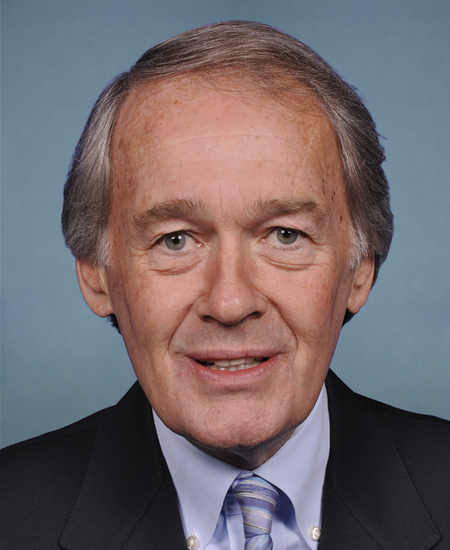
Sen. Edward J. Markey
Sponsored bills
Maddy summaryThis bill proposes a new amendment to the U.S. Constitution that would establish voting as a fundamental right for all citizens of legal voting age. It requires any government denial of this right to be narrowly tailored to serve a compelling interest, while also repealing specific language from the 14th Amendment related to voting rights. The amendment would grant Congress the authority to pass laws enforcing these protections against any denial or abridgment of the right to vote.
Maddy summaryThis Senate resolution expresses support for library staff across public, school, academic, and special libraries in the United States. It highlights the essential services libraries provide, such as equitable internet access, social support, and community resources, while calling for adequate funding at all government levels. The measure reaffirms the right of citizens to freely access information and explicitly supports the ability of library workers to unionize and collectively bargain. Additionally, it defends the civil rights of library staff against intimidation and censorship, noting recent challenges like book bans and the potential elimination of the Institute of Museum and Library Services.
Maddy summaryThe Neighborhood Tree Act of 2026 creates a new funding source to help states, tribes, and local governments improve urban tree canopies, with a specific focus on reducing disparities in areas affected by historical discrimination and poverty. To receive these funds, eligible entities must conduct tree assessments, engage with local communities, and design projects using climate science to ensure trees are properly planted and maintained. The legislation prioritizes funding for neighborhoods with high poverty rates, low existing tree cover, or higher summer temperatures, while also supporting community-led food production through trees. Additionally, the bill expands the National Urban and Community Forestry Advisory Council to include members representing small towns and low-income communities.
Maddy summaryThe HELP Separated Children Act directs the Department of Homeland Security to identify parents of U.S. children during immigration enforcement actions and ensures they can make phone calls to arrange care for their children. It requires officials to notify child welfare agencies only when a parent cannot arrange care for their child or when there is an imminent risk of harm to the child. The bill also mandates that detained parents be allowed regular contact with their children, participate in family court proceedings, and be considered for release if it serves the child's best interests. Additionally, the legislation requires federal employees involved in these actions to receive training on minimizing trauma to children and establishes a system for collecting data on how the law is implemented.
Maddy summaryThe Housing Survivors of Major Disasters Act of 2026 expands disaster relief assistance to individuals who lived in disaster areas but lacked formal proof of ownership or were not renting, including those who were homeless or stayed in temporary accommodations. It allows these eligible households to use federal funds to pay for obtaining property titles, such as costs for land surveys and associated taxes, by accepting a wide range of documents like utility bills, driver's licenses, and school records as evidence of their connection to the property. The bill also requires FEMA to create a simple, non-notarized form for applicants to self-certify their eligibility and mandates that the agency consult with the Department of Housing and Urban Development to coordinate temporary rental assistance programs for displaced residents. Additionally, the legislation amends existing disaster housing rules to focus on ensuring residences are habitable during long-term recovery and permits temporary housing if the President deems it a cost-effective alternative to other solutions.
Maddy summaryThis Senate resolution formally acknowledges April as Community College Month to honor the role of over 1,000 institutions in providing affordable higher education and workforce training. The bill does not change any laws or allocate funding; instead, it serves as a symbolic statement recognizing how these colleges support economic prosperity and serve diverse student populations. By highlighting statistics on enrollment, tuition costs, and economic impact, the resolution aims to raise public awareness about the value of community colleges without imposing new requirements.
Maddy summaryThis resolution designates April 22, 2026, as National Assistive Technology Awareness Day to highlight the importance of devices that help people with disabilities and older adults perform daily tasks. The bill directly affects individuals with disabilities, older adults, assistive technology specialists, and organizations that support access to these tools. It serves as a commemorative measure to recognize the role of assistive technology in promoting inclusion, education, and employment, while also honoring the professionals who facilitate its distribution. The text provides background statistics on disability prevalence and explains how state programs assist with device exchange, loans, and financing.
Maddy summaryThis bill establishes a Climate Change Education Program within the National Oceanic and Atmospheric Administration to increase public understanding of climate change and its solutions. It authorizes funding to provide grants to schools, universities, and community organizations for developing curricula, training teachers, and supporting student-led climate projects. The legislation requires that 40 percent of certain grant funds be directed toward environmental justice communities and mandates annual reporting to Congress on the program's effectiveness. Funding is authorized at $50 million per year from 2027 through 2032 to support these educational initiatives.
Maddy summaryThe Youth Climate Leadership Act of 2026 requires heads of five major federal agencies to create advisory councils composed of young people aged 16 to 29 to provide recommendations on environmental issues. These councils must include at least 50% of members from disadvantaged communities and draw from diverse backgrounds such as business, academia, and government, with no single group making up more than 60% of the membership. The councils will meet at least once a year, submit annual reports to agency heads, and receive administrative support and funding of $250,000 annually from 2027 through 2037.