

Uyghur Forced Labor Prevention Act This bill imposes importation limits on goods produced using forced labor in China, especially the Xinjiang Uyghur Autonomous Region, and imposes sanctions related to such forced labor. The Department of Homeland Security shall report to Congress a strategy for preventing the importation of goods produced in China using forced labor. The strategy must contain certain information, including a list of entities working with the government in Xinjiang to move forced labor or Uyghurs, Kazakhs, Kyrgyz, or members of other persecuted groups out of Xinjiang. The U.S. Customs and Border Protection shall generally presume that goods produced by these entities and certain other entities, generally those sourcing material from Xinjiang or involved with Chinese government forced labor programs, are barred from importation into the United States. The bill also expands existing asset- and visa-blocking sanctions related to Xinjiang to cover foreign individuals and entities responsible for serious human rights abuses in connection with forced labor. The Department of State shall report to Congress a strategy to enhance international awareness of forced labor in Xinjiang and to address such forced labor.
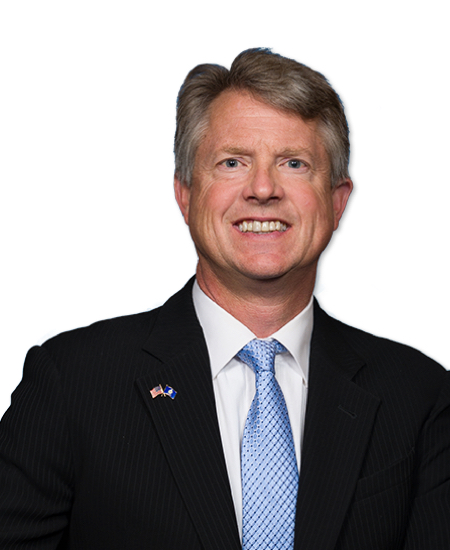
Sen. Roger Marshall
Sponsored bills
This resolution recognizes and expresses support for the efforts of democracy and human rights activists in Cuba.
This bill requires the President to impose visa- and property-blocking sanctions on the Supreme Leader of the Islamic Republic of Iran, Ayatollah Ali Khameini, and the Iranian president elected in 2021, Sayyid Ebrahim Raisol-Sadati.
Candidates Afforded Dignity, Equality and Training (CADET) Act of 2021 This bill requires the Departments of Defense, Homeland Security, and Transportation to prescribe regulations ensuring that the parental guardianship rights of cadets and midshipmen attending military service academies are protected consistent with individual and academic responsibilities. Cadets and midshipmen with dependents must establish a family care plan with appropriate academy leadership. Pregnant cadets and midshipmen must be provided with, at minimum, the options to (1) take leave from the military service academy for up to one year, (2) fully release from the military service academy and any related obligations, and (3) enlist in active-duty service. Males fathering a child while enrolled at a military service academy must not be required to give up parental rights and must not acquire any benefits or leave considerations as a result of fathering a child, with certain exceptions (e.g., leave to attend the birth).
Consumer and Fuel Retailer Choice Act This bill amends the Clean Air Act to address the limitations on Reid vapor pressure (a measure of gasoline's volatility) that are placed on gasoline during the summer ozone season. The bill applies the Reid vapor pressure requirements that are applicable to gasoline blended with 10% ethanol (E10) to gasoline blended with more than 10% ethanol. Thus, the waiver given to E10 gasoline, which allows an increase in the Reid Vapor Pressure volatility, is extended to gasoline blended with more than 10% ethanol.
Travel Mask Mandate Repeal Act of 2021 This bill prohibits federal agencies from mandating the use of masks or face coverings on planes, trains, buses, and other public conveyances and at transportation hubs to prevent the transmission of COVID-19. Specifically, the bill nullifies (1) the rule issued by the Centers for Disease Control and Prevention (CDC) on January 29, 2021, that mandates such use of masks or face coverings; and (2) orders and directives of the Transportation Security Administration that relate to the CDC rule.
Securing the Homeland from International Entrants with Life-threatening Diseases Act or the SHIELD Act This bill suspends for one year the admission and parole into the United States of certain categories of individuals who are from or were recently in a country that fails to meet certain criteria related to COVID-19. This restriction applies to certain individuals entering the United States from Mexico or Canada through a port of entry or U.S. Border Patrol station and (1) whose country of origin has not been categorized by the Centers for Disease Control and Prevention as a low-risk country for COVID-19, or (2) who was in such a country at any time in the 30 days before arriving in the United States. The bill exempts certain individuals from this restriction, including U.S. citizens and lawful permanent residents, members of the Armed Forces, and persons from a foreign country who arrive at a designated port of entry with valid travel documents. The Department of Homeland Security shall transport barred individuals to a foreign location, such as an individual's country of origin, to the extent practicable.
This resolution (1) supports the designation of June 2021 as National Dairy Month, and (2) encourages the people of the United States to visit with dairy producers to learn more about agriculture and the vital role dairy producers play in our global food system.
Regulatory Accountability Act This bill expands and provides statutory authority for notice-and-comment rulemaking procedures to require federal agencies to consider (1) whether a rulemaking is required by statute or is within the discretion of the agency, (2) whether existing laws or rules could be amended or rescinded to address the problem, and (3) reasonable alternatives to a new rule. For proposed major or high-impact rules that have a specified significant economic impact or adverse effect on the public health or safety, an agency must publish notice of such rulemaking to invite interested parties to propose alternatives and ideas to accomplish the agency's objectives; allow persons interested in high-impact or certain major rules to petition for a public hearing with oral presentation, cross-examination, and the burden of proof on the proponent of the rule; adopt the rule that maximizes net benefits within the scope of the statutory provision authorizing the rule, unless the agency explains the costs and benefits that justify adopting an alternative rule and such rule is approved by the Office of Information and Regulatory Affairs (OIRA); and publish a framework and metrics for measuring the ongoing effectiveness of the rule. Agencies must notify OIRA with certain information about a proposed rulemaking, including specified discussion and preliminary explanations concerning a major or high-impact rule. Further, OIRA must establish certain rulemaking guidelines. Additionally, the bill (1) revises the scope of judicial review of agency actions, and (2) establishes requirements for agencies issuing guidance.
Unnecessary Agency Regulations Reduction Act of 2021 This bill requires the Office of Information and Regulatory Affairs to annually report a list of major rules (i.e., rules with a significant economic impact, cost to consumers, or adverse effects on competition) that it recommends should be consolidated or repealed because they are outdated, duplicative, or incur excessive compliance costs. Congress must review the list to determine, and recommend by joint resolution, any such rules to consolidate or repeal.