

Maddy summaryThe GUARD Act of 2026 requires U.S. national security agencies to evaluate whether humanoid or quadruped robots made by foreign entities pose a risk to national security. If a robot is determined to be unsafe or comes from a country of concern, the Federal Communications Commission will add it to a banned list, preventing its use in U.S. communications networks. The law mandates that agencies report their findings to Congress within specific timeframes, ensuring transparency about these security assessments. Importantly, the rule does not apply to allies such as NATO members or designated Major Non-NATO Allies.
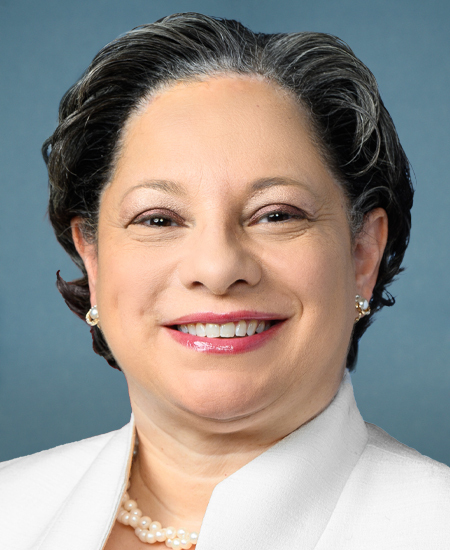
Rep. Jennifer L. McClellan
Sponsored bills
Maddy summaryHR 7294, the "AI for Secure Networks Act," requires the Secretary of Commerce to conduct a study on how artificial intelligence (AI) technology impacts telecommunications network security. The study must examine AI's potential to improve security through real-time threat detection, network resiliency, and energy efficiency, as well as its use with Open RAN and virtualized security technologies, while also assessing associated risks. The Secretary must consult with the Federal Communications Commission and industry stakeholders and submit a report with findings and potential recommendations to Congress within one year of the bill's enactment. This bill does not create new regulations or directly affect businesses or consumers; it is a procedural step to gather information about AI's role in securing telecom networks.
Maddy summaryHR 5967 establishes a federal task force led by the FTC and DOJ to combat scams. The task force, including agencies like the FBI, SEC, and Social Security Administration, will develop a national strategy using existing tools such as the Consumer Sentinel Network and Internet Crime Complaint Center. Key actions include public education, coordination with industry (like banks and social media platforms), and enforcement using current laws against fraud and money laundering. The task force must report to Congress within one year and dissolve after 10 years.
Maddy summaryThe HEIRS Act of 2025 establishes two grant programs to help homeowners with "heirs' property" - residential land held by multiple heirs without clear title due to intestacy. It provides $30 million annually (2026-2036) to states/local governments that adopt the Uniform Partition of Heirs Property Act, funding title documentation, legal fees, and estate planning. An additional $10 million annually (2026-2030) supports HUD-approved housing counselors and legal services to assist low- and moderate-income minority homeowners in clearing title and retaining homes. The bill requires grantees to prioritize neighborhoods with high concentrations of affected residents and includes mandatory education about heirs' property risks and solutions.
Maddy summaryHR 6893, the Chesapeake Bay Watershed Advancement for Training, Education, Restoration, and Science (WATERS) Act, reauthorizes and updates NOAA's Chesapeake Bay Office to better support Bay restoration. It establishes new programs including a watershed education initiative for students and teachers, a coastal habitat management program focused on species like oysters and blue crabs, and requirements for coordinated scientific monitoring of water quality and living resources. The bill mandates the Office Director to consult with the Chesapeake Executive Council, ensure peer-reviewed scientific merit for funded projects, and submit biennial reports to Congress on progress. This directly affects NOAA, Bay watershed states, educators, researchers, and conservation groups working on Bay restoration under the Chesapeake Bay Program.
Maddy summaryThis House resolution supports the designation of August 17 through August 23, 2026, as Warehouse Worker Recognition Week to honor over 1.8 million employees in the logistics industry. The bill highlights the critical role these workers play in the U.S. economy and supply chain while acknowledging the challenging conditions they face, such as extreme heat and long hours. It encourages increased public awareness of their contributions and commits lawmakers to collaborating on efforts to reduce workplace injuries and better support these front-line employees.
Maddy summaryHR 6332 designates the United States Postal Service facility at 10660 Page Avenue in Fairfax, Virginia, as the "Congressman Gerald E. Connolly Post Office Building." This bill updates all official references in federal documents, maps, and records to use the new name for this specific post office location. It does not create new policies or affect any services; it solely changes the building's official designation to honor Congressman Gerald E. Connolly. The change applies to all federal materials referencing the facility.
Maddy summaryThis bill (HR 6317) is a procedural naming resolution. It designates the U.S. Postal Service facility at 12109 New Kent Highway in New Kent, Virginia, as the "Patricia Paige Post Office." The bill updates all official U.S. government references (including laws, maps, and documents) to use the new name for this specific post office location. It does not change postal services or create new policies - it only changes the facility's official name.
Maddy summaryThis bill renames a U.S. Postal Service facility at 46164 Westlake Drive in Sterling, Virginia, as the "Firefighter Trevor Brown Post Office Building" to honor Firefighter Trevor Brown. It requires all future federal references to that specific location to use the new name. The bill affects only the postal facility's official designation and has no policy or funding provisions. (Procedural naming resolution, 2 sentences)
Wintergreen Emergency Egress Act This bill directs the Department of the Interior to issue a right-of-way through the Blue Ridge Parkway for an additional emergency exit from Wintergreen in Nelson County, Virginia, once certain requirements have been met. Specifically, Interior must grant the right-of-way if it reports to specified congressional committees that the following have been completed: (1) an evaluation of alternatives to the right-of-way for exiting Wintergreen that do not cross federal land, including an evaluation of whether existing trails can be converted to roads; (2) an analysis of expected fire ecology behavior in the event of a fire emergency with respect to the right-of-way; and (3) any required reviews under the National Environmental Policy Act of 1969 and the National Historic Preservation Act.