

Title X Abortion Provider Prohibition Act This bill prohibits the Department of Health and Human Services (HHS) from awarding family planning grants to entities that perform abortions or provide funding to other entities that perform abortions. To receive a grant, an entity must certify it will refrain from those activities during the grant period. The bill provides exceptions for abortions (1) in cases of rape or incest; or (2) when the life of the woman is in danger due to a physical disorder, injury, or illness. It also exempts hospitals unless they provide funds to non-hospital entities that provide abortions. HHS must report annually on this prohibition.
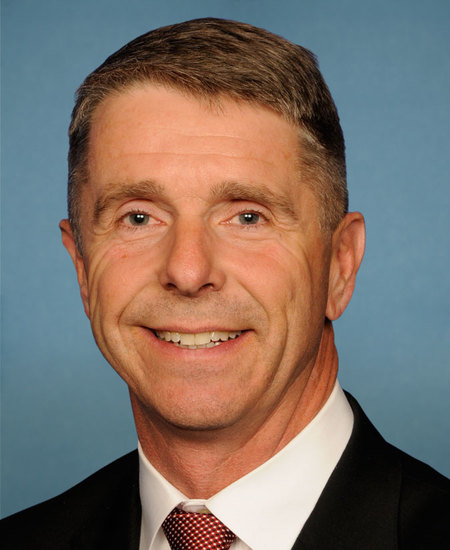
Rep. Robert J. Wittman
Sponsored bills
Protecting Life in Crisis Act This bill specifies that federal funds allocated for COVID-19 (i.e., coronavirus disease 2019) response efforts may not, in general, be used for abortions. Current law generally prohibits the use of federal funds for abortions through language included in appropriations bills, such as the Hyde Amendment. The bill also restricts the use of federal tax credits or other federal funding for health insurance coverage if the coverage includes abortions.
Rebuilding Our Communities by Keeping aggregates Sustainable Act of 2021 or the ROCKS Act This bill directs the Department of Transportation to establish a working group of stakeholders (e.g., state, tribal, and local transportation and planning agencies) with knowledge and expertise in the production and transportation of materials used in the construction and maintenance of transportation infrastructure projects to conduct a study on access to such materials, including access to stone, sand, and gravel.
This resolution expresses the gratitude of the House of Representatives to the members of the National Guard and law enforcement agencies who were deployed to the District of Columbia to ensure a safe and secure environment for the 59th inauguration.
No Abortion Bonds Act This bill denies a tax exclusion for the interest paid on state and local bonds that are used to provide a facility owned or used (for any purpose) by an abortion provider for more than 30 days during a year in which interest is paid on the bonds. An entity is not considered an abortion provider solely as a result of performing abortions if (1) the pregnancy is the result of an act of rape or incest; or (2) a woman suffers from a physical disorder, physical injury, or physical illness that would, as certified by a physician, place the woman in danger of death unless an abortion is performed, including a life-endangering physical condition caused by or arising from the pregnancy itself. The Department of the Treasury may exempt certain hospitals from being considered an abortion provider by making the name of the hospital available on Treasury's public website.
Education Savings Accounts for Military Families Act of 2021 This bill directs the Department of Education (ED) to establish a program to provide children with parents on active duty in the uniformed services with funds to pay educational expenses. Specifically, ED must establish a tax-exempt Military Education Savings Account for dependent children of parents in the uniformed services for the payment of the children's educational expenses. Funds in the savings account may be used for specified purposes, including the cost of attendance at a private elementary or secondary school or institution of higher education, private tutoring, or costs associated with an apprenticeship or other vocational training program.
Access Technology Affordability Act of 2021 This bill allows a refundable tax credit equal to the amounts paid for qualified access technology for use by a blind individual who is the taxpayer, the taxpayer's spouse, or a dependent of the taxpayer. Qualified access technology is hardware, software, or other information technology with the primary function of converting or adapting information that is visually represented into forms or formats useable by blind individuals. The credit is limited to (1) costs that are not compensated by insurance or otherwise, and (2) an aggregate amount of $2,000 per blind individual in any period of three consecutive taxable years. The credit must be adjusted for inflation after 2021 and terminates after 2026.
Federal Firefighter Pay Equity Act This bill modifies certain pay calculations that are used to determine retirement and annuity benefits for federal firefighters. Specifically, the bill adjusts the method of determining the average pay of a federal firefighter by adding one-half of a firefighter's basic hourly rate multiplied by the number of overtime hours included as part of such firefighter's regular tour of duty.
Stay on Schedule (S.O.S.) Resolution This resolution makes it out of order for the House to consider a concurrent resolution for its adjournment during any day in August of a calendar year unless it has passed by July 31 each of the regular appropriation bills for the fiscal year beginning on October 1.
FairTax Act of 2021 This bill imposes a national sales tax on the use or consumption in the United States of taxable property or services in lieu of the current income taxes, payroll taxes, and estate and gift taxes. The rate of the sales tax will be 23% in 2023, with adjustments to the rate in subsequent years. There are exemptions from the tax for used and intangible property; for property or services purchased for business, export, or investment purposes; and for state government functions. Under the bill, family members who are lawful U.S. residents receive a monthly sales tax rebate (Family Consumption Allowance) based upon criteria related to family size and poverty guidelines. The states have the responsibility for administering, collecting, and remitting the sales tax to the Treasury. Tax revenues are to be allocated among (1) the general revenue, (2) the old-age and survivors insurance trust fund, (3) the disability insurance trust fund, (4) the hospital insurance trust fund, and (5) the federal supplementary medical insurance trust fund. No funding is authorized for the operations of the Internal Revenue Service after FY2025. Finally, the bill terminates the national sales tax if the Sixteenth Amendment to the Constitution (authorizing an income tax) is not repealed within seven years after the enactment of this bill.