

STOP II: Classrooms Over Conference Rooms Act This bill increases the authorization of appropriations for FY2022-FY2028 for the Secure Our Schools grant program. The program provides grants to states, local governments, and Indian tribes to improve security, including the placement and use of metal detectors and other deterrent measures, at schools and on school grounds. The bill requires any funds appropriated under the Consolidated Appropriations Act, 2021, which may be used for renting conference rooms in the District of Columbia with respect to the administration of federal education programs, to instead be used for the Secure Our Schools grant program.
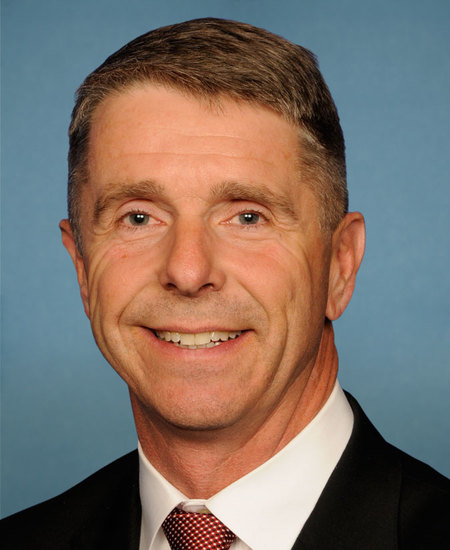
Rep. Robert J. Wittman
Sponsored bills
21st Century NICS Act This bill modifies procedures for conducting firearms-related background checks through the national instant criminal background check system (NICS). Specifically, it permits the NICS to query an additional database—the National Data Exchange—as part of a firearm-related background check.
Wastewater Infrastructure Improvement Act of 2021 This bill sets forth requirements and establishes incentives to control water pollution. Specifically, the bill reauthorizes and revises several existing grant programs that address water pollution, including grants concerning implementing state water quality improvement programs, increasing the resilience of public wastewater utilities to man-made or natural disasters, recycling wastewater or stormwater, constructing sewer overflow and stormwater management projects, and supporting the clean water state revolving fund. In addition, the bill revises requirements concerning the National Pollutant Discharge Elimination System (NPDES) permit program of the Environmental Protection Agency (EPA). The bill allows the EPA to issue certain NPDES permits to states or municipalities for up to 10 years (currently, 5 years).
This resolution designates National Pregnancy Center Week.
Metastatic Breast Cancer Access to Care Act This bill expedites payment of Social Security Disability Insurance (SSDI) benefits and eligibility for Medicare coverage for those with metastatic breast cancer (i.e., breast cancer that has spread to other sites in the body). Specifically, the bill eliminates the 5-month waiting period for SSDI benefits and the subsequent 24-month waiting period for Medicare coverage for individuals with metastatic breast cancer. Under current law, individuals generally must wait five months after the onset of disability to begin receiving SSDI benefits and an additional 24 months to become eligible for Medicare.
Combatting Racist Training in the Military Act of 2021 This bill prohibits the Armed Forces and academic institutions of the Department of Defense from promoting specified anti-American and racist theories (e.g., that any race is inherently superior or inferior to any other race). Specifically, the bill prohibits including anti-American and racist theories or materials in curricula, reading lists, seminars, workshops, trainings, or other educational or professional settings in a manner that could appear as sponsorship, approval, or endorsement; contracting with, hiring, or otherwise engaging speakers, consultants, diversity trainers, and other persons for the purpose of advocating anti-American and racist theories; compelling members of the Armed Forces to affirm or profess belief in anti-American and racist theories; and segregating members of the Armed Forces by race in any setting, including educational and training sessions.
This bill prohibits the use of federal funds for the provision of training or education based on critical race theory at the U.S. service academies (e.g., the Air Force Academy).
Adoption Tax Credit Refundability Act of 2021 This bill makes the tax credit for adoption expenses refundable.
This resolution thanks the teachers of the United States and promotes the teaching profession by encouraging students, parents, school administrators, and public officials to recognize National Teacher Appreciation Week.
Homecare for Seniors Act This bill allows tax-exempt distributions from health savings accounts (HSAs) to be used for qualified home care. Qualified home care means a contract to provide three or more of the following services in the residence of the service recipient assistance with eating, assistance with toileting, assistance with transferring, assistance with bathing, assistance with dressing, assistance with continence, and medication adherence. The Department of Health and Human Services must carry out a campaign to increase public awareness of the in-home service expenses that are eligible for tax-free distribution from HSAs.